Industrial Racking & High-Density Storage Solutions
Explore our EN 15512 engineered pallet racking and automated live storage components designed to optimize floor space in Canton of Vaud logistics centers.
1. Engineering Whitepaper: Gravity Racking Systems Architecture
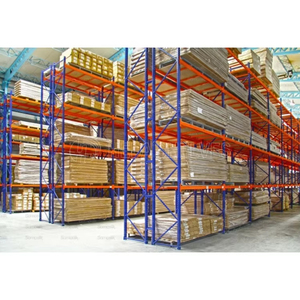
In modern logistics engineering, Gravity Racking Systems (commonly recognized as Pallet Flow Racks or Dynamic Live Storage) represent the pinnacle of high-density passive-automation storage. Operating strictly under the First-In, First-Out (FIFO) inventory control discipline, gravity flow systems utilize inclined roller tracks mounted on heavy-duty structural steel frameworks. Pallets are loaded from the higher elevation (charge face) and glide smoothly under controlled gravitational acceleration toward the picking face (discharge face).
For enterprise facility managers, logistics architects, and procurement officers operating across Lausanne and the wider Canton of Vaud region, implementing gravity flow technology yields transformative physical and operational efficiencies. By converting traditional access aisles into dense storage lanes—often reaching up to 20 pallets deep—gravity racking delivers up to a 65% reduction in warehouse footprint requirements compared to conventional selective pallet racking setups.
The structural integrity of a heavy-duty gravity flow system relies on precise mechanical physics. Roller beds are calibrated at an inclination angle between 3.5% and 4.0%, engineered specifically to overcome static friction while keeping terminal velocity below critical thresholds. Crucially, the system incorporates specialized centrifugal brake rollers spaced at calculated intervals along the lane. These magnetic or mechanical braking components govern pallet acceleration, maintaining a constant flow speed of approximately 0.25 m/s regardless of pallet payload variance (ranging from 300 kg to 1,500 kg per position).
2. Lausanne & Lake Geneva Region Logistics Dynamics
Lausanne holds a strategic position along the Lake Geneva (Lac Léman) economic axis. Sitting at the intersection of the primary A1 and A9 motorways, Lausanne connects Western Switzerland (Romandie) directly to Bern, Zurich, and the cross-border European transport corridors of France and Northern Italy. Industrial zones such as Bussigny, Crissier, Morges, and Lausanne-Vidy serve as vital distribution nodes for biopharmaceuticals, luxury goods, precision machinery, and temperature-controlled food logistics.
However, commercial real estate across the Canton of Vaud is characterized by severe spatial constraints and premium land valuations. Constructing new logistics infrastructure or expanding horizontal warehouse footprints in the Lake Geneva basin involves significant capital expenditure and rigorous municipal zoning restrictions. Consequently, enterprise operators in Lausanne must maximize volumetric cubic efficiency ($m^3$) rather than mere surface floor area ($m^2$).
Volumetric Cubic Maximization
Gravity flow racks utilize up to 85% of available building volume by eliminating interior forklift travel aisles, ideal for Vaud's high-cost real estate landscape.
Strict FIFO Traceability
Ensures absolute batch integrity and lot control for Lausanne's world-class pharmaceutical hubs, medtech cleanrooms, and food & beverage suppliers.
SIA 261 Seismic Engineering
Fully calculated according to Swiss structural standard SIA 261 for Seismic Zone 1 and Zone 2 safety compliance across the Lake Geneva basin.
Additionally, labor expenses in Switzerland are among the highest globally. Standard warehouse operations that rely on excessive forklift movements expend excessive labor hours per pallet turn. Gravity flow racking decouples the loading operation from picking activity. Forklift operators drop pallets at the rear charge lane without entering the storage structure, while order fulfillment teams pick from the front aisle. This separation reduces forklift travel distances by up to 50%, drastically mitigating labor costs and operational equipment wear.
3. Localized Application Scenarios across Canton of Vaud
A. Pharmaceutical & Biotech Cold Chains (EPFL Innovation Park & Health Valley Cluster)
The region surrounding Lausanne host dozens of world-leading biotechnology institutes, clinical research centers, and pharmaceutical distribution centers. Maintaining unbroken cold chain storage (−25°C deep freeze to +4°C ambient cold storage) is mandatory under Swissmedics Good Distribution Practice (GDP) guidelines. Operating refrigeration units at deep-freeze temperatures requires massive power consumption; every cubic meter of cold air represents an ongoing operational expense.
By implementing stainless steel or hot-dip galvanized gravity flow racking inside cold chambers, pharmaceutical facilities achieve ultimate storage density. The automatic FIFO rotation guarantees that temperature-sensitive biologics, vaccines, and reagents are dispatched strictly in order of manufacture date, eliminating stock expiration risk.
B. Food & Beverage Distribution (Lavaux AOC & Vaudois FMCG Supply Chains)
From the agricultural supply chains of the Gros-de-Vaud to the prestigious wine cellars of the Lavaux AOC region, high-turnover consumer goods require seamless inventory flow. Gravity racking equipped with dynamic separation mechanisms allows heavy liquid pallets (e.g., bottled wine, dairy products, beverages) to advance smoothly. The automatic safety separator holds back trailing pallets until the lead pallet is completely lifted off the picking face by a forklift, preventing back-pressure crushing and protecting operators from unexpected pallet surges.
C. High-Tech Precision Manufacturing & Microtechnology Buffer Storage
Precision engineering firms near Lausanne utilize gravity flow racking to manage raw material buffers (such as brass coil stock, aluminum billets, and stainless steel components) alongside finished component boxes. Gravity flow lanes integrated with ergonomic pick-to-light picking modules allow assembly lines to draw materials seamlessly without waiting for forklift transport.
4. Technical Comparison Matrix: Storage Systems Evaluated
Selecting the appropriate storage technology requires comparing key operational metrics. The evaluation matrix below highlights how Gravity Flow Racking performs against alternative high-density warehouse systems under typical Swiss operating conditions:
| Storage System Type | Space Utilization Ratio | Inventory Flow Principle | Forklift Travel Time | Swiss Labor Efficiency Index | Cold Storage Suitability |
|---|---|---|---|---|---|
| Gravity Flow Racking | 80% – 85% | Strict FIFO | Very Low (-50%) | Optimal (10/10) | Excellent (Passive mechanics) |
| Selective Pallet Rack | 35% – 40% | Random Access | High (Base level) | Moderate (5/10) | Low (High refrigeration waste) |
| Drive-In Racking | 65% – 75% | LIFO Only | High (Enters racking lane) | Poor (Risk of structural impact) | Moderate |
| Push-Back Racking | 60% – 70% | LIFO Only | Moderate | Good (7/10) | Good |
| Automated ASRS High-Bay | 90% – 95% | FIFO / LIFO Software Controlled | Zero (Fully automated) | Highest (High CAPEX) | Excellent (Complex maintenance) |
5. Enterprise Factory Standards & Custom Engineering Competence
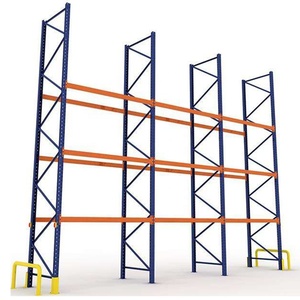
As a premier direct manufacturer and supplier for global industrial storage systems, our manufacturing facilities adhere to internationally recognized engineering standards. Every structural upright frame, box beam, roller bed, and safety beam connector supplied to Lausanne projects is designed strictly to EN 15512 (Adjustable pallet racking systems – Principles for structural design) and tested per EN 15512 static load calculations.
Factory Quality Assurance Protocol
Our manufacturing lines utilize high-grade certified cold-rolled steel coils (Q235B and Q355B yield strength steel). Key manufacturing milestones include:
CNC Automated Roll-Forming
Continuous multi-station cold roll-forming ensures precise profile geometry, tight dimensional tolerances, and uniform structural thickness along upright columns.
Robotic Welding Precision
Automated robotic welding arms deliver 100% seam penetration on beam connectors, column baseplates, and roller lane support frames according to ISO 3834 specs.
Electrostatic Epoxy Powder Coating
Components undergo a 6-stage pre-treatment wash followed by thermosetting epoxy-polyester powder coating (80–100 μm thickness) for maximum impact resistance.
Seismic Resistance Engineering to Swiss Standard SIA 261
Although Switzerland is situated in central Europe, seismic activity along the Rhone Valley and Lake Geneva basin requires static structural validation. Under SIA 261 (Actions on Structures), installations in Lausanne must account for horizontal ground acceleration forces. Our engineering department performs Finite Element Analysis (FEA) modeling to determine upright column baseplate dimensions, anchor bolt embedding depths, and top-tier cross-bracing configurations. This ensures structural stability even when gravity lanes are operating at maximum load capacities.
6. Frequently Asked Questions (FAQ) for Swiss & Lausanne Buyers
Below are technical answers to common questions raised by facility engineering managers, safety compliance officers, and procurement directors in Switzerland:
Q1: Which European and Swiss standards do your gravity racking systems comply with?
Our gravity racking systems are fully engineered in accordance with EN 15512 (Structural design of adjustable pallet racking) and EN 15620 (Tolerances, deformations, and clearances). For Swiss installations, structural calculations incorporate SIA 261 seismic load criteria relevant to Canton of Vaud seismic zones, as well as operational safety standards governed by Suva (Swiss National Accident Insurance Fund).
Q2: How do you prevent pallet damage caused by back-pressure in deep gravity lanes?
Deep-lane gravity flow systems experience cumulative weight back-pressure at the discharge end. To eliminate pallet-on-pallet crushing and ensure operator safety, we install mechanical Pallet Safety Separators. This separation mechanism physically isolates the first lead pallet from trailing pallets. When a forklift picks up the front pallet, the separator automatically releases the next pallet to slide into the picking position under controlled speed.
Q3: Can gravity flow racking accommodate non-standard Euro pallets or damaged wooden pallets?
Gravity racking performs best with standardized wooden Euro pallets (EPAL 1 / 800x1200mm, EPAL 2 / 1200x1000mm) or steel runner pallets with smooth bottom boards. Damaged boards or sagging bottom runners can create erratic flow. For facilities handling diverse pallet qualities, we equip roller lanes with full-width cylindrical steel rollers, increased roller density (smaller pitch spacing), or bottom slave boards to guarantee smooth passage.
Q4: What logistics support, customs handling, and lead times apply for delivery to Lausanne?
We provide comprehensive turn-key export management. Shipments travel directly to European ports (e.g., Rotterdam, Antwerp, or Genoa) and are transported via rail or road freight directly to your warehouse facility in Lausanne, Bussigny, or Crissier. We handle all export documentation, Certificate of Origin paperwork, and customs clearance procedures for import into Switzerland. Typical factory lead times range from 3 to 5 weeks upon final structural layout approval.
Q5: What mandatory inspection and maintenance protocols are required in Switzerland?
According to European standard EN 15635 (Application and maintenance of storage equipment), industrial racking systems require annual expert safety inspections by a qualified rack inspector, supplemented by weekly visual checks by warehouse safety supervisors. We supply high-visibility EN 15635 Load Warning Signs displaying maximum beam capacities, lane load limits, and safety guidelines for mounting directly on every rack bay end-frame.
Q6: Do your engineering teams provide multi-language project documentation?
Yes. Technical proposal documentation, CAD layout drawings, structural calculation reports, static signages, and operation/maintenance manuals can be delivered in French, English, or German to facilitate seamless communication across all cantons in Switzerland.
7. Our Turnkey Project Execution Methodology
Partnering with our direct factory organization guarantees a seamless transition from initial warehouse layout planning to final rack commissioning:
Data Analysis & CAD Layout
We audit your SKU profiles, pallet weights, forklift turn radius specs, and building clear heights to generate optimized 2D/3D CAD layouts.
Structural Calculation
Engineers calculate steel profiles, beam selection, and SIA 261 seismic baseplates to issue certified static engineering reports.
Precision Manufacturing
ISO 9001 factory production under strict QA inspection, including powder coating thickness testing and roller brake resistance testing.
Optimize Your Lausanne Warehouse with Gravity Flow Engineering
Contact our direct factory engineering team today to request custom CAD layout designs, structural load calculations, and competitive factory-direct quotations tailored for your facility in the Canton of Vaud.
Get a Quote