Featured Industrial Cantilever Racking Systems
Calculated to EN 15512, RMI, and FEM structural guidelines. Designed for lumber, steel pipes, aluminum profiles, and heavy bar stock.
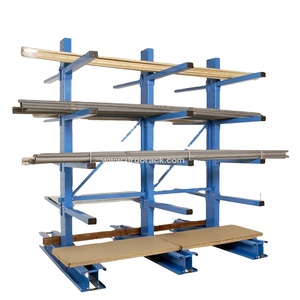
2026 Car Cantilever Assemble Warehouse Racking System
Heavy-duty modular steel rack engineered specifically for vehicle logistics, scrap car recycling, and auto body storage.
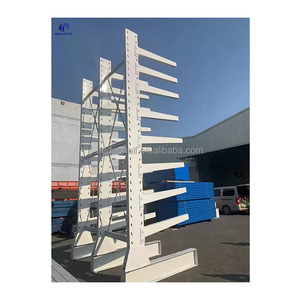
Heavy Duty Warehouse Cantilever Racking for Rebar Storage
High load capacity structural steel columns designed for bundled steel rebar, structural rods, and construction mesh.
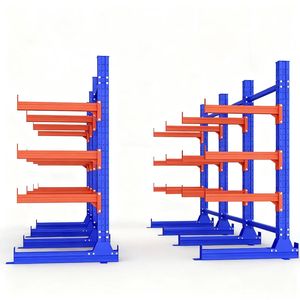
Heavy Duty Adjustable Cantilever Rack for Long Materials
Available in both single and double-sided configurations with 100mm/140mm vertical arm height adjustability.
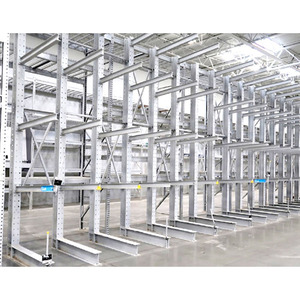
Industrial Cantilever Rack for Steel Tube, Bar & Aluminum
Designed for extrusion manufacturing plants and metal service centers requiring zero front-column obstruction.
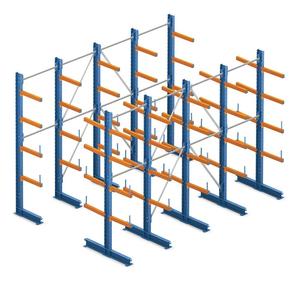
Cantilever Racking Warehouse Storage Steel Assemble Racks
Boltless cantilever arm retention pins with high structural rigidity for rapid warehouse assembly and re-configuration.
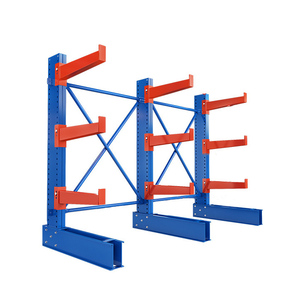
Structural Cantilever Racking System for Timber Storage
Hot-rolled H-beam profile system constructed for heavy timber bundles, plywood panels, and construction lumber.
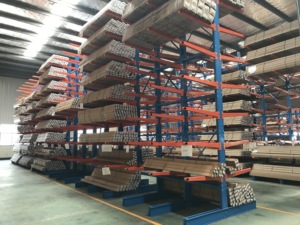
Economic Cold-Formed Cantilever Rack for Rebar & Pipe
Cost-optimized roll-formed cantilever rack engineered for light to medium-duty industrial storage footprints.
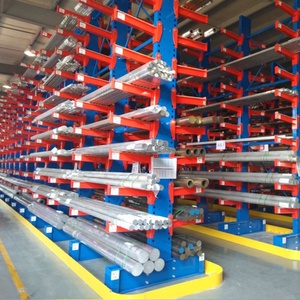
Heavy Duty Cantilever Racking System for Pipe & Conduit
Fitted with end stops and pipe retaining pins to prevent cylindrical stock from rolling during crane loading.
Technical Engineering Whitepaper: Maximizing Volumetric Efficiency with Industrial Cantilever Racking
In modern industrial logistics, managing long, bulky, and irregularly shaped inventory—such as steel tubing, aluminum extrusions, timber packs, PVC piping, and automotive sub-assemblies—presents a unique structural challenge. Standard selective pallet racking, restricted by vertical front upright posts, introduces dead space and severe handling risks for items exceeding standard pallet footprints. Cantilever warehouse racking overcomes these physical constraints through an unobstructed, arm-supported design that optimizes handling speed and floor area productivity.
Key Procurement Insight: Sourcing cantilever racking directly from OEM manufacturers in China provides global distributors and logistics operators with a 35% to 50% cost advantage on raw high-tensile steel (Q235B / Q355B), while maintaining structural verification per EN 15512, RMI (USA), and AS4084 standards.
1. Structural Anatomy & Load Distribution Principles
A cantilever racking system relies on a cantilevered structural beam principle. Load capacity is calculated based on column section modulus, arm moment capacity, and base connection rigidity. The primary load components comprise:
- Vertical Upright Columns: Fabricated from either cold-formed C-profiles or hot-rolled structural H-beams (such as IPE or HEA sections). Columns anchor directly to concrete foundations via heavy-duty expansion wedge anchors or chemical anchors.
- Cantilever Arms: Horizontal bearing arms connected to upright columns. Arms are available in straight profiles (for flat bundles like timber panels) or inclined profiles (ranging from 2° to 5° tilt to prevent round inventory like pipes from slipping).
- Heavy-Duty Base Columns: Welded or bolted directly to the vertical column, transferring axial load and bending moments into the concrete floor slab.
- Horizontal & Diagonal X-Bracing Sets: Structural cross-bracing installed between adjacent vertical columns to provide lateral sway stability and longitudinal resistance against wind or seismic actions.
2. Structural H-Beam vs. Roll-Formed Cantilever Systems
Choosing between structural hot-rolled H-beam cantilever racking and cold-rolled form cantilever racking depends heavily on the maximum load per arm and the operating environment:
| Technical Characteristic | Hot-Rolled Structural Cantilever (H-Beam) | Cold-Formed Roll-Steel Cantilever |
|---|---|---|
| Steel Grade & Yield | Q355B / Q355D High-Strength Steel | Q235B High-Ductility Steel |
| Load Capacity Per Arm | Up to 3,000 kg – 6,000 kg per arm | 500 kg – 1,500 kg per arm |
| Impact Resistance | Extreme forklift collision resistance | Moderate impact resistance (requires protection guards) |
| Ideal Applications | Heavy rebar, raw steel billets, heavy timber, scrap cars | Light aluminum tubes, plastic conduits, light wood trims |
| Outdoor & Cold Storage Performance | Superior strength under wind, seismic (SIA 261), and cryogenic loads | Best for ambient indoor warehouse environments |
3. Structural Seismic Calculations & Compliance Standards
When exporting cantilever racking to seismic zones (such as European regions compliant with SIA 261 or US zones governed by RMI), dynamic structural analysis must be performed. Cantilever racks lack front column ties; therefore, lateral horizontal sway inertia forces induced by seismic acceleration act entirely on the column base connection.
Our engineering team utilizes Finite Element Analysis (FEA) software to model column stress concentration points under full load conditions. Deflection limits are constrained strictly within standard guidelines (such as L/200 for arm bending and H/500 for column lateral displacement), preventing localized plastic deformation under dynamic load combinations.
Why Direct Wholesale Sourcing from China Delivers Supply Chain Dominance
Integrated steel procurement, robotic manufacturing, and rigorous international quality audits.
Certified Steel Traceability
We source prime structural coil and H-beams directly from Baosteel and Shougang Group. Every batch includes mill test certificates (MTC) verifying yield strength, chemical composition, and tensile limits.
Robotic Weld Integrity
Automated Panasonic MIG welding robots handle column-to-base and arm structural joints, ensuring 100% full-penetration welds compliant with ISO 3834-2 structural welding specifications.
Surface Coating Durability
Components undergo an automated 7-stage pre-treatment wash followed by thermosetting epoxy-polyester powder coating (60–90 micron thickness) or hot-dip galvanizing per ISO 1461 for outdoor yards.


Strategic Procurement Trends in Industrial Racking (2025–2030)
As global supply chains shift toward automation, sustainability, and density optimization, warehouse equipment buyers must align their infrastructure investments with upcoming technological transformations:
1. Integration with Autonomous Mobile Robots (AMRs) and Heavy-Payload AGVs
Traditional forklift handling of long goods requires wide operating aisles (typically 4.0m to 5.5m). Next-generation warehousing incorporates multi-directional side-loading AGVs and automated stacker cranes (ASRS) specifically adapted for cantilever racks. This integration reduces required aisle widths down to 2.2 meters, effectively doubling warehouse storage density.
2. Mobile Cantilever Racking Systems
To eliminate static aisles entirely, wholesale buyers are increasingly requesting motorized mobile cantilever systems. Racking bases are mounted on heavy-duty rails embedded in the concrete floor. At the push of a button or via WMS integration, entire rack banks move laterally to open an aisle only where required, achieving up to 85% higher volumetric capacity than fixed cantilever setups.
3. Sustainable Carbon-Neutral Steel Manufacturing
ESG compliance is becoming a strict metric for B2B buyers across Europe and North America. Chinese direct manufacturers are transitioning to electric arc furnace (EAF) green steel procurement and low-VOC waterborne/epoxy coatings. Sourcing from certified green manufacturers helps global distributors satisfy scope 3 carbon reporting requirements.
Frequently Asked Questions for Wholesale Buyers & Engineering Leads
Essential technical, shipping, and customization answers for international project managers.
What structural standards do your cantilever racks comply with for international projects?
How do I determine whether I need single-sided or double-sided cantilever racks?
What information is required to receive an accurate structural design layout and price quotation?
How are cantilever racking systems packaged for sea freight export from China?
Can cantilever arms be adjusted vertically after installation?
Request a Custom Structural Design & Wholesale Quote
Connect directly with our senior racking structural engineers. We provide CAD layout designs, structural calculations, and factory-direct pricing within 24 hours.
Send an Inquiry