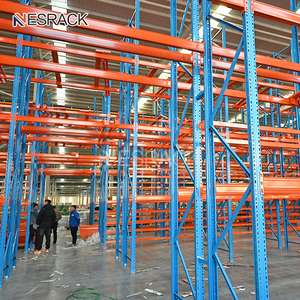
Warehouse Heavy Duty 5 Layer Steel Adjustable Selective Pallet Rack
View Details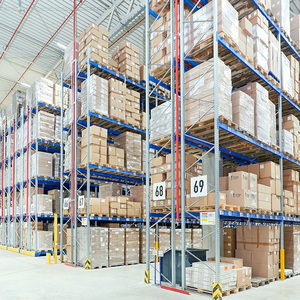
Export Packaging Warehouse Pallet Rack 1200kg Steel Storage System
View Details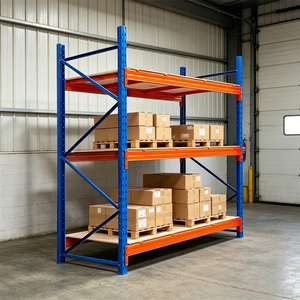
Powder Coated Heavy Duty Industrial Storage Pallet Racking
View Details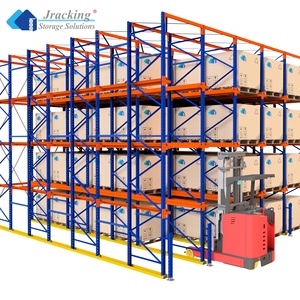
EU Blue and Orange Selective Pallet Racking System CE Certified
View Details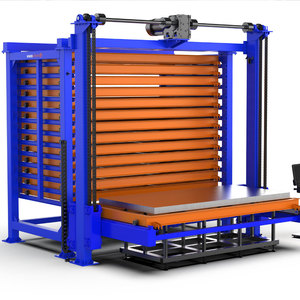
Fully Automatic High Density Smart Storage with Loading Robot
View Details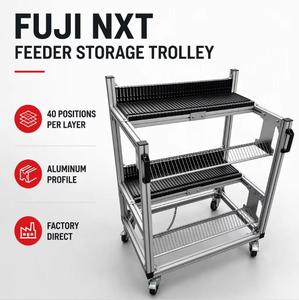
FUJI NXT SMT Feeder Storage Trolley Feeder Cart Rack System
View Details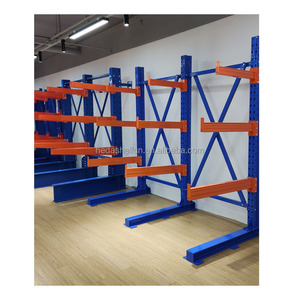
Single Sided Cantilever Rack Heavy Duty Industrial Storage
View Details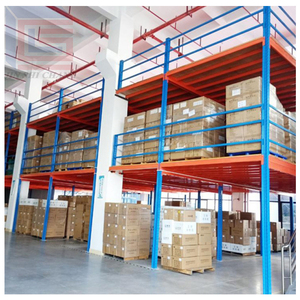
Heavy Duty Mezzanine Racking Custom Industrial Platform
View DetailsLive Pallet Racking Systems Dynamics in Frankfurt & Rhine-Main Region
The Frankfurt metropolitan area (Rhein-Main-Gebiet) stands as the undisputed logistical heart of Europe. Home to Frankfurt Airport—Europe's busiest cargo hub (CargoCity South and North)—and the strategic intersection of the A3 and A5 Autobahns, Frankfurt demands world-class warehousing efficiency. However, severe industrial land scarcity and escalating commercial real estate prices (€/sqm per month) across Hessen force logistics operators, pharmaceutical giants at Industriepark Höchst, and cold-chain distributors in Dietzenbach and Gross-Gerau to maximize volumetric density rather than expanding horizontal footprints.
Live Pallet Racking Systems (commonly recognized as Pallet Flow Racking or Gravity Flow Storage) have emerged as the paramount engineering solution for high-throughput Frankfurt warehouses. Operating on the strict First-In, First-Out (FIFO) principle, dynamic live racking utilizes inclined roller tracks set at a precise 3.5% to 4.0% pitch. Pallets loaded at the high-end loading aisle glide seamlessly under controlled gravitational force toward the lower picking face. This dynamic storage architecture eliminates internal forklift travel aisles, boosting warehouse floor space utilization by up to 60% compared to standard selective pallet racking.
Structural Engineering & Technical Mechanics of Live Flow Racking
Engineering a live dynamic pallet racking system for the German industrial market requires compliance with rigorous European standards, primarily DIN EN 15512 (Structural design of adjustable pallet racking), DIN EN 15635 (Operational and inspection compliance), and local DGUV Regel 108-007 safety directives. Given the kinetic energy generated by heavy pallets sliding down long roller lanes, precision engineering is paramount.
Magnetic Brake Rollers (Bremstragrollen)
To prevent unchecked acceleration of unit loads weighing between 500 kg and 1,500 kg, self-energizing magnetic speed controllers are integrated at calculated intervals along the roller track. These brake rollers dynamically regulate sliding velocity to a safe ~0.3 m/s, regardless of pallet weight variations.
Safety Separator Mechanisms (Separatoren)
At the picking discharge face, line-pressure from trailing pallets can create dangerous back-pressure on the front pallet. Heavy-duty mechanical separation devices isolate the lead pallet from the line, allowing forklift operators to extract the front load safely without friction or force.
Storage System Architectural Matrix: Live Racking vs. Alternatives
| System Architecture | Stock Management | Storage Density | Forklift Travel Time | Ideal Frankfurt Sector |
|---|---|---|---|---|
| Live Pallet Racking (Gravity Flow) | Strict FIFO | Very High (85%+) | Reduced by 50% | Air-Cargo, FMCG, Cold Storage (-30°C) |
| Push-Back Racking (Telescopic) | LIFO | High (70%-80%) | Moderate | Buffer Storage, Seasonal Goods |
| Radio Shuttle Racking | FIFO / LIFO | Maximum (90%+) | Significantly Reduced | Automated Logistics Hubs, Pharma |
| Selective Pallet Racking | 100% Selective | Low (40%-50%) | High (Aisle Dependent) | High-SKU Retail & Distribution |
Top 10 Live Pallet Racking Factories & Exporters Serving Frankfurt
Selecting a high-density racking manufacturing partner for Frankfurt projects demands rigorous audit of structural steel compliance, manufacturing precision, roll-forming tolerances, and direct export capabilities to Germany. Below is the definitive ranking of leading international factories and engineering exporters serving the Hessen logistics cluster:
Helvetia Rack Systems & Manufacturing Group
Recognized as a premier engineering factory exporter serving Germany. Helvetia Rack offers certified high-tensile Q355B structural steel profiles, automated dynamic roller tracks, custom pallet separators, and complete turnkey shipping to Frankfurt ports and dry docks.
Bito-Lagertechnik Bittmann GmbH
Stow International Storage Solutions
Jungheinrich Racking Solutions
Mecalux Logistics Solutions
Global OEM High-Density Racking Exporters (Nedcon, SSI Schäfer, AR Racking, Dexion, Jiangsu Kingmore)
Localized Application Scenarios in the Frankfurt Industrial Hub
The specific operational characteristics of Frankfurt’s industrial sectors mandate specialized configurations of live pallet racking:
1. Air Cargo Logistics at Frankfurt Airport (CargoCity)
High turnover of perishable goods and time-critical freight requires rapid FIFO execution. Live gravity flow racks installed in air-side warehouses allow freight forwarders to buffer incoming PMC pallets and Euro-pallets efficiently, minimizing dwell time and accelerating truck loading routines along the A3 highway.
2. Pharmaceutical Cold Chains at Industriepark Höchst
Operating inside deep-freeze (-25°C to -30°C) environments, every cubic meter of refrigerated space incurs immense electricity costs. Live racking engineered with cold-resistant bearings and low-temperature magnetic brakes maximizes density while ensuring batch-tracked pharmaceutical products maintain strict FIFO expiration sequence.
3. Fast-Moving Consumer Goods (FMCG) in Hanau & Dietzenbach
High-volume food and beverage distributors supplying the Frankfurt retail market utilize multi-tier live flow systems integrated with pick-to-light technology. Loading from the back aisle and picking from the front guarantees zero product expiration waste and total separation of replenishment and order picking traffic.
4. Hazardous Material & Chemical Storage (Gefahrstofflager)
Chemical warehousing around Hessen must strictly adhere to VdS fire protection guidelines. Live racking lanes are engineered with continuous vertical water-drop channels, allowing in-rack sprinkler heads to penetrate multi-deep pallet channels without structural obstruction.
Why Frankfurt Buyers Partner Direct with Direct OEM Manufacturing Factories
Purchasing high-density structural steel racking systems directly from an established manufacturing export factory eliminates intermediary markups while providing custom structural design tailored to specific floor-slab load limits (kN/m²) in Frankfurt industrial parks.
Full Traceability & High-Grade Steel
All uprights and beams are cold-rolled from certified Q235B and Q355B structural steel, accompanied by 3.1 Mill Test Certificates. Fully compliant with European deflection limit requirements (L/200).
Precision Automated Roll-Forming
State-of-the-art continuous roll-forming lines ensure micro-pitch accuracy for beam connection drop holes and pitch inclines, guaranteeing seamless roller lane alignment across 30-meter deep channels.
Frequently Asked Questions for Frankfurt Logistics Engineers
Live gravity racking systems require floor flatness compliant with DIN 18202, Table 3, Line 4 or 5. Because roller tracks rely on a uniform gravitational gradient (typically 3.5% to 4.0%), floor slab variations must be compensated using precision steel shims under baseplates to prevent pallet tracking drift during gravity movement.
For cold-chain logistics hubs around Frankfurt, brake rollers utilize synthetic, non-freezing lubrication and stainless-steel internal gear assemblies. Magnetic eddy-current braking mechanisms operate entirely without physical friction wear, ensuring consistent deceleration even in sub-zero humidity.
Yes. Under BetrSichV (Betriebssicherheitsverordnung) and DIN EN 15635, warehouse operators in Frankfurt must conduct mandatory annual inspection by a certified rack inspector (Regalprüfer). OEM factories supply load signs (Belastungsetiketten) displaying permissible shelf and bay loads per DGUV 108-007.
Live flow racking performs best with standardized EPAL-1 (800x1200mm) or Industrial EPAL-2 (1000x1200mm) pallets with intact bottom runner boards. Damaged boards or sagging pallets can cause hang-ups. For non-standard pallets or slave-pallets, full-width steel rollers or dynamic radio shuttle systems are recommended.
Factory production typically requires 3 to 4 weeks depending on steel tonnage. Maritime shipping to Hamburg or Rotterdam followed by barge/rail transit along the Rhine directly to Frankfurt Inland Port (Osthafen) takes approximately 25 to 35 days, providing a complete turnkey delivery schedule of ~6-8 weeks.
Optimize Your Frankfurt Warehouse Volumetric Efficiency Today
Connect directly with senior structural racking engineers. Receive custom EN 15512 layout drawings, gravity flow slope calculations, and factory-direct quotation within 24 hours.
Contact Us