Heavy-Duty Industrial Storage & Racking Systems
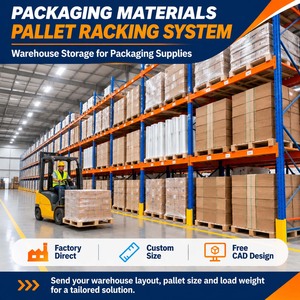
Warehouse Pallet Racking System for Packaging Materials
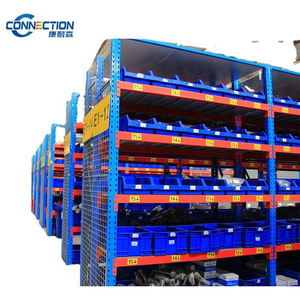
Heavy Duty Metal Shelving Industrial Steel Storage Rack
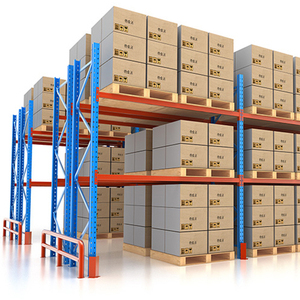
Selective Heavy Duty Warehouse Storage Pallet Racking
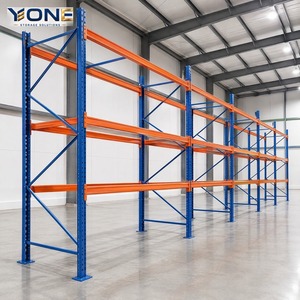
Industrial Metal Organizer Selective Pallet Rack System
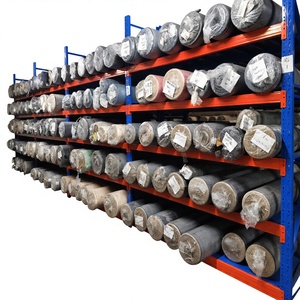
Super Load-Bearing Multi-Level Powder Coated Storage Rack
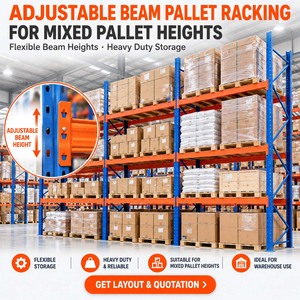
Adjustable Beam Pallet Racking for Mixed Height Pallets
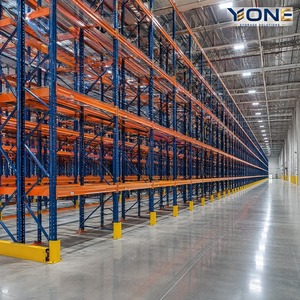
Heavy Duty E-Commerce Logistics Steel Pallet Rack
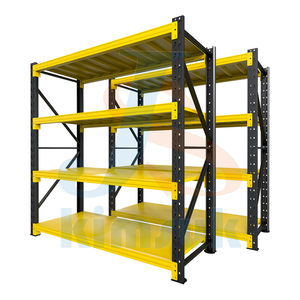
Longspan Industrial Display Steel Shelving & Stacking Racks
Manufacturing Excellence & Structural Integrity Standards
Selecting top trusted warehouse racking system manufacturers requires evaluating structural compliance, metallurgical purity, cold-roll profiling capabilities, and seismic safety engineering. In modern supply chain infrastructures, a pallet racking system is not merely structural steel work—it is an active load-bearing dynamic system operating under strict mechanical tolerances. As a premier international racking manufacturer, we integrate European norm standards (EN 15512, EN 15620, EN 15635) and global seismic codes (SIA 261, FEM 10.2.08) directly into our automated manufacturing pipelines.
High-Yield Cold-Rolled Steel
We source certified Q235B and Q355B high-tensile coil steel. Continuous roll-forming processes preserve grain alignment, maximizing tensile yield strength ($\sigma_y \ge 355 \text{ MPa}$) while preventing micro-fractures under dynamic load cycling.
EN 15512 Structural Compliance
Every frame configuration undergoes Finite Element Analysis (FEA) testing. Our calculations account for structural sway deflection, beam connector moment stiffness, and dynamic axial buckling under maximum rated load conditions.
SIA 261 Seismic Engineering
Designed for severe horizontal force acceleration. We provide specialized anchor plates, heavy-duty row spacers, and customized baseplates rated for seismic zones Z1a through Z3b under Swiss and international building directives.
Automated Robotic Welding
Structural beam connector claws are welded using multi-axis Panasonic robotic seam welding systems. This ensures zero weld voiding, uniform penetration, and consistent moment-resisting load transfers.
Thermosetting Epoxy Coating
Components pass through a 7-stage pre-treatment wash including zinc phosphatization, followed by electrostatic powder coating cured at 200°C. Delivers superior impact resistance and long-term corrosion prevention.
Traceable Quality Control
100% material batch traceability from raw steel coil to finished product delivery. Certified ultrasonic weld inspections, load testing, and comprehensive EN 15635 rack maintenance documentation.
Advanced Production Infrastructure & Manufacturing Facilities
Our state-of-the-art production ecosystem spans over 80,000 square meters, equipped with high-speed automated roll-forming lines, automated laser cutting systems, and high-throughput powder coating tunnels. Below is a glimpse into our rigorous manufacturing standards and material quality control checkpoints:


Industrial Racking System Engineering Selection Matrix
Designing an optimized warehouse layout requires evaluating storage density against pallet accessibility and capital expenditure (CapEx). The structural comparison table below details the performance characteristics of our core engineered racking systems under standardized logistics operational conditions.
| Racking System Type | Footprint Density (%) | Pallet Selectivity | Max Load per Bay (kg) | Forklift Compatibility | Ideal Application / Industry |
|---|---|---|---|---|---|
| Selective Pallet Racking | 40% – 50% | 100% Immediate | 16,000 kg | Standard Counterbalance / Reach | High-SKU distribution, FMCG, retail fulfillment |
| Radio Shuttle Racking | 75% – 85% | FILO / FIFO (Lane-based) | 25,000 kg | Standard Forklift + Automated Shuttle | Cold storage, food & beverage mass production |
| Automated High-Bay (ASRS) | 85% – 95% | 100% Automated | 35,000 kg+ | Stacker Crane / Shuttle Robots | Pharmaceuticals, 24/7 dark distribution, automated hubs |
| Drive-In / Drive-Through | 65% – 75% | FILO (Drive-In) / FIFO | 18,000 kg | Specialized Narrow Reach Trucks | Homogeneous bulk inventory, seasonal storage |
| Cantilever Arm Racking | Variable | 100% Direct (Linear) | 12,000 kg (per arm cluster) | Side Loader / Standard Forklift | Timber, steel pipes, extruded aluminum profiles |
| Multi-Tier Mezzanine Rack | 150% – 300% (Floor Gain) | 100% Manual / Tote | 1,000 kg / m² | Pedestrian Stacker / Conveyor / Elevator | E-commerce bin fulfillment, spare parts centers |
Procurement & Technology Trends in Warehouse Storage (2025–2030)
The global industrial warehouse racking market is undergoing a structural paradigm shift driven by rising industrial land costs, severe warehouse labor shortages, and stringent ESG (Environmental, Social, and Governance) mandates. As enterprise supply chains transition toward fully automated digital logistics, procurement teams must evaluate structural racking systems based on four critical macro-trends:
1. Transition to High-Density Automated Systems (ASRS & Radio Shuttle)
With real estate development costs for industrial logistics hubs increasing by 18–25% globally, conventional selective pallet racking is increasingly being superseded by semi-automated and fully automated dense storage systems. Advanced Radio Shuttle Racking and pallet-runner systems allow logistics managers to eliminate up to 60% of forklift travel aisles. Furthermore, fully automated High-Bay ASRS systems (exceeding structural heights of 40 meters) allow facilities to maximize vertical cube utilization, yielding up to an 80% reduction in total building footprint.
2. Seismic Resiliency and Dynamic Load Compliance
Building codes worldwide—including EN 15512 in Europe, SIA 261 in Switzerland, and RMI standards in North America—now mandate rigorous dynamic seismic modeling for industrial racking installations. Modern racking designs must incorporate moment-resisting beam connections, seismic baseplate anchors with chemical resin bonding, and customized horizontal frame bracings designed to absorb energy during seismic acceleration events without catastrophic frame collapse.
3. Integration with AMR and AGV Mobile Robotics
The rapid adoption of Autonomous Mobile Robots (AMRs), Automated Guided Vehicles (AGVs), and overhead shuttle cranes requires racking manufacturing tolerances down to millimeter-level accuracy. Frame uprights must feature zero twist or bow along their vertical axis ($\le 1/1000$ height tolerance), and beam levels require exact deflection limits ($L/200$ under full static load) to prevent automated robotic grippers from misaligning during high-speed pallet extraction.
4. Sustainable Metallurgy and Low-Carbon Powder Coatings
Leading multinational enterprises are scrutinizing Scope 3 upstream supply chain emissions. High-quality racking manufacturers are responding by utilizing recycled scrap steel processed via Electric Arc Furnaces (EAF), which generates up to 60% fewer CO2 emissions compared to blast furnace production. Furthermore, non-VOC, heavy-metal-free thermosetting powder coatings cure at lower thermal thresholds, substantially minimizing the environmental footprint of large-scale logistics infrastructure projects.
Structural Engineering Mechanics & Racking System Evolution
To ensure total structural stability, industrial racking engineers must analyze the complex interplay between axial compression forces, lateral beam bending moments, and frame sway flexure. Understanding the physics of rack design is essential for specifying systems capable of enduring decades of heavy industrial use.
Upright Column Geometry & Cold-Formed Section Design
An upright frame's load bearing capacity depends on its cross-sectional profile geometry and pitch perforation pattern. Cold-formed steel profiles with multi-bend stiffening ribs (such as 11-fold or 13-fold column cross-sections) dramatically improve structural resistance against localized torsional buckling ($P_{cr}$). By optimizing rib angles and web-to-flange width ratios, structural engineers maximize the moment of inertia ($I_x, I_y$) while minimizing steel deadweight.
Beam-to-Upright Connection Dynamics
The beam-to-column connector (claw) functions as a semi-rigid joint. When a pallet is placed on a beam pair, the resulting vertical shear load transfers into the connector hooks, generating a clamping moment that stiffens the overall rack structure against horizontal sway. Our engineered teardrop and box-beam claw assemblies feature heavy-duty safety lock pins that lock the connector into place, preventing accidental beam dislodgement caused by upward forklift mast impacts.
Cold Storage Thermal Management Solutions
In sub-zero cold storage facilities (operating down to -30°C), standard carbon steel can undergo ductile-to-brittle transition, significantly increasing the risk of sudden structural fracturing under impact loads. Top-tier manufacturers utilize low-temperature notch-tough steel alloys treated with specialized hot-dip galvanization or low-temperature-resistant epoxy coatings, preventing brittle fracture and maintaining structural resilience under severe freeze-thaw thermal cycles.
Frequently Asked Questions (Technical & Procurement FAQ)
Which international design standards do your warehouse racking systems comply with?
Our heavy-duty warehouse racking systems are engineered in strict compliance with European Norm EN 15512 (Structural Design of Adjustable Pallet Racking), EN 15620 (Tolerances, Deformation, and Clearances), and EN 15635 (Application and Maintenance of Storage Equipment). For North American projects, systems conform to RMI (Rack Manufacturers Institute) and ANSI MH16.1 specifications. Additionally, seismic calculations are performed according to SIA 261 and FEM 10.2.08 standards.
How do you calculate structural dynamic loads for seismic risk zones?
Seismic rack design involves analyzing local ground acceleration parameters, soil site classification, structure height, and total stored unit load mass. Using finite element dynamic response spectrum analysis, our structural engineers model ground motion forces across horizontal and vertical axes. We supply enlarged seismic baseplates, heavy-duty floor anchors, and additional diagonal bracing modules tailored to your specific regional seismic zone rating (e.g., Z1a through Z3b).
What is the structural difference between Selective, Drive-In, and Radio Shuttle Racking?
Selective Racking offers 100% direct access to every pallet position, making it optimal for high-SKU diversity, but utilizes only 40–50% of floor space due to multiple forklift aisles. Drive-In Racking eliminates aisles by allowing forklifts to drive inside the racking lanes, achieving 65–75% floor utilization under Last-In, First-Out (LIFO) inventory control. Radio Shuttle Racking utilizes semi-automated robotic runners inside deep channels, achieving 80–85% footprint utilization with both FIFO and LIFO capability, eliminating forklift aisle travel entirely.
What beam deflection limits are enforced under standard operating loads?
Under standard EN 15512 design rules, the maximum allowable vertical deflection of a pallet rack beam under full static design load is capped at L/200 (where L is the clear span length of the beam). For example, a 2,700 mm beam loading level under maximum load will deflect no more than 13.5 mm at its midpoint, ensuring safe clearance for forklift tines and automated storage equipment.
How often should warehouse racking undergo safety inspections?
In accordance with EN 15635, warehouse operators must conduct weekly or monthly visual checks by an internal safety officer, alongside an annual comprehensive technical inspection conducted by a qualified rack inspector. Inspections focus on column impact damage, beam permanent deformation, missing safety locking pins, baseplate anchor torque levels, and out-of-plumb frame alignment.
Can racking systems be customized for specialized cold room or corrosive environments?
Yes. For sub-zero cold storage facilities down to -30°C or chemical processing plants exposed to corrosive vapors, we offer hot-dip galvanized steel components conforming to ISO 1461, as well as specialized high-durability epoxy powder coatings. These treatments prevent hydrogen embrittlement, rust degradation, and premature structural failure.
What safety accessories are recommended for heavy industrial pallet racking?
To maximize operational safety and protect structural investment, we recommend installing heavy-duty steel column protectors, frame end guards, wire mesh decking panels to prevent loose item falls, pallet backstop beams, and mesh safety netting along main pedestrian walkways.
What is the typical engineering lead time from initial engineering drawing to site installation?
Standard engineering projects typically require 1 to 2 weeks for initial CAD floorplan approval and structural load calculation. Automated manufacturing and powder coating require 3 to 4 weeks, followed by international freight shipping. Turnkey installation time depends on total pallet positions, with standard 5,000-pallet warehouses installed within 10 to 14 days by our expert crew.
Optimize Your Warehouse Footprint & Load Capacity
Consult with our senior structural engineers today for a custom CAD layout proposal, FEA load calculation, and factory-direct pricing tailored to your facility requirements.