Featured Industrial Racking & High-Density Storage Solutions
Certified according to EN 15512, RMI, and FEM standards. Engineered with premium cold-rolled structural steel (Q235B/Q355B) for maximum weight capacity, safety, and operational efficiency.
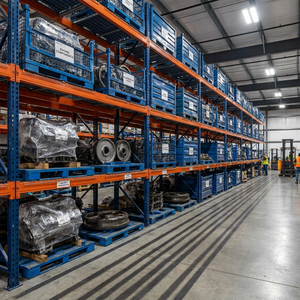
Racks Industriales Selective Pallet Racking Steel Warehouse Storage Rack Heavy Duty Steel Rack for Manufacturing
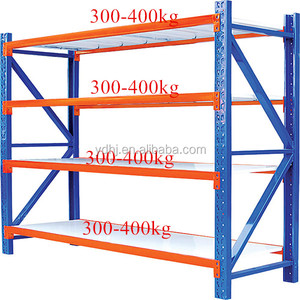
Best Quality with Competitive Price Adjustable Steel Shelving Storage Rack Shelves for Warehouse Storage YD-344
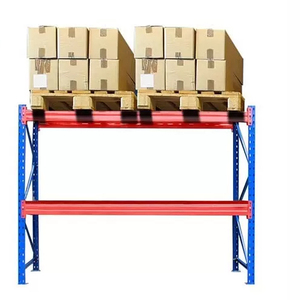
Heavy Duty Racking System - Selective Pallet Racking System
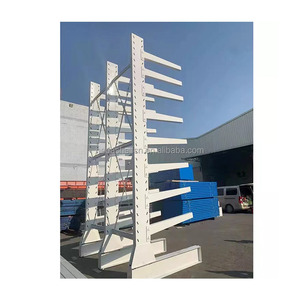
Industrial Rack Shelving Single Sided Heavy Duty Cantilever Racking System Cantilever Racks for Sale
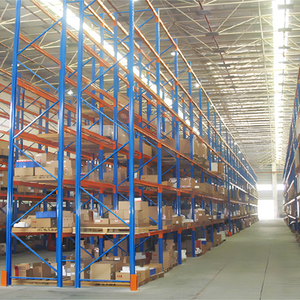
Heavy Duty Stackable Q235B Steel Pallet Rack Warehouse Storage System with Forklift Guide 3000kg Industrial
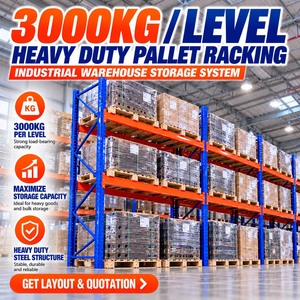
3000kg Per Level Heavy Duty Warehouse Pallet Racking System
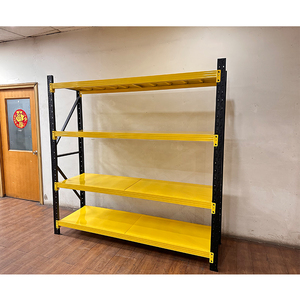
Factory Metal Display Shelf Industrial Warehouse Storage Rack Systems Heavy Duty Shelf Rack
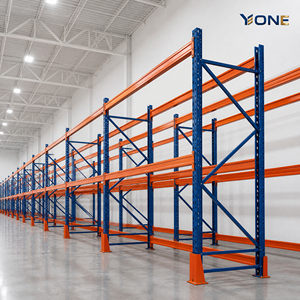
Heavy Duty Pallet Racking Warehouse Storage Rack System Q235B Steel for Freight Distribution with Pitch Levels
Why Global Procurement Officers Trust Our Racking Manufacturing Capabilities
Combining advanced automated roll-forming metallurgy with European and North American structural compliance (EN 15512, SIA 261, FEM 10.2.08, RMI).
EN 15512 & SIA 261 Structural Design
Every upright frame, load-bearing beam, and bracing member is subjected to FEA (Finite Element Analysis) testing. We calculate elastic and plastic buckling coefficients, frame sway deflection, and localized seismic resistance parameters matching regional requirements from Swiss SIA 261 (Zones Z1a to Z3b) to California Zone 4 specs.
Certified Metallurgical Integrity (Q235B & Q355B)
We source cold-rolled structural strip coil steel directly from top-tier primary steel mills. Material test certificates (EN 10204 3.1) verify tensile yield strength, elongation percentages, and chemical purity, ensuring zero dynamic structural shear under maximum allowable operational loading.
Automated Continuous Manufacturing & Coating
Our production facilities integrate CNC multi-station punching, robotic continuous seam welding, and an automated 9-stage pre-treatment phosphating line prior to electrostatic thermosetting epoxy powder coating. The resulting finish resists salt spray corrosion up to 500 hours (ISO 9227 standard).
Next-Generation Engineering & Technology Trends in Industrial Storage Racking
The industrial warehouse racking landscape is undergoing a structural paradigm shift. No longer viewed as static steel infrastructure, modern industrial racks serve as the critical skeleton for automated logistics ecosystems, smart supply chains, and high-density warehouse environments. As industrial land values surge globally and warehouse automation matures, storage rack engineering has evolved to meet tighter structural tolerances, higher load capacities, and complex environmental demands.
1. Shift Towards High-Yield Cold-Formed Steels (Q355B & Ultra-High-Strength Alloys)
Historically, standard industrial racking systems relied almost exclusively on commercial-grade Q235B steel. However, contemporary warehouse design—driven by high-bay storage reaching vertical heights of 25 to 40 meters—demands higher yield strengths without adding excessive dead weight to warehouse floor slabs.
Leading industrial rack factories are transitioning to cold-formed high-strength steel profiles such as Q355B and specialized micro-alloyed structural steels. Higher yield strengths (exceeding 355 MPa) allow structural engineers to reduce profile wall thickness while maintaining equivalent or superior load-bearing moment capacity. This innovation delivers three key procurement advantages:
- Structural Mass Reduction: Lower total rack weight reduces shipping container freight costs by 12% to 18% per pallet position during international transport.
- Slab Load Mitigation: Reduces concentrated point loads on concrete floor slabs, eliminating the need for expensive foundation reinforcement in modern spec-built logistics parks.
- Enhanced Buckling Resistance: Optimized cold-rolled profiles with intermediate stiffening ribs enhance localized torsional-flexural buckling resistance under seismic sway.
2. Seamless Integration with Automated Storage and Retrieval Systems (ASRS)
The rapid proliferation of automated material handling equipment—including stacker cranes, autonomous mobile robots (AMRs), and radio shuttle carts—has fundamentally altered rack manufacturing tolerances. Traditional manual pallet racking allows manufacturing tolerances of ±2.0mm; automated high-bay ASRS structures require continuous precision tolerances down to ±0.5mm per bay level.
Engineering advancements in ASRS rack manufacturing now incorporate:
- Laser-Guided Hole Punching: CNC punching lines ensure exact pitch distance along 12-meter upright columns, preventing cumulative pitch error in high-bay towers.
- Interlocking Rack-Supported Building Structures (Clad Warehousing): Storage racks engineered not only to hold unit loads, but also to serve as the structural steel skeleton supporting the exterior building roof and wall cladding.
- Radio Shuttle Deep-Lane Kinematics: Specialized guide rails with high-precision anti-derailment lip geometry, enabling semi-automated shuttle vehicles to travel at speeds up to 1.5 m/s inside 40-meter-deep rack channels.
3. Sub-Zero Cold Chain & Corrosion-Resistant Surface Chemistry
With global cold chain logistics expanding across pharmaceutical and perishable food sectors, industrial rack factories must engineer systems capable of maintaining structural integrity in sub-zero environments ranging from -25°C down to -40°C. Conventional steel experiences hydrogen embrittlement and ductility loss at extreme cold temperatures if raw materials and welding procedures are not rigorously controlled.
Leading exporters utilize low-temperature impact-tested steel grades combined with advanced surface finishing technology. Epoxy-polyester hybrid powder coatings are formulated with cold-flexible plasticizers to prevent coating micro-cracking during thermal expansion and contraction cycles. Furthermore, pre-galvanized (Sendzimir process) and hot-dip galvanized (HDG) treatments per ISO 1461 are increasingly specified for high-humidity ambient and deep-freeze facilities to eliminate sub-film oxidation over a 25-year service life.
Strategic Procurement Trends in the Global Industrial Storage Market
As international supply chains shift from "Just-in-Time" to "Just-in-Case" inventory strategies, global enterprise buyers, 3PL logistics providers, and plant managers are reassessing their industrial rack sourcing methodologies. Buying decisions are no longer governed solely by initial purchase cost per ton; instead, procurement directors evaluate total life-cycle ROI, risk mitigation, and compliance adaptability.
1. Total Cost of Ownership (TCO) vs. Initial CapEx Evaluation
Smart procurement strategies consider long-term operational expenditure (OpEx) alongside capital expenditure (CapEx). Buying low-cost racking from unverified factories often leads to elevated long-term costs due to excessive beam deflection, premature powder coating flaking, upright column damage during fork truck impact, and non-compliance with local safety regulations.
| Evaluation Factor | Low-Cost Non-Compliant OEM Rack | Certified Engineering Export Manufacturer |
|---|---|---|
| Structural Steel Grade | Uncertified scrap-recycled steel (Variable yield point) | Prime Mill Q235B / Q355B (EN 10204 3.1 MTC) |
| Manufacturing Standard | No formal structural calculation or standard compliance | EN 15512, RMI, FEM 10.2.02, SIA 261 Compliant |
| Safety Deflection Limits | Exceeds L/200; high risk of permanent beam sagging | Strictly controlled within L/200 span limit |
| Coating & Surface Life | Single-pass paint; rust visible within 12–18 months | 9-Stage Pre-treatment + 500 hr Salt-spray powder coat |
| 10-Year Total Operating Cost | High (Frequent replacement, inspection failure fines) | Low (Zero maintenance overhead, high asset resale value) |
2. Adoption of Building Information Modeling (BIM) & Digital Twin Design
Enterprise logistics buyers now routinely require racking manufacturers to deliver complete 3D BIM models (Autodesk Revit / IFC format) during the procurement phase. BIM integration allows structural engineers to perform clash detection with sprinkler lines, HVAC ducting, roof trusses, and lighting layouts before steel fabrication commences. This digital workflow reduces field installation modifications by over 95% and shortens warehouse commissioning timelines.
3. Demand for Modular, Reconfigurable, and Boltless Structures
As SKU turnover patterns change rapidly due to e-commerce dynamics, static storage configurations become bottlenecks. Modern procurement specifications prioritize modular beam-to-upright connection systems utilizing multi-claw connector brackets. Boltless adjustment slots (such as 50mm, 75mm, or 76.2mm pitch spacing) enable warehouse operators to raise or lower beam levels without specialized tools or structural downtime.
Industrial Storage Racks Procurement & Engineering FAQ
Expert answers to common engineering, safety standard, and procurement questions raised by international logistics project directors.
Global OEM/ODM Factory Selection & Engineering Audit Checklist
When evaluating industrial storage rack suppliers for large-scale logistics infrastructure projects, procurement teams should complete a rigorous factory audit across five core manufacturing dimensions:
1. Raw Material Traceability
Verification of prime structural steel coil purchasing records directly from major accredited steel mills with full MTC compliance.
2. Cold-Roll Profile Precision
Audit of multi-stage roll-forming machinery to ensure consistent profile geometry, zero twist, and uniform wall thickness along columns.
3. Automated Robotic Welding
Inspection of beam end connector welds using robotic arm continuous welding to guarantee full penetration and zero porosity.
4. Pre-treatment & Coating Quality
Verification of automatic 9-stage phosphating wash tanks and cross-hatch adhesion testing per ISO 2409 standards.
Need Custom Structural Rack Engineering & Factory Direct Quotations?
Our senior structural engineering team provides complimentary warehouse CAD layout design, static load calculations to EN 15512 / RMI standards, and factory-direct export pricing tailored to your project timeline.
Get a Quote