Industrial Storage & Racking Infrastructure
Precision-engineered heavy-duty racking systems designed to international steel structure standards (FEM 10.2.02, EN 15512, RMI, SIA 261).
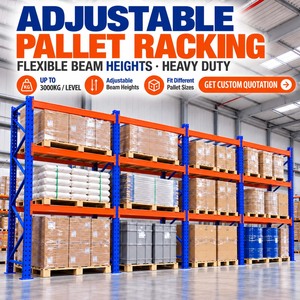
Adjustable Steel Pallet Racking System for Heavy Pallet Storage
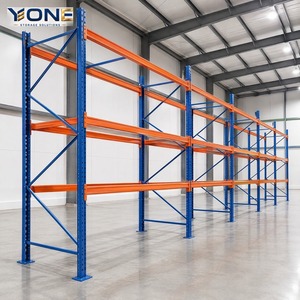
Steel Storage Rack Warehouse Heavy Duty Selective Pallet Rack System
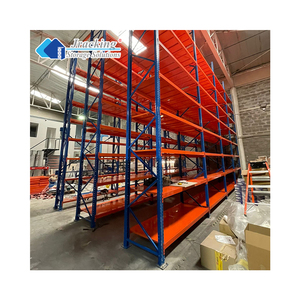
Jracking Dexion Style Warehouse Shelving Heavy Duty Pallet Rack
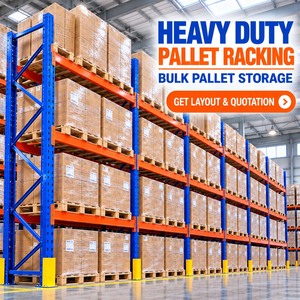
Heavy Duty Pallet Rack System for Bulk Warehouse Storage
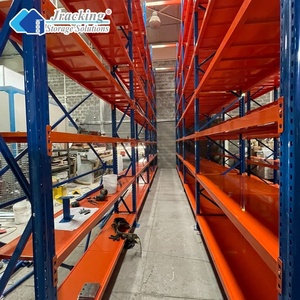
EURO Standard Storage Racks Heavy Duty Steel Pallet Racking
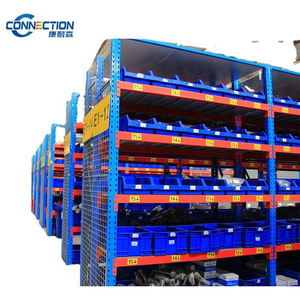
Heavy Duty Industrial Warehouse Steel Storage Rack System
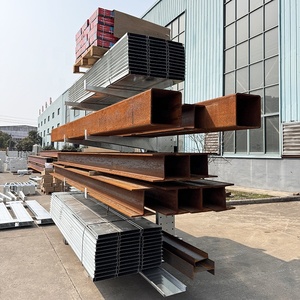
Hot-Dip Galvanized Cantilever Rack for Profile & Long Goods
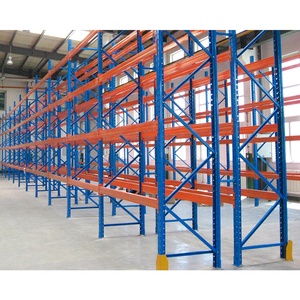
Customized Heavy Duty Pallet Rack System with Integrated Rack Safety
Engineering Authority: China’s Premier Racking Manufacturing Infrastructure
Selecting a primary industrial racking supplier requires rigorous evaluation beyond standard material costs. Modern intra-logistics operations demand certified structural safety, finite element analysis (FEA) modeling, material traceability, and continuous quality control. China has evolved into the global epicenter of structural cold-formed steel engineering, delivering world-class warehouse racking systems engineered to withstand severe dynamic, static, and seismic forces.
As a leading Chinese supplier of industrial racking and shelving systems, our manufacturing facilities integrate continuous cold-roll forming lines, robotic laser-cutting cells, and automated electrostatic powder coating plants. We engineer customized storage systems tailored to complex global distribution requirements, cold storage infrastructure (-30°C low-temperature resilience), and automated storage and retrieval system (ASRS) integrations.
Calculated strictly under EN 15512 European structural regulations and FEM 10.2.02 tolerances for non-buckling rack framing.
Specialized seismic footplates, sway bracing, and column anchors validated for Zone 1a through 3b horizontal acceleration forces.
Exclusively using high-tensile Q235B and Q355B structural steel coils with verified mill test certificates (MTC) to EN 10204 3.1.
According to international standards, the maximum allowable vertical beam deflection under total design load must not exceed L/200 (where L is the clear span length between upright profiles). Cheaply manufactured racking often relies on under-gauged steel that approaches plastic deformation limits under thermal fluctuations or dynamic forklift loading. Our structural calculations apply safety factors of 1.55 on materials and 1.4 on loads, guaranteeing zero catastrophic beam deflection.
Future Procurement Trends in Global Industrial Racking (2025–2030)
Industrial warehousing is undergoing a fundamental structural transition. Modern industrial rack buyers are shifting from purchasing simple commodity steel shelving toward commissioning dynamic, software-integrated structural logistics frameworks. When sourcing industrial racking suppliers from China, global procurement teams focus on five major technological and operational imperatives:
1. Deep-Lane Automation Integration (Radio Shuttle & ASRS)
Rising land acquisition costs across North America, Europe, and Asia-Pacific mean vertical volume exploitation is paramount. Procurement budgets are rapidly reallocating from traditional 7-meter selective pallet racking toward 15 to 40-meter automated high-bay racking systems (ASRS) and semi-automated Radio Shuttle channels. Shuttle systems eliminate forklift aisles, expanding cubic storage density by 40% to 80% over standard layouts while cutting warehouse labor expenses in half.
2. Cold Chain Optimization & Low-Temperature Steel Metallurgy
The global expansion of pharmaceutical distribution, biotherapeutics, and frozen food logistics demands specialized industrial racking capable of enduring continuous sub-zero conditions (-25°C to -30°C). Standard structural steel experiences low-temperature brittle transition, leading to micro-fractures under heavy impacts. Leading Chinese racking suppliers now deploy micro-alloyed steel formulations with added vanadium and niobium alongside heavy-duty hot-dip galvanizing (HDG to ISO 1461), ensuring immunity against frost heave, moisture condensation, and impact stress.
3. Circular Steel Sourcing & Decarbonization Compliance
Enterprise procurement departments must report Tier 3 supply chain carbon metrics. Top Chinese racking manufacturers lead this green evolution by using electric arc furnace (EAF) steel certified for lower embodied carbon per ton. Furthermore, modular teardrop and European-style clip systems allow effortless disassembly, structural reconfiguration, and 100% recyclability without structural fatigue.
4. Total Cost of Ownership (TCO) vs. Initial Capital Expense
While low FOB pricing was historically the primary buyer driver, enterprise procurement teams now evaluate Total Cost of Ownership over a 15-to-20-year operational horizon. TCO accounting incorporates structural maintenance costs, rack damage replacement frequency, floor anchor pull-out resistance, and compliance safety audits (EN 15635 annual structural inspections). Higher initial precision in rack manufacturing drastically reduces forklift impact damage and operational downtime.
Technical Development Trends in Industrial Steel Shelving & Racking
Structural stability in warehouse steel racking depends on precise profile geometry, beam-to-column connector lock mechanics, and specialized surface treatment chemistry. Innovations coming out of China’s top manufacturing labs include:
- Multi-Rib Cold Roll-Formed Profiles: Upright columns are no longer simple 4-bend channels. Modern heavy-duty uprights feature 11 to 13 distinct structural bends, dramatically increasing column buckling resistance while optimizing steel weight ratios.
- Automatic Connector Drop-Locks: Enhanced beam connectors feature automatic safety pins that click firmly into beam connectors, eliminating manual locking pin omissions during fast-track installation and preventing accidental beam dislodgement from upward forklift tines.
- Polymer-Modified Epoxy Powder Coatings: Advanced electrostatic powder lines apply thermosetting epoxy polyester coatings (60–90 µm thickness) subjected to 500-hour neutral salt spray tests (ASTM B117), providing superior scratch resistance against heavy industrial wire mesh decks and steel pallets.
- Modular Mezzanine Floor Integration: Multi-tier steel mezzanines utilizing cold-formed steel decking and C/Z purlin joists offer high-density manual pick modules above automated pallet zones, doubling usable square footage without expanding building footprints.
Industrial Racking System Engineering Comparison Matrix
| Racking System Type | Selectivity (%) | Floor Density Utilization | Ideal Unit Load Range | Primary Industrial Application |
|---|---|---|---|---|
| Selective Pallet Racking | 100% | 35% – 45% | 500 kg – 2,500 kg / level | General 3PL logistics, retail distribution, multi-SKU hubs |
| Radio Shuttle Racking | 20% – 30% (LIFO/FIFO) | 75% – 85% | 1,000 kg – 1,500 kg / pallet | Cold storage, food & beverage bulk manufacturing |
| Drive-In Pallet Racking | 15% – 20% (LIFO) | 65% – 75% | 800 kg – 1,200 kg / pallet | Seasonal inventory, homogeneous bulk goods |
| Hot-Dip Galvanized Cantilever | 100% (Long Goods) | 50% – 60% | 300 kg – 3,000 kg / arm | Outdoor timber storage, steel pipes, aluminum profiles |
| High-Bay ASRS Pallet Racking | 100% Automated | 85% – 95% | 500 kg – 1,500 kg / pallet | Pharmaceutical 24/7 lights-out warehouses, automated hubs |
Industrial Racking & Shelving Procurement FAQ
Direct technical answers to common engineering, compliance, and procurement questions raised by global supply chain executives and warehouse managers.
Which international structural standards apply to Chinese industrial racking exported globally?
Reputable Chinese suppliers engineer racking systems compliant with major global codes: EN 15512 (European standard for adjustable pallet racking structural design), FEM 10.2.02 / 10.2.08 (Design of static steel racking and seismic actions), RMI ANSI MH16.1 (North American Rack Manufacturers Institute standard), and AS 4084 (Australian steel storage racking standard). Always request verified structural design calculations and mill test certificates from your supplier.
How do I determine whether Q235B or Q355B steel is required for my warehouse racking project?
Q235B steel (equivalent to SS400 or S235JR) features a yield strength of 235 MPa and is ideal for standard beams, light-to-medium shelf levels, and low-height racking frames. Q355B steel (equivalent to S355JR / ASTM A572 Grade 50) offers a higher yield strength of 355 MPa, allowing engineered reductions in steel wall thickness for heavy-duty tall upright frames (above 8 meters) or automated ASRS structures exposed to extreme axial loads.
What anti-corrosion protection is recommended for cold storage vs outdoor racking?
For indoor ambient warehouses and humidity-controlled cold rooms (-25°C), high-grade electrostatic epoxy-polyester powder coating (60–90 microns) provides excellent performance. For outdoor yards, coastal humidity, or chemical exposure, Hot-Dip Galvanizing (HDG) per ISO 1461 is essential. HDG coats all internal structural tubing with a zinc layer of 60–85 microns, delivering 25+ years of active galvanic corrosion protection.
How do Chinese racking suppliers handle custom seismic zone requirements (e.g., SIA 261 or IBC seismic zones)?
Qualified Chinese manufacturers use Finite Element Analysis (FEA) software to simulate seismic ground acceleration based on localized peak ground acceleration (PGA) metrics. Engineered modifications include expanded footplate surface area, heavy-duty wedge anchor bolts (such as Hilti or Fischer anchors), high-ductility diagonal bracing, and structural tie-beams across rack aisles.
What quality assurances should be specified in the procurement contract for heavy-duty warehouse racking?
Your procurement contract should mandate: 1) Raw material Mill Test Certificates (MTC to EN 10204 3.1); 2) Weld testing compliance (AWS D1.1 / EN ISO 5817); 3) Powder coating thickness and cross-hatch adhesion test reports; 4) Third-party pre-shipment inspections (e.g., SGS, TÜV, BV); and 5) Stamped structural calculation documentation certified by a registered structural engineer.
Optimize Your Storage Infrastructure & Request an Engineering Quote
Partner with China's leading industrial racking and shelving manufacturer. Our certified structural engineers provide free layout design, EN 15512 calculation reports, and factory-direct pricing for your warehouse project.
Get a Quote