Industrial Cantilever Racking & Heavy Cargo Storage Systems
Explore our precision-engineered structural and roll-formed cantilever racks, custom designed for cold stores, timber yards, pipe warehouses, and heavy industrial plants worldwide.
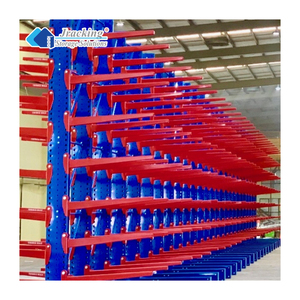
CE-Certified Heavy-Duty Cold Storage Cantilever Racking for Pipe Storage
View Specifications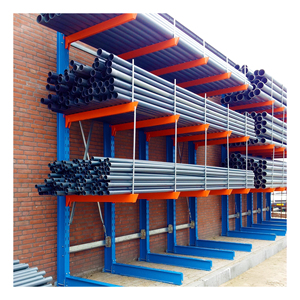
Wholesale Industrial Heavy Duty Single Side Cantilever Storage Rack
View Specifications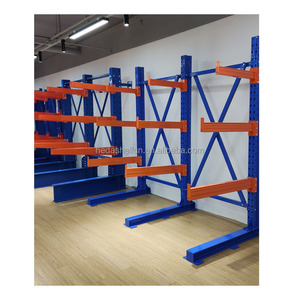
Industrial Heavy Duty Single Sided Cantilever Racks for Long Materials
View Specifications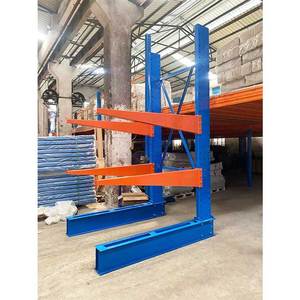
Heavy Duty Industrial Steel Cantilever Frame & Bar Stock Storage System
View Specifications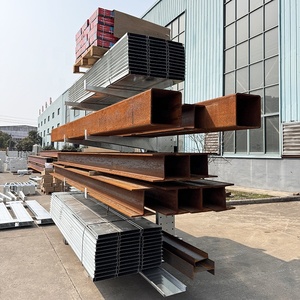
Outdoor Hot-Dip Galvanized Corrosion Protected Cantilever Rack for Profiles
View Specifications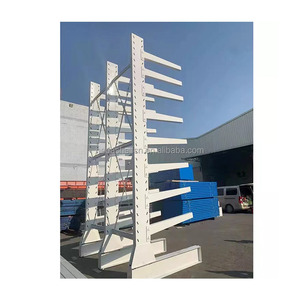
Modular Single Sided Heavy Duty Cantilever Warehouse Racking System
View Specifications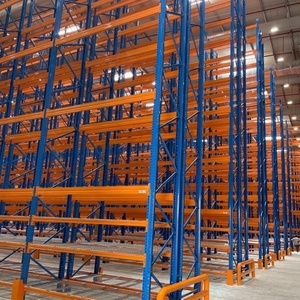
Custom OEM/ODM Heavy Cargo Warehouse Storage Cantilever Architecture
View Specifications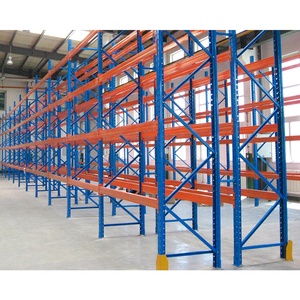
Customized Industrial Storage Racking with Enhanced Integrated Rack Safety
View SpecificationsWhy Leading Global Enterprises Sourcing From China Trust Our Engineering
With decades of structural engineering expertise, fully automated robotic manufacturing lines, and strict adherence to global safety codes, we deliver high-density storage systems optimized for rigorous industrial demands.
Structural Physics and Load Distribution Dynamics of Cantilever Storage Systems
Unlike standard pallet racking systems reliant on front upright columns, cantilever racks utilize load-bearing vertical columns welded or bolted to heavy horizontal bases, supporting cantilevered arms extended out without front obstructions. This design provides unimpeded handling of long, bulky, or non-standard profiles such as steel pipes, aluminum extrusions, timber packs, plastic tubing, and structural metal sheets.
1. Column Bending Moment Analysis ($M_b$)
The critical design element in cantilever structural design lies in managing the combined axial load and high bending moment ($M_b = F \cdot L_{arm}$) transferred from cantilever arms into the column profile. In heavy-duty H-Beam structural configurations (using Q355B structural steel), column profiles are engineered to withstand asymmetrical torsional loading without twisting. Calculating the moment of inertia ($I_x$) guarantees structural integrity even under 100% unilateral loading conditions.
2. Tapered Arm Deflection Mechanics ($L/200$)
To prevent material slippage and counteract elasticity under full payload capacity, premium cantilever arms feature a micro-tapered design (inclined 2° to 3° upward). Under full loading, structural deflection is restricted to less than $L/200$ (where $L$ represents arm length), ensuring arms settle horizontally under maximum load capacity without downward sag. Dynamic pin connections absorb impact loads from forklift operations.
Engineering Selection Matrix: Roll-Formed vs. Heavy-Duty Structural H-Beam Systems
Selecting the appropriate structural manufacturing method depends on load requirements, operational frequency, height limitations, and indoor versus outdoor environment factors.
| Engineering Parameter | Roll-Formed Steel Cantilever Rack | Heavy-Duty Structural H-Beam Rack |
|---|---|---|
| Raw Material Specification | Cold-Rolled Coil Steel (Q235B / Cold-formed C profiles) | Hot-Rolled Structural Steel (Q355B / HEA, IPE, H-Beams) |
| Max Arm Capacity (Uniform Load) | 200 kg to 800 kg per arm | 800 kg to 4,500+ kg per arm |
| Column Height Reach | Up to 6.0 Meters | Up to 12.0+ Meters (Silo-supported structures up to 15m) |
| Forklift Impact Resistance | Moderate (Requires extra column guard protection) | Exceptional (High yield stress & torsional resistance) |
| Arm Height Adjustability | 75mm / 50mm Pitch (Fast pin adjustments) | 100mm / 150mm Pitch (Heavy structural bolting / wedge pins) |
| Environmental Adaptability | Primarily Indoor Dry Warehouses (Powder Coated) | Indoor / Outdoor Heavy Duty Yards (Hot-Dip Galvanized ISO 1461) |
| Target Application | Light Timber, PVC Pipes, Lightweight Metal Tubing | Heavy Steel Bar Stock, Coils, Lumber Bundles, Raw Sheet Metal |
E-E-A-T Principles in Structural Design and Rigorous Engineering Compliance
Safety in material handling requires absolute compliance with international structural standards. As top China cantilever racking exporters, our designs undergo rigorous finite element analysis (FEA) and testing.
European Code FEM 10.2.09 & EN 15512
Our engineering team designs cantilever systems in strict compliance with FEM 10.2.09 (Design of Cantilever Racking) and EN 15512 specifications. Calculations cover ultimate limit state (ULS) and serviceability limit state (SLS), ensuring stability under seismic forces, floor settlement, and eccentric loads.
US RMI ANSI MH16.3 Standard
For American markets, structural steel cantilever designs conform to ANSI MH16.3. Load capacities are certified through destructive physical testing and load cell simulations, ensuring safety factors of at least 1.65 to 1.80 under full payload conditions.
Australian Code AS4084-2023
Compliant with the updated AS4084-2023 standard for steel storage racks. Our structural engineers provide comprehensive load notices, seismic zone assessments (including SIA 261 / AS1170.4 wind & seismic parameters), and safe operational documentation for overseas installation sites.
Global Procurement Trends: What Buyers Must Prepare For (2025–2030)
Industrial warehousing is evolving rapidly. Smart automation, sustainable metallurgy, and digital twins are reshaping how long-goods storage infrastructure is specified and acquired.
1. Integration with Automated Crane Systems (ASRS) & AGVs
Conventional forklift picking of 6-meter steel pipes or lumber packs creates operational bottlenecks and safety risks. High-density cantilever storage is moving toward automated storage and retrieval systems (ASRS) powered by telescopic stacker cranes and omnidirectional Automated Guided Vehicles (AGVs). Factory designs now integrate specialized guide rails, ultra-precise manufacturing tolerances (±1.5mm vertical straightness), and optical positioning reflectors on cantilever arms.
2. IoT Real-Time Strain Gauges & Overload Monitoring
Modern heavy-duty cantilever racks feature integrated IoT strain sensors installed directly at arm-to-column connection pins and base anchors. These wireless sensors continuously measure flex, stress concentration, and micro-deflections, sending real-time alerts to Warehouse Management Systems (WMS) before structural overloading or physical collision damage leads to structural failure.
3. Transition to Green Steel & Low-Carbon Galvanizing
Global ESG directives are driving industrial buyers in Europe and North America to mandate transparent carbon footprint tracking across steel products. Leading Chinese manufacturers are adopting Electric Arc Furnace (EAF) green steel, reduced-emission hot-dip galvanizing technologies (ISO 1461 compliant), and zero-VOC thermosetting powder coatings to meet global corporate sustainability standards.
4. Modular Fast-Adjustment Pin & Socket Architectures
Static, bolt-heavy cantilever designs are giving way to quick-adjust toolless pin-locking systems. Modern enterprise facilities demand the flexibility to alter arm elevation levels within minutes as inventory stock keeping units (SKUs) shift between thin aluminum extrusions and large-diameter steel pipes.
OEM / ODM Customization & End-to-End Export Logistics
As a premier Chinese rack manufacturer and exporter, we provide comprehensive engineering and production capabilities. From custom structural calculations to tailored anti-corrosion treatments, we turn complex architectural drawings into reliable warehouse installations.
Robotic Welding Precision
Equipped with 6-axis Panasonic robotic welding arms ensuring 100% full-penetration welds on all load-bearing column bases and arm connectors (ISO 3834 certified).
Surface Protection Options
Choose from high-durability electrostatic thermosetting powder coating (60-80µm) or industrial hot-dip galvanizing per ISO 1461 (85-100µm) for outdoor or C4/C5 marine environments.
Global Export Packaging
Bundled with protective corrugated wraps, corner guards, steel strapping, and custom wooden cradles designed for safe sea freight container loading and fast unloading.
Frequently Asked Questions (FAQ) for Cantilever Racking Sourcing
Technical, structural, and procurement insights answered directly by our senior structural engineering team.
Q1: How do you calculate required arm capacity for non-uniformly distributed loads?
For non-uniformly distributed loads, total weight cannot simply be divided by the number of arms. Structural engineers evaluate point load concentration by modeling the stiffness of the material being stored (e.g., flexible PVC pipes vs rigid steel billets). If a bundle sags between arms, outer arms absorb excess load. We apply a load distribution factor ($K_d \approx 1.25$) to prevent localized overload and ensure safety compliance under FEM 10.2.09.
Q2: What is the difference between single-sided and double-sided cantilever column loads?
Single-sided cantilever columns transfer maximum bending moment into the base anchor bolts and floor slab, as loads act unilaterally. Double-sided cantilever columns experience balanced static bending moments when fully loaded on both sides, converting net vertical forces into axial compression down the center column. However, double-sided designs must still be calculated for 100% single-side loading during stock replenishment cycles.
Q3: Why is Hot-Dip Galvanizing (HDG) recommended for outdoor cantilever storage?
Hot-Dip Galvanizing per ISO 1461 involves immersing fabricated steel components into molten zinc at ~450°C. This forms a multi-layer metallurgical zinc-iron alloy bond (85–100µm thickness) that delivers superior barrier and cathodic protection. Unlike standard powder paint, HDG will not chip, peel, or rust when exposed to harsh outdoor weather, rain, UV exposure, or forklift scrape impacts, ensuring a 25+ year outdoor service life.
Q4: How many support arms are needed for a given stock material length?
The number of arms depends on material deflection limits. As a rule of thumb, spacing between arms should equal 1/2 of the total material length, leaving an overhang of 1/4 the material length at each end. For example, a 6-meter pipe bundle typically requires at least 3 to 4 cantilever arms to prevent material sagging or structural slippage between support points.
Q5: What concrete floor thickness and grade are required for heavy-duty cantilever anchor installation?
Heavy-duty structural H-beam cantilever columns require a minimum concrete slab thickness of 200mm to 300mm with a compressive strength grade of C25/30 or higher. Expansion or chemical anchor bolts must meet embedment depth calculations based on overturn moment requirements derived from maximum rack height and arm loads.
Q6: Can cantilever arms be fitted with wire mesh or solid decking for short items?
Yes. Cantilever arms can be customized with continuous steel decking, wire mesh panels, or wood decks supported by cross-beams spanning across arms. This transforms cantilever racking into a versatile storage solution capable of holding both long profiles and variable-length pallets or heavy boxes on the same level.
Q7: How does factory-direct sourcing from China lower your Total Cost of Ownership (TCO)?
Direct sourcing eliminates middleman distributor markups while securing high-grade structural Q355B steel manufactured at high volume. Coupled with automated manufacturing efficiencies, full-service CAD structural design support, and optimized ocean shipping configurations, overall system procurement costs can be reduced by 25% to 40% without compromising structural safety or design compliance.
Request a Custom Engineering Design & Direct Factory Quote
Need customized CAD layouts, structural FEA calculations, or competitive factory-direct pricing for your warehouse project? Connect directly with our senior racking engineers today.