Industrial Steel Beam Pallet Racking Portfolio
Engineered for maximum vertical cube utilization, seamless forklift integration, and uncompromising structural safety standards across global warehouse facilities.
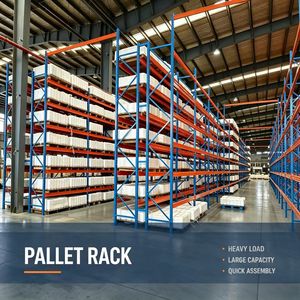
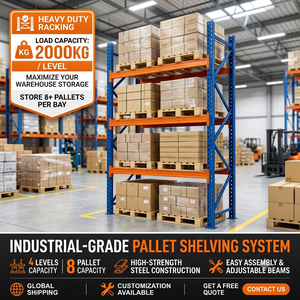
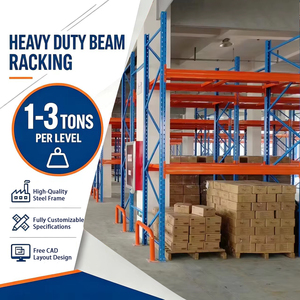
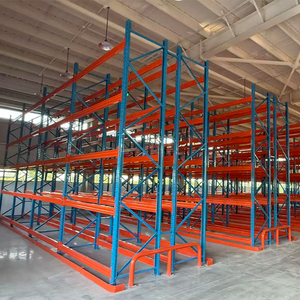
Structural Physics & Metallurgical Science of Beam Pallet Racking Systems
An authoritative technical guide on stress distribution, load capacity optimization, cold-formed steel mechanics, and global structural compliance standards for modern warehouse logistics.
1. Finite Element Analysis (FEA) & Load-Bearing Physics
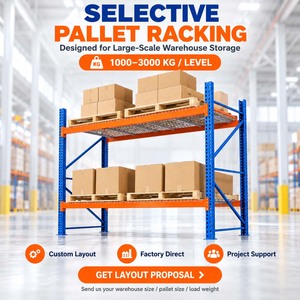
In modern high-bay industrial warehousing, beam pallet racking serves as the primary load-bearing backbone. Structural failure can lead to catastrophic inventory loss and human risk. Advanced rack design relies on Finite Element Analysis (FEA) to simulate non-linear elasticity, buckling modes, and dynamic impacts. Selective pallet rack beams operate under continuous bending moments, where the maximum allowable deflection ratio is strictly governed by standards such as EN 15512:2019 and ANSI/RMI MH16.1. Standard industrial criteria require maximum beam deflection to not exceed L/200 under full static load (where L represents the clear beam length), while high-precision automated systems mandate tighter tolerances of L/300 to prevent automated guided vehicle (AGV) positioning errors.
The structural strength of a beam pallet racking assembly depends heavily on the moment-resisting capacity of the beam-to-column connector joint. Unlike rigid welded structural steel frame connections, pallet racking uses semi-rigid claw-hook connectors. The mechanical interaction between the multi-claw connector hook and the teardrop or diamond-punched upright profile determines the rotational stiffness of the frame. Our engineered beam systems feature a 3-hook to 4-hook heavy-gauge connection profile equipped with automatic spring-loaded safety locks, guaranteeing resistance against accidental upward dislodgement forces exceeding 15 kN caused by lifting equipment.
Metallurgical Superiority: Q235B vs. Q355B Steel Profiles
While standard low-cost racking uses commercial Q235B steel (yield strength ~235 MPa), our heavy-duty beam profiles utilize structural grade Q355B cold-rolled structural steel (yield strength ~355 MPa, tensile strength up to 510 MPa). This high yield-to-tensile ratio allows a 25-30% reduction in tare steel mass while expanding structural load capacity per level up to 4,500 kg, directly lowering ocean freight costs per pallet slot and reducing operational carbon footprint.
2. Beam Geometry: Box Beams vs. Step Beams vs. Structural C-Channels
Choosing the correct beam geometry directly impacts warehouse versatility and system longevity. Each structural profile delivers specific physical mechanics under torsional stress:
| Beam Type | Profile Cross-Section | Optimal Applications | Key Structural Advantage |
|---|---|---|---|
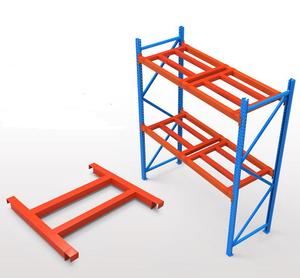
| Nested Box Beam | Dual C-channels interlocking to form a closed rectangular box. | Standard Selective & Palletized Bulk Storage | Highest torsional resistance & uniform moment of inertia under eccentric loads. |
| Step Beam | Recessed step profile along the top inside edge. | E-commerce, Wire Deck & Steel Panel Decks | Allows flush-fit drop-in wire mesh decking and drop-in shelf panels. |
| Structural C-Channel | Hot-rolled structural steel channels welded back-to-back. | Extreme Heavy Industrial & Outdoor Yards | Superior impact damage resistance from heavy forklift collisions. |
3. Surface Finishing Technology: Corrosion Protection Science
In cold storage facilities (-30°C) and high-humidity ambient environments, uncoated steel suffers rapid oxidation and micro-structural embrittlement. Our manufacturing process incorporates an automated multi-stage pre-treatment phase including zinc-phosphate conversion coating, followed by electrostatic application of thermosetting epoxy-polyester powder (70–90 μm film thickness). This process passes the ISO 9227 continuous salt spray corrosion test for over 1,000 hours without paint film blistering or steel delamination, ensuring structural life over 20+ years.
Future Procurement & Technology Trends in Warehouse Storage
Key shifts impacting supply chain executives, industrial developers, and logistics engineering teams over the next decade.
AGV & AMR System Integration
As warehouse automation accelerates, traditional structural tolerances are insufficient. Future beam racking procurement requires extreme precision manufacturing to EN 15620 Class 300/400 standards, ensuring laser-guided forklifts and Autonomous Mobile Robots (AMRs) pick pallets without structural collision risks.
TCO Optimization vs. Upfront Price
Global buyers are shifting focus from lowest per-ton initial purchase cost to Total Cost of Ownership (TCO). High-tensile steel, modular seismic design, and repairable bolted frame components dramatically reduce lifetime rack maintenance expenses and down-time risks.
Smart Rack IoT Load Monitoring
Incorporating strain gauge IoT sensors directly into critical upright frames and main beam levels enables real-time monitoring of live static loads, structural fatigue warning, dynamic seismic impact recording, and predictive safety alerts.
Why Direct Sourcing from China’s Leading Racking Exporter Matters
Fully integrated steel roll-forming lines, automated robotic welding cells, and comprehensive structural quality verification.
-
Structural Design to EN 15512 & SIA 261: In-house structural engineering teams providing FEA calculations, seismic vulnerability assessments, and stamped structural drawings.
-
Continuous Roll-Forming Precision: 16-stage continuous cold roll-forming mills producing precision upright channels up to 15 meters in a single length without splices.
-
Robotic Arc Welding Cells: OTC robotic welding workstations producing 100% full-penetration beam connector welds with zero micro-cracks or spatter.
-
End-to-End Multilingual Support: Technical support, installation guidance, project drawings, and inspection documentation offered in English, German, French, and Italian.


Featured Warehouse Racking Case Studies
Proven heavy-duty pallet storage installations across North America, Europe, Asia, and Latin America.

40,000 Pallet Slot Distribution Hub
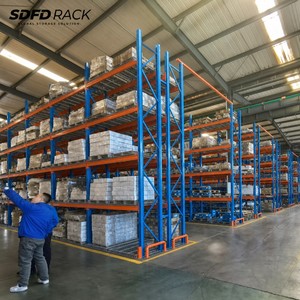
Georgia, USA | Teardrop Selective Racking | 1,000 kg capacity per pallet level.

Semi-Automated Cold Store
Vietnam | 4,000 Pallet Radio Shuttle System | Cold Storage (-25°C).

High-Density Food Warehouse
Paraguay | 840 Positions + 2 Autonomous Radio Shuttles | FMCG Storage.

5,000 Position Logistics Logistics
Israel | Heavy Duty Selective Pallet Racking System | Enhanced Seismic Baseplates.
Frequently Asked Technical & Sourcing Questions
Expert guidance on structural safety, shipping logistics, customization options, and international compliance standards.
Request a Custom Warehouse Structural Calculation & Quotation
Connect directly with our senior racking structural engineers. Receive an optimized warehouse CAD layout, FEA capacity verification, and direct factory pricing within 24 hours.