Engineered Industrial Racking Systems
Discover our structural-grade warehouse storage solutions manufactured with high-tensile cold-rolled steel, custom load capacities, and precision safety certifications.
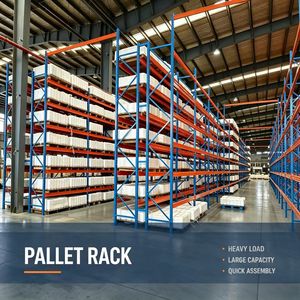
Selective Pallet Racking With Adjustable Steel Beam, OEM for Forklift Palletized Goods
High-accessibility selective rack system featuring 50mm/75mm adjustable beam pitches, designed for seamless forklift operation and maximum SKU flexibility.
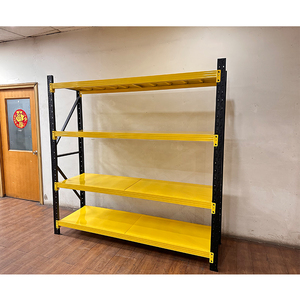
Factory Metal Display Shelf Industrial Warehouse Storage Rack Systems Heavy Duty
Heavy-duty industrial metal shelf units engineered for retail distribution centers, hardware logistics, and high-density manual order fulfillment.
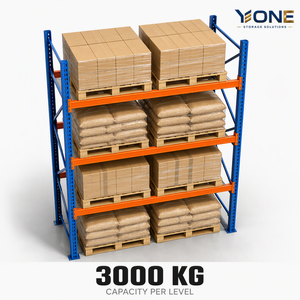
Factory Heavy Duty Steel Pallet Rack 2000kg Capacity Boltless Adjustable System
Boltless interlocking assembly system supporting 2,000kg uniform distributed load per beam pair, featuring safety pins and durable epoxy powder coating.
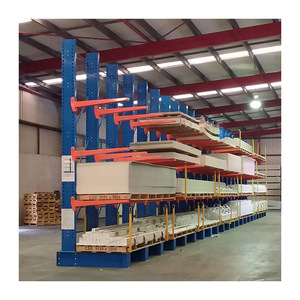
Adjustable Corrosion Protection Steel Pipe Custom Warehouse Cantilever Rack System
Specialized heavy-duty cantilever racks designed for storing long profiles, steel pipes, timber, and sheet metals with zero front-column obstruction.
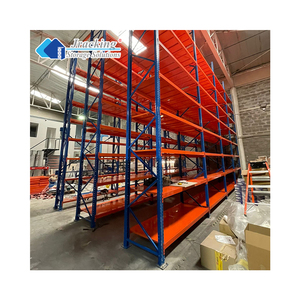
Jracking Dexion Style Warehouse Shelving Heavy Duty Pallet Rack System
Dexion compatible structural teardrop/hook profile pallet racks offering international interchangeability, robust upright frame geometry, and high rigidity.
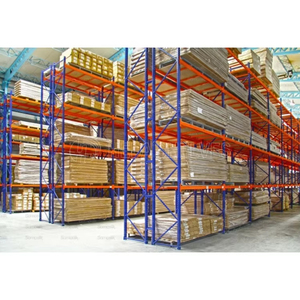
Medium Duty Europe Pallet Rack & Stacking Metal Storage Shelving Racks
Versatile Euro-pallet compatible shelving and transport stacking frames built for cold storage facilities, automotive logistics, and buffer storage.
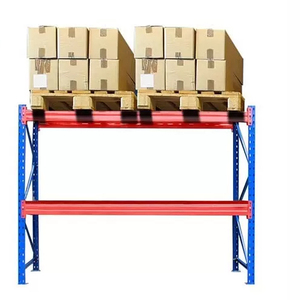
Heavy Duty Industrial Racking System - Selective Pallet Racking Solution
Standard industrial high-bay racking engineered to withstand dynamic forklift impacts, complying with FEM 10.2.02 and EN 15512 safety protocols.
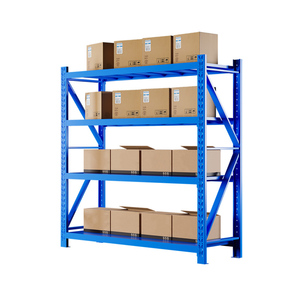
Industrial Warehouse Storage 5-Layer Pallet Racking with Tire & Slotted Angle Racks
Multipurpose 5-tier vertical storage layout incorporating slotted angle shelving and tire storage beams for maximized clear height utilization.
Why Global Enterprise Logistics Leaders Trust Our Engineering
Combining advanced automated cold-roll forming lines with structural engineering rigors (EN 15512, SIA 261, FEM 10.2.08) to deliver turn-key structural safety and optimal volumetric efficiency.
Structural Compliance (EN 15512 / SIA 261)
Every beam profile, column frame, and floor anchor calculation undergoes Finite Element Analysis (FEA). We guarantee complete compliance with European Standard EN 15512 for structural design and SIA 261 seismic criteria across all cantons and international seismic zones.
High-Precision Automated Manufacturing
Utilizing fully automated continuous cold-roll forming production mills, CNC punching machines, and robotic welding stations. High-tensile steel (Q235B / Q355B grades) ensures tight geometric tolerances and high load-bearing integrity over decades of continuous use.
Severe Environment Powder Coating
Components pass through automated 7-stage pre-treatment chemical washing followed by electrostatic epoxy-polyester powder coating (60–80 μm). Excellent corrosion resistance suitable for chemical, food processing, and ambient/cold storage down to -30°C.
Industrial Racking Systems Structural Comparison & Volumetric ROI
Selecting the optimal warehouse storage architecture requires balancing direct pallet accessibility (selectivity) against volumetric storage density and total operational expenditure (CAPEX/OPEX). Below is an engineering evaluation matrix comparing core racking topographies:
| Storage Topography | Selectivity Rate | Floor Area Utilization | Forklift Travel Time | Optimal SKU Volume | EN 15512 Standard Compliance |
|---|---|---|---|---|---|
| Selective Pallet Racking | 100% Direct Access | 35% - 40% | Baseline (100%) | High SKU Diversity / Low Volume | EN 15512 / EN 15620 |
| Radio Shuttle Racking | Filtered (FIFO/LIFO) | 70% - 85% | Reduced by 45% | Medium SKU Diversity / High Volume | EN 15512 / FEM 10.2.08 |
| Drive-In Racking | LIFO Strict Block | 60% - 75% | Increased by 20% | Low SKU Count / Bulk Storage | EN 15512 / FEM 10.2.07 |
| High-Bay ASRS (Miniload/Pallet) | 100% Automated | 85% - 92% | Zero Driver Time (Automated) | High Throughput 24/7 Operations | FEM 9.831 / EN 15512 |
| Cantilever Rack System | 100% Long Goods | 45% - 60% | N/A (Side Loader / Forklift) | Pipes, Tubing, Timber, Plates | EN 15512 Modified |
Structural Design Mechanics & Steel Grade Integrity
In modern warehouse structural design, steel column geometry and moment-resisting beam connections dictate the structural lifespan and dynamic impact durability of racking installations.
1. Cold-Rolled Steel Profiling & Rib Geometry
Our heavy-duty upright frames are cold-formed from certified high-yield structural steel coils (Q235B and Q355B equivalent to S235JR and S355JR under European standard EN 10025). The multi-bend upright cross-section features 10 to 12 cold-formed stiffening ribs. This geometric design drastically improves section modulus and torsional rigidity, guarding against global structural buckling under full axial loads.
2. Beam-to-Column Locking Connections
Beam connectors feature multi-claw engineered hooks (3 to 5 teeth) that press tightly into precision-punched column slots. This self-locking taper fit creates a stiff moment-resisting joint. Every beam level is secured using galvanized steel safety locking pins with a shear force capacity exceeding 15 kN, preventing accidental beam displacement during rapid forklift loading operations.
3. Baseplate Anchorage & Seismic Calculations (SIA 261 / FEM 10.2.08)
Floor baseplates are structurally dimensioned based on concrete slab compressive strength and local seismic accelerations. Using mechanical expansion anchors or chemical anchor bolts, baseplate assemblies transfer column axial loads and dynamic overturning moments into the foundation. In seismic zones (such as SIA 261 Zone Z1a through Z3b), horizontal dynamic bracing and heavy-duty seismic baseplates are integrated to maintain structural stability during ground acceleration events.
Future Procurement Trends in Industrial Racking (2025–2030)
The global warehousing and logistics sector is undergoing a massive transformation driven by supply chain resilience, land cost inflation, labor shortages, and aggressive net-zero carbon mandates. Industrial procurement teams must align their racking specifications with the following dominant market shifts:
A. Escalation of High-Bay Automated Warehouses (ASRS)
As urban industrial land prices escalate, warehouse designers are expanding vertically. High-bay rack-supported buildings (where the racking system forms the structural envelope of the building) reaching heights of 30 to 45 meters are replacing traditional 10-meter flat warehouses. Integration with stacker cranes, rail-guided vehicles (RGV), and Autonomous Mobile Robots (AMRs) requires strict manufacturing tolerances to EN 15620 Class 100/200, where beam deflections cannot exceed L/500.
B. Deep-Lane Cold Storage Optimization
Energy costs associated with cold storage facilities (-18°C to -30°C) demand maximum thermal efficiency per cubic meter. High-density semi-automated Radio Shuttle racking systems are rapidly replacing standard drive-in racks. These shuttles utilize lithium-iron-phosphate (LiFePO4) battery units engineered specifically to operate reliably in sub-zero environments, eliminating heat generation from conventional forklifts driving inside freezer zones.
C. Green Steel & Sustainable Manufacturing Lifecycles
Global enterprises are demanding environmental product declarations (EPDs) for structural steel procurements. Leading racking manufacturers are adopting recycled steel scrap content, green-hydrogen steel smelting inputs, and low-VOC solvent-free powder coatings to reduce Scope 3 carbon emissions across corporate logistics infrastructure.
Enterprise Buyer's Risk Mitigation Checklist
Purchasing enterprise warehouse racking involves significant CAPEX and structural liability. Procurement officers should enforce the following four-stage qualification protocol prior to vendor selection:
- 1. Material Traceability: Ensure Mill Test Certificates (MTC) to EN 10204 3.1 are provided for all steel coils, verifying chemical composition, yield strength (Reh ≥ 355 MPa), and elongation capacity.
- 2. Third-Party Structural Validation: Demand structural load calculations signed off by an independent structural engineer according to EN 15512 or ANSI MH16.1.
- 3. Impact Protection & Safety Accessories: Verify inclusion of heavy-duty column guards, aisle end-frames protectors, safety wire mesh decking, and load-capacity plaque documentation (EN 15635).
- 4. Lifecycle Inspection & Spares Availability: Partner with manufacturers offering guaranteed component interchangeability and fast-ship replacement parts for ongoing annual EN 15635 safety audits.
Frequently Asked Questions by Industrial Buyers
Detailed answers addressing engineering compliance, structural calculations, custom safety accessories, and international procurement standards.
Which structural design standards do your warehouse racking systems comply with? +
Our pallet racking systems are engineered in strict compliance with European Standard EN 15512 (Steel static storage systems - Adjustable pallet racking systems - Principles for structural design). For installation and slab tolerances, we adhere to EN 15620. Operational and inspection protocols conform to EN 15635. Where seismic design is mandated, such as SIA 261 guidelines, dynamic seismic analyses are incorporated using FEM 10.2.08 criteria.
How do you calculate maximum beam deflection under heavy industrial loads? +
In accordance with EN 15512, maximum vertical beam deflection under full Uniformly Distributed Load (UDL) is restricted to a maximum of L/200 (where L is the clear span length of the beam). For automated ASRS installations or high-bay precision operations, deflection limits are further constrained to L/300 or L/500 to ensure seamless robotic crane access without structural interference.
What is the structural difference between Teardrop, Dexion, and Box Beam designs? +
Teardrop racking utilizes a boltless slide-and-lock teardrop hole pattern standard across North American markets. Dexion style features a hook profile common across European and Commonwealth logistics nodes. Box beams are formed by cold-rolling two C-channel steel profiles together with continuous robotic welding, delivering superior torsional resistance compared to open step beams under heavy pallet loads.
Can your pallet racking systems be customized for sub-zero cold storage warehouses? +
Yes. For cold storage operations down to -30°C, we specify fine-grain structural steel with guaranteed Charpy V-notch impact toughness at low temperatures to eliminate steel embrittlement. Furthermore, special low-temperature epoxy powder coatings or hot-dip galvanizing per ISO 1461 are applied to prevent moisture corrosion and rust formation during thermal cycling.
Why is wire mesh decking recommended over wooden timber decks? +
Wire mesh decking allows overhead fire sprinkler water to pass through racking levels to meet NFPA 13 and EN fire safety compliance. Unlike timber decks, steel mesh decking does not accumulate dust, will not rot or splinter, offers superior fire resistance, and accommodates non-standard pallet sizes safely without risking load fall-through.
What details are required for a complete structural layout and price quotation? +
To prepare an accurate 3D CAD layout and engineering proposal, our structural design team requires: (1) Warehouse building CAD drawings showing clear height, column grids, and floor slab details; (2) Pallet dimensions (W x D x H) including goods overhang; (3) Maximum load weight per pallet; (4) Forklift model specifications and minimum operating aisle width (AST); and (5) Ambient temperature conditions.
How are dynamic forklift impact risks mitigated in high-traffic aisles? +
We supply heavy-gauge steel column protectors (minimum 5mm steel thickness) anchored directly into the floor slab, as well as full-length structural channel aisle end-guards. Additionally, corner frames feature heavy-duty floor anchorage to absorb impact energy before forces transfer into vertical structural racking members.
What lead times should buyers expect for large-scale international racking orders? +
Standard manufacturing lead times range from 3 to 4 weeks following 3D CAD engineering sign-off. Components are sea-freight packed using protective wooden pallets, steel strapping, and plastic stretch wrapping to prevent shipping friction damage during container transit.
Optimize Your Warehouse Volumetric Storage Today
Request a complimentary structural CAD layout, load capacity calculation, and detailed technical catalog tailored to your exact logistics requirements.