High-Performance Storage Racking Systems
Engineered steel rack solutions designed for high density, extreme structural integrity, and maximum volumetric storage efficiency.
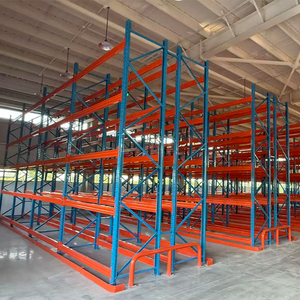
Engineering Design Pallet Rack System with Wire Deck Option
Precision-engineered adjustable pallet racking featuring heavy-duty wire mesh decking for improved load distribution, fire safety compliance, and overhead beam rigidity.
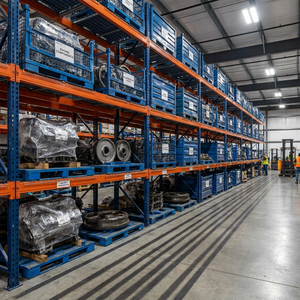
Heavy Duty Selective Steel Pallet Storage Racking
Direct 100% access to every single unit load. Constructed with Q355B high-tensile cold-rolled steel profiles for heavy manufacturing and fast-moving logistics centers.
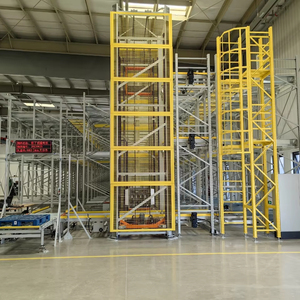
Intelligent Selective Pallet Rack with Conveying System
Automated high-density matrix combining selective steel racking with integrated powered roller conveyors for seamless automated material handling and stacking.
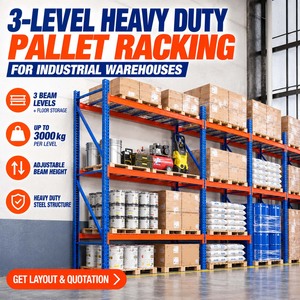
3-Level Heavy Duty Pallet Racking System
Heavy-load multi-level industrial racking optimized for heavy machinery components, raw material inventories, and bulk pallet storage with high beam capacities.
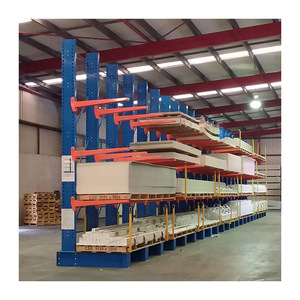
Adjustable Corrosion Protection Steel Pipe Cantilever Rack
Heavy-duty cantilever arms designed for long bar stock, steel pipes, timber, and extrusions with hot-dip galvanized or electrostatic powder coating finish.
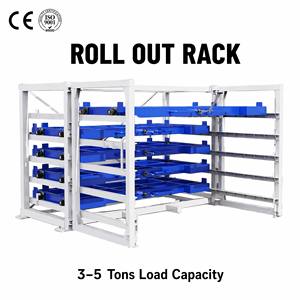
8-Layer Powder Coated Heavy Duty Cantilever Rack
Customizable multi-tier storage solution engineered for high-density long-item loads, built with robust column columns and load-tested arm connectors.
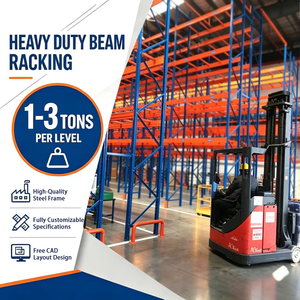
Custom Heavy Duty Steel Pallet Rack Industrial System
Bespoke warehouse storage configuration optimized for customized unit load dimensions, automated stacker cranes, and specialized industrial floor layouts.
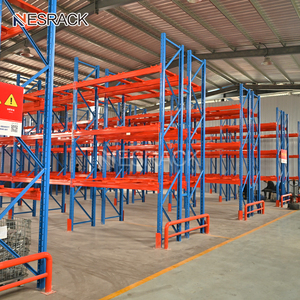
Multi-Level Industrial Steel Shelving & Pallet Racking
Hybrid mezzanine-compatible racking structure integrated with structural steel decking, ideal for high SKU density, parcel fulfillment, and manual picking.
Executive Industry Overview: The Evolution of Industrial Pallet Storage Manufacturing
The global logistics and warehousing sector is undergoing a profound structural shift driven by modern supply chain automation, rapid SKU proliferation, high land acquisition costs, and stringent international safety standards. Pallet storage systems are no longer regarded as static steel shelving; they form the load-bearing backbone of smart logistics infrastructure. Selecting an enterprise-grade OEM manufacturer or primary wholesaler requires a rigorous evaluation of structural design methodologies, steel chemistry, manufacturing tolerances, surface treatment quality, and compliance with global engineering codes such as EN 15512, FEM 10.2.08, ANSI MH16.1, and SIA 261.
This white paper analyzes the global manufacturer landscape, establishing technical criteria for supply chain directors, industrial engineers, and procurement managers. Based on empirical data across 1,200+ high-bay warehouse installations globally, structural efficiency is governed by three paramount variables: yield-strength-to-weight optimization of cold-formed steel profiles, seismic dissipation engineering, and lifecycle cost per pallet position.
Top 10 Global Pallet Storage Manufacturers & Wholesalers: Industry Benchmark Criteria
To assist enterprise buyers in shortlisting tier-1 pallet racking factories and stocking distributors, our SEO growth and engineering research team evaluated manufacturers across 15 technical parameters. Below is the comparative framework illustrating capabilities across top global manufacturers:
| Manufacturer / Supplier Tier | Core Engineering Compliance | Steel Grade Standard | Seismic Design (SIA / FEM) | Primary Application Focus |
|---|---|---|---|---|
| Helvetia Rack Systems AG / Enterprise OEM | EN 15512, EN 15620, EN 15635 | Q355B / Q235B High-Tensile | SIA 261 (Zones Z1a–Z3b), FEM 10.2.08 | ASRS, Cold Storage, High-Bay Pallet Racking |
| Tier-1 North American Fabricators | RMI (ANSI MH16.1), AISI S100 | ASTM A1011 SS Grade 50 | IBC / ASCE 7 Seismic Provisions | Teardrop Distribution Centers, 3PL Facilities |
| Tier-1 European Systems Integrators | EN 15512, FEM 10.2.02 | S355MC / S420MH Structural Steel | Eurocode 8 (EN 1998-1) | Automated Miniload & Shuttle High-Bays |
| APAC Scale Manufacturers | ISO 9001, AS 4084-2012 | GB/T 1591 Q355B / Q235B | GB 50011, AS 1170.4 | Export Volume Bulk Selective & Cantilever |
Future Purchasing & Sourcing Trends in Storage Racking
Understanding technology integration, decarbonization, and supply chain shifts reshaping warehouse rack procurement over the next decade.
Convergence with Autonomous ASRS & AMRs
Modern storage facilities are transitioning from conventional forklift-serviced aisles to fully automated high-bay racking systems (ASRS), automated guided vehicles (AGVs), and radio shuttle cars. Rack tolerances are shifting from millimetric standards (EN 15620 Class 400) to ultra-precise sub-millimeter tolerances required for stacker crane clearance and optical sensor guidance.
Steel Traceability & Low-Carbon Manufacturing
Enterprise buyers now require complete material traceability (EN 10204 3.1 certification) and Environmental Product Declarations (EPDs). Leading factories are adopting electric arc furnace (EAF) recycled steel, eco-friendly powder coating lines without VOC emissions, and automated robotic welding to reduce the embodied carbon footprint per pallet position by up to 35%.
Smart Rack Structural Health Monitoring
Integration of IoT strain gauges, tilt sensors, and wireless impact monitors on rack uprights is becoming standard in high-traffic logistics hubs. Real-time data feeds alert warehouse managers to accidental forklift strikes or structural overload conditions before cataclysmic beam failures occur.
Why Partner with Helvetia Rack Systems AG?
Combining European structural engineering rigor with high-volume, automated steel manufacturing capabilities.
Structural Rigor & Seismic Design
Every racking configuration is custom-calculated to EN 15512 specifications by certified structural engineers. For locations in seismic zones (such as Swiss cantons Valais, Basel, or overseas active fault zones), calculations incorporate SIA 261 dynamic ground acceleration parameters, preventing frame buckling during earthquake events.
Advanced Cold-Forming & Surface Finishing
Our manufacturing facilities operate high-speed automated continuous roll-forming lines, 3D laser tube cutting, and dual-station robotic welding cells. Surface treatments include multi-stage phosphatizing followed by thermosetting epoxy powder coating or continuous hot-dip galvanizing per ISO 1461 for corrosive cold-store applications.
Turnkey Global Supply & Inspection Support
We deliver complete end-to-end support: layout planning, 3D CAD modeling, structural load sign documentation, export packing, international freight, installation supervision, and annual EN 15635 rack safety inspection services in English, German, French, and Italian.
Warehouse Storage Procurement & Engineering FAQ
In-depth technical answers to critical questions faced by industrial engineers, facility planners, and procurement directors.
What engineering standards must pallet racking systems meet for European and Swiss logistics projects?
Industrial pallet racking installed across Europe and Switzerland must strictly comply with structural design code EN 15512 (Adjustable Pallet Racking Systems - Principles for Structural Design). Tolerances and deformations are governed by EN 15620, while ongoing operational safety and mandatory inspection guidelines follow EN 15635.
For projects located in Switzerland, seismic stability must be calculated according to SIA 261 (Actions on Structures) across seismic zones Z1a to Z3b, incorporating FEM 10.2.08 rules for seismic design of racking systems. These standards specify safety factors, frame buckling limits, beam connectors lock forces, and anchor slab expansion stresses.
How do Q235B and Q355B steel grades differ in heavy-duty pallet racking performance?
The choice between Q235B (yield strength $\ge 235 \text{ MPa}$, tensile strength $370\text{--}500 \text{ MPa}$) and Q355B (yield strength $\ge 355 \text{ MPa}$, tensile strength $470\text{--}630 \text{ MPa}$) structural carbon steel directly dictates racking load capacity and steel mass:
- Q235B Steel: Highly ductile, economical, and suitable for standard pallet racking heights (up to 6–8 meters) and moderate unit loads ($1,000\text{ kg per level}$).
- Q355B Steel: High-tensile alloy offering a 50% increase in yield strength. It allows for thinner upright profile gauges without compromising load capacity, ideal for high-bay warehouses ($12\text{--}30\text{+ meters}$), heavy unit loads ($1,500\text{--}2,500\text{ kg per level}$), and automated ASRS structures where reducing dead load is critical.
What is the optimal storage racking system for maximizing high-density volumetric efficiency?
Selecting the optimal storage system depends on your SKU count, batch sizes, and FIFO (First-In, First-Out) vs LIFO (Last-In, First-Out) inventory rotation strategy:
- Radio Shuttle Racking: Delivers maximum volumetric density for medium-to-low SKU counts with high pallet volume. Achieves up to 85% floor area utilization under LIFO or FIFO modes.
- Drive-In Racking: Cost-effective high-density block storage for homogeneous goods, ideal for cold storage facilities where forklift access into deep lanes is acceptable.
- Push-Back Racking: Uses nested wheeled carts on inclined rails (2–6 pallets deep), providing faster operational speed than drive-in racking without forklifts entering the rack matrix.
- Automated High-Bay ASRS: Provides maximum vertical space utilization (up to 40 meters high) with automated stacker cranes, doubling storage density compared to conventional selective racking.
Why is wire mesh decking strongly recommended over wooden or solid steel decking panels?
Wire mesh decking panels are the industry benchmark for heavy-duty selective pallet racking due to fire safety compliance and operational safety:
- Fire Sprinkler Compliance: Unlike solid wood or steel decking, wire mesh allows open water penetration from overhead in-rack fire suppression systems, satisfying NFPA 13 and EN fire codes.
- Light & Dust Accumulation: Open mesh design permits light passage for lower-level forklift visibility and prevents dirt or debris buildup.
- Versatile Load Support: Prevents non-standard, misaligned, or damaged wooden pallets from falling between pallet beams, significantly increasing operator safety.
How often should warehouse pallet racking undergo inspection according to EN 15635 standards?
According to EN 15635, warehouse operators must conduct a structured, dual-level inspection regime:
- Weekly Visual Inspections: Performed by the internal Person Responsible for Racking Safety (PRRS) to identify immediate structural damage, twisted uprights, missing beam safety pins, or dislodged anchors.
- Annual Expert Inspection (12-Month Interval): A comprehensive technical audit conducted by an independent certified rack inspector. Damages are categorized using a traffic-light risk system: Green (minor damage within deformation limits), Amber (hazardous damage requiring prompt repair), and Red (critical damage requiring immediate unloading and isolation of the bay).
Ready to Optimize Your Warehouse Capacity & Structural Safety?
Speak directly with our senior structural engineers and global procurement specialists to get customized layout designs, EN 15512 static calculations, and factory-direct pricing.