Industrial Heavy Duty Pallet Racking Solutions
Engineered for maximum structural integrity, optimized volumetric utilization, and compliance with strict international storage safety standards.
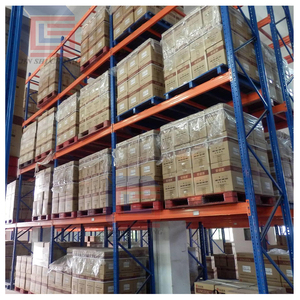
Industrial Heavy Duty Steel Pallet Rack System
View Product Details →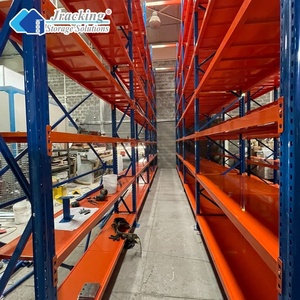
EURO Standard Heavy Duty Steel Pallet Racking
View Product Details →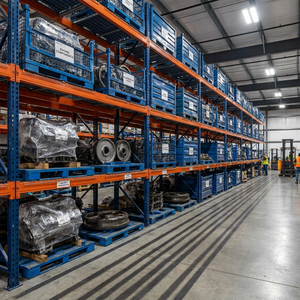
Racks Industriales Selective Pallet Racking
View Product Details →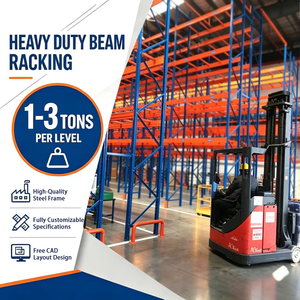
Custom Heavy Duty Steel Pallet Rack System
View Product Details →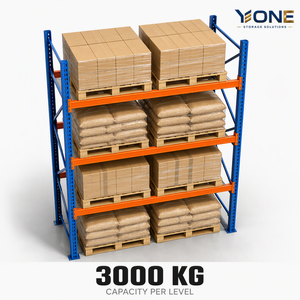
Boltless Adjustable 2000kg Pallet Rack System
View Product Details →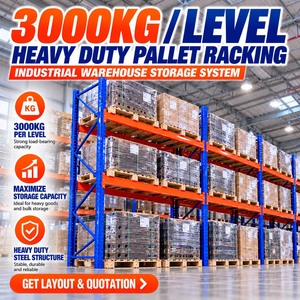
3000kg Per Level Heavy Duty Pallet Racking
View Product Details →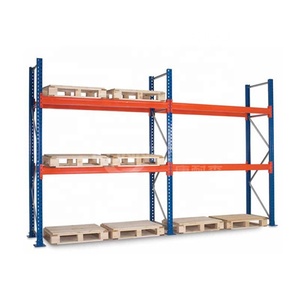
Industrial Selective Pallet Racking System
View Product Details →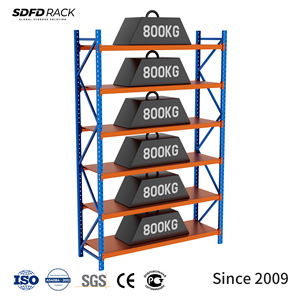
Adjustable 4-6 Layer Selective Pallet Rack
View Product Details →Why Global Enterprise Logistics Partners Choose Us
From seismic analysis to automated robotic welding, our engineering matrix guarantees operational longevity and seamless compliance with European and American safety standardizations.
EN 15512 & FEM 10.2.08 Compliance
Our structural design calculations undergo rigorous finite element analysis (FEA), adhering strictly to European EN 15512 standards and FEM 10.2.08 guidelines for adjustable beam pallet racking under dynamic structural stress.
Seismic-Engineered Calculations
Custom structural upright profile configurations tailored to regional seismic activity (such as SIA 261 standards), featuring augmented baseplates, heavy anchor bolts, and calculated ductility factors to withstand severe tremors.
Automated CNC & Robotic Welding
Eliminating human margin of error through fully automated cold-roll forming lines and robotic beam connector welding, providing ultra-consistent weld seam penetration and zero structural micro-fractures.
Comprehensive Guide: Evaluating Top 10 Racking Pallet System Factories & Suppliers
Modern supply chain optimization depends heavily on the structural reliability and volumetric density of heavy-duty racking pallet systems. As global logistics centers evolve toward high-bay storage, cold chain automation, and rapid e-commerce fulfillment, selecting a top-tier racking factory requires looking far beyond material cost per metric ton. Sourcing professionals must evaluate structural engineering standard compliance, high-tensile steel grade sourcing, anti-corrosion surface chemistry, and seamless integration capabilities with Automated Storage and Retrieval Systems (ASRS).
1. Structural Engineering Standards: Global Compliance Matrix
The manufacturing process for high-load warehouse shelving requires strict design validation according to regional structural engineering standardizations. Top suppliers differentiate themselves by holding multi-regional engineering certifications:
- European Standard EN 15512: Dictates the structural design principles for adjustable pallet racking, factoring in beam end connector stiffness, sway movement, dynamic payload variations, and geometric imperfection tolerances.
- American RMI (MH16.1): Published by the Rack Manufacturers Institute, focusing on cold-formed steel structural members, teardrop connection shear safety, and frame bracing under seismic loading conditions.
- Australian Standard AS4084-2012: Imposes stringent limits on upright frame rotation, beam safety lock shear testing, and installation deflection tolerances under extreme operational cycles.
2. Key System Architecture Comparison
Choosing the correct racking configuration directly impacts throughput efficiency, forklift travel distance, and storage density. Below is a structural engineering evaluation matrix comparing core pallet storage architectures:
| Racking System Type | Selectivity Rate | Volumetric Storage Density | Forklift Accessibility | Ideal Application Profile |
|---|---|---|---|---|
| Selective Pallet Racking | 100% Direct Access | Moderate (~40-50%) | Standard Counterbalance / Reach Truck | High SKU variety, fast-moving consumer goods (FMCG), general distribution. |
| Radio Shuttle Racking | LIFO / FIFO Semi-Automated | Ultra-High (~75-85%) | Forklift loads lane entrance; Shuttle handles internal travel | Cold storage, food & beverage bulk storage, high-volume homogenous SKUs. |
| Drive-In Racking | LIFO Block Storage | High (~65-75%) | Forklift drives directly into racking structure lanes | Seasonal inventory, high-density non-perishable pallet storage. |
| Push-Back Racking | LIFO Nested Carts | High (~60-70%) | Forklift pushes back front pallets along inclined rails | Medium SKU count, multi-pallet deep storage per lane. |
| Automated ASRS Racking | 100% Automated FIFO/LIFO | Maximum Vertical Density (>85%) | Stacker Cranes / Autonomous Mobile Robots (AMRs) | 24/7 dark warehouses, high-bay pharma and automated logistics hubs. |
Future Procurement Trends in Industrial Storage Systems (2025–2030)
1. Automated & Robotic Compatibility Integration
Procurement teams are shifting away from standalone manual racking toward hybrid systems engineered for future robotic automation. Modern pallet racking uprights must now include pre-punched mounting slots for sensor arrays, shuttle track alignment guides, and AMR pick-up stations. Industrial drive-in and radio shuttle systems are increasingly specified with sub-millimeter manufacturing tolerances to prevent autonomous shuttle jamming.
2. High-Yield Eco-Steel & Advanced Powder Coatings
Sustainability and carbon footprint reduction have reached the procurement agenda of major logistics operators. Advanced manufacturers are adopting ultra-high-strength, cold-rolled steel profiles (such as Q355B and S355JR) which reduce total structural steel weight while maintaining identical load-bearing capacity. Furthermore, electrostatic thermosetting epoxy-polyester powder coating lines operating under zero-VOC guidelines ensure extended corrosion protection—even in high-humidity cold storage environments (-30°C).
3. IoT Smart Racking & Dynamic Load Monitoring
The integration of strain-gauge sensors and IoT connectivity directly onto racking beam connectors represents a massive leap in operational safety. Future-ready racking systems transmit real-time deflection data to Warehouse Management Systems (WMS), instantly alerting facility managers if an accidental forklift collision occurs or if an upper shelf level exceeds its nominal safe working load limit.
Material Selection & Quality Assurance Framework
When conducting a factory audit for top racking suppliers, verifying raw material integrity is paramount. Leading factories utilize automated ultrasonic flaw detection on heavy weld lines and source steel exclusively from top-tier steel mills. Key manufacturing checkpoints include:
- Steel Profile Roll-Forming Precision: 18-to-24 station roll-forming machines guarantee uniform profile cross-sections without internal residual stress concentrations.
- Safety Locking Pins: Automated drop-in safety locks with minimum 10kN shear resistance prevent accidental beam dislodgement caused by upward forklift mast movement.
- Galvanization & Surface Pre-Treatment: 9-stage chemical cleaning including acid pickling, phosphating, and deionized water rinsing ensures maximum coating adhesion and 500+ hours of salt spray resistance (ASTM B117).
End-to-End Turnkey Project Execution
We support structural design, custom fabrication, international shipping, and on-site engineering installation guidelines worldwide.
Custom CAD & 3D BIM Modeling
Our in-house structural engineers construct detailed Building Information Modeling (BIM) files and AutoCAD spatial layouts, ensuring seamless collision-free integration with facility sprinklers, HVAC ducting, and building columns.
Global Export & Packaging Standard
Heavy upright frames and beams are bundled with steel strapping, protective edge corner boards, and waterproof stretch wrapping, optimizing container stuffing density to reduce ocean freight costs for international buyers.
Lifecycle Inspection Support
Providing detailed EN 15635 rack maintenance protocols, safety load signs, beam label templates, and replacement structural components to maintain long-term warehouse safety compliance.
Frequently Asked Questions (FAQ)
Expert technical responses to common questions encountered during pallet racking procurement, layout engineering, and factory selection.
What structural standards should be verified when importing racking from a factory?
You should request documented proof of compliance with EN 15512 (Europe), RMI MH16.1 (USA), or AS4084-2012 (Australia). Ensure the factory supplies ISO 9001 quality certificates, Mill Test Certificates (MTC) proving steel grade (e.g., Q235B, Q355B), and certified Finite Element Analysis (FEA) reports calculated by licensed structural engineers.
How is maximum safe working load (SWL) determined per beam level?
SWL is determined based on cold-formed steel section modulus, beam length, profile depth, and connector rivet stiffness. According to EN 15512 standards, maximum allowable beam deflection under full uniformly distributed load (UDL) must not exceed L/200 (where L is the clear span length between uprights).
What is the difference between teardrop racking and European box beam connectors?
Teardrop racking features a slide-and-lock connection widely popular in the Americas, allowing easy height adjustments without tools. European standard racking utilizes multi-claw structural beam end connectors attached to open profile uprights, offering higher torsional rigidity and specialized load signs compliant with FEM/EN regulations.
Can pallet racking systems be engineered for seismic zones?
Yes. Racking installed in seismic regions requires custom engineering under standards such as SIA 261 or Eurocode 8. Upright frames are reinforced with wider footplates, heavy anchor bolts, top ties, dynamic cross-bracing, and higher-grade structural steel profiles to dissipate seismic vibration energy without collapse.
How does wire mesh decking improve racking safety compliance?
Wire mesh decks sit on pallet beams to support non-standard pallets, prevent loose items from falling, and allow light and overhead fire sprinkler water to penetrate to lower levels, satisfying strict NFPA and local fire department safety codes.
What is the recommended inspection frequency for heavy-duty storage racks?
According to EN 15635 standard guidelines, warehouse operators must conduct weekly visual checks for forklift damage and schedule an annual expert inspection by a certified racking inspector. Damaged uprights or bent beams exceeding allowable tolerances must be immediately unladen and replaced.