High-Performance Industrial Pallet Racking Systems
Calculated to EN 15512, SIA 261, and RMI standards. Engineering-certified racking engineered for maximum structural safety, cold storage resilience, and seismic compliance.
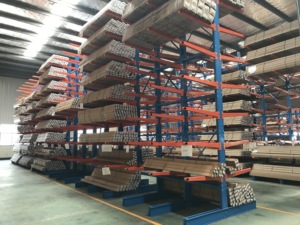
Heavy Duty Cantilever Racking for Rebar & Profile Storage
Unobstructed linear storage optimized for steel rebar, timber, and aluminum extrusion profiles with adjustable load-bearing arms.
Explore Specifications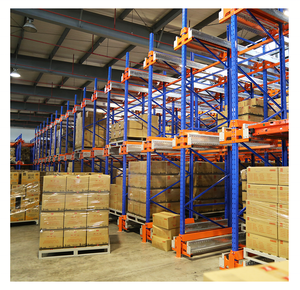
Automated Steel Radio Shuttle Pallet Racking System
Semi-automated deep-lane pallet shuttle system designed for extreme volume density, optimized FIFO/FILO logic, and ambient/cold store integration.
Explore Specifications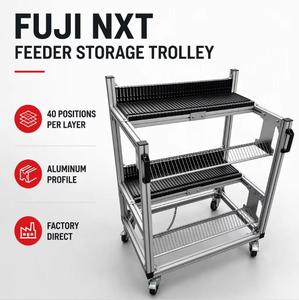
Precision SMT Feeder Storage Trolley & Component Rack
ESD-compliant high-density storage mobile trolley engineered specifically for electronic surface mount technology (SMT) feeder reels and tooling.
Explore Specifications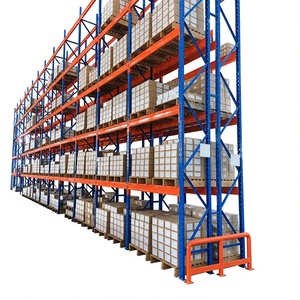
Heavy Duty Multi-Level Vertical Storage Racking
Corrosion-protected, powder-coated customizable vertical frame structures optimized for high bay forklift access and heavy payload stability.
Explore Specifications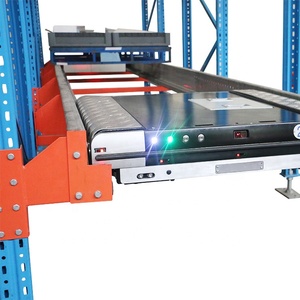
High Density FIFO/FILO Automated Radio Shuttle System
Maximum-density automated raw material storage solution featuring intelligent radio-controlled shuttles for rapid turnover industrial logistics.
Explore Specifications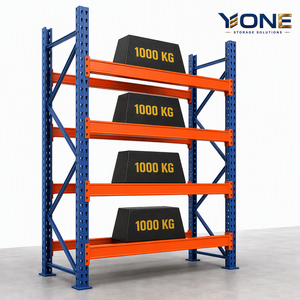
Durable Industrial Selective Steel Pallet Racking
Versatile selective pallet racking equipped with safety accessories, frame protectors, and heavy-duty beam profiles for variable unit loads.
Explore Specifications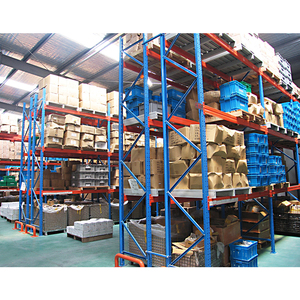
Standard Modular Heavy Duty Warehouse Pallet Rack
Standardized, boltless assemble-type racking engineered for rapid deployment, high structural rigidity, and direct pallet accessibility.
Explore Specifications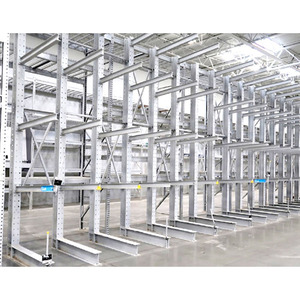
Industrial High-Capacity Steel Cantilever Racking
Heavy-duty structural arm cantilever system purpose-built for storing steel tubes, aluminum profiles, and bulky industrial materials.
Explore SpecificationsGlobal Benchmark for Racking Engineering & Manufacturing
Quantifiable metrics defining tier-1 industrial pallet rack manufacturers globally.
1. Strategic Evaluation Criteria for Global Top 10 Pallet Rack Manufacturers
Selecting a top-tier industrial pallet rack supplier demands rigorous structural engineering analysis, material traceability, and alignment with modern supply chain dynamics. Modern logistics facilities no longer treat racking as mere inert steel shelves; it is an active structural component of the building footprint—especially in Automated Storage and Retrieval Systems (ASRS) and self-supporting rack-clad structures.
To establish a definitive ranking of the top 10 pallet rack storage system factories and suppliers, procurement executives must evaluate manufacturers based on five essential core engineering pillars:
Steel Metallurgy & Yield Strength
Leading manufacturers utilize structural cold-formed steel conforming to high-grade standards such as Q235B, Q355B, or S355JR. Material thickness tolerances, certified mill test reports (MTRs), and tensile strength verification are non-negotiable for high-bay stability.
Structural Design Codes Compliance
Adherence to global standards—including EN 15512:2020 (Europe), RMI MH16.1 (USA), and FEM 10.2.02—ensures calculations account for flexural-torsional buckling, beam-column connection rigidity, and second-order elastic effects ($P-\Delta$).
Seismic Engineering Adaptability
Top factories provide custom finite element analysis (FEA) for high-risk seismic zones (e.g., Swiss SIA 261 seismic regions Z1a to Z3b, US Zone 4). This includes dynamic acceleration response spectra, baseplate chemical anchoring, and cross-bracing structural mechanics.
2. Industrial Racking Structural Architecture Comparison
A comprehensive matrix breaking down the primary pallet storage architectures, load capacities, space utilization efficiency, and ideal application environments.
| Storage System Type | Floor Space Utilization | Pallet Accessibility | Max Payload / Level | Primary Technical Advantage |
|---|---|---|---|---|
| Selective Pallet Racking | 40% – 50% | 100% Direct Access | Up to 4,500 kg | Maximum SKU flexibility and simple inventory management; lowest initial capital investment per pallet position. |
| Radio Shuttle Racking | 75% – 85% | LIFO / FIFO (Deep Lane) | 1,500 kg per shuttle | Semi-automated deep lane storage; drastically reduces forklift travel times and operational costs in cold storage (-25°C). |
| Automated High-Bay ASRS | 85% – 95% | 100% Computerized (WMS) | 3,000 kg per crane | Lights-out automated operation; vertical heights exceeding 40m, minimizing physical building footprint costs. |
| Drive-In / Drive-Through Rack | 65% – 75% | LIFO (Drive-In) / FIFO | 1,500 kg per pallet | Eliminates internal operating aisles for homogeneous bulk storage; optimized for long-run production batches. |
| Heavy Duty Cantilever Racks | 60% – 70% | Direct Unobstructed Access | Up to 6,000 kg / arm | Continuous front access without upright column obstructions; ideal for steel bars, rebar, timber, and sheet metal. |
3. Corporate Engineering Strengths & Technical Capabilities
Representing European structural excellence and global manufacturing scalability, Helvetia Rack Systems AG exemplifies the technical benchmarks required of leading racking manufacturers. By combining precision continuous cold roll-forming lines with rigorous finite element structural modeling, our engineering frameworks address the most stringent storage challenges in Switzerland and internationally.
EN 15512 & SIA 261 Structural Verification
Every pallet rack system undergoes structural static and dynamic calculations based on EN 15512 (Adjustable Pallet Racking) and Swiss structural code SIA 261. Floor slab point-loading, seismic response spectrum analyses, and anchor shear capacities are fully certified prior to fabrication.
Advanced Electrostatic Powder Coating
All upright columns and load beams undergo a 7-stage chemical pretreatment followed by thermosetting epoxy-polyester powder coating (60–80 μm dry film thickness). This process guarantees high impact resistance, corrosion protection, and strict hygiene standards required by food and pharmaceutical sectors.
Multilingual Engineering Support
From initial warehouse CAD layout drafting to final EN 15635 rack safety inspections, project engineering and documentation are seamlessly delivered in English, German, French, and Italian to support multinational logistics operations.
4. Future Procurement Trends in Industrial Storage Systems (2025–2030)
The global industrial racking market is undergoing a structural transition driven by rising real estate land costs, severe warehouse labor shortages, and aggressive corporate decarbonization mandates. Buyers evaluating top pallet rack suppliers must align their capital expenditure (CapEx) strategies with four emerging industrial megatrends:
A. Shuttle-Aisle Hybridization and Autonomous Mobile Robot (AMR) Convergence
Traditional static racking is rapidly giving way to semi-automated and fully automated hybrid layouts. Radio shuttle channels are increasingly integrated with vertical lifters and floor-level AMRs, creating dynamic 3D shuttle networks. This evolution allows logistics operators to increase volume density by up to 80% while preserving high-throughput velocity.
B. Micro-Alloyed Steel and Sub-Zero Cold Storage Durability
With global cold chain logistics expanding for pharmaceuticals and frozen foods, structural steel failure risks caused by low-temperature brittle fracture have become a vital safety focus. Leading factories are specifying micro-alloyed steels treated with specialized grain-refinement elements (such as Niobium and Vanadium) to maintain high impact toughness at temperatures as low as -30°C.
C. IoT-Enabled Structural Health Monitoring (SHM)
Structural racking failure in high-bay distribution centers presents catastrophic financial and safety risks. Future-ready factories are integrating wireless strain-gauge sensors and optical vibration monitors into upright columns. These IoT devices deliver real-time alerts regarding forklift impact damage, overload deflection, or micro-seismic shifts—enabling predictive maintenance before structural failure occurs.
D. Decarbonization and Circular Economy Compliance
Environmental, Social, and Governance (ESG) criteria are now embedded in tier-1 global procurement contracts. Leading manufacturers are adopting low-carbon green steel produced via Electric Arc Furnace (EAF) technology powered by renewable energy. Furthermore, modular rack design standards ensure components can be disassembled, reconfigured, or recycled with minimal environmental impact.
Frequently Asked Procurement & Engineering Questions
Expert answers to standard technical queries encountered during industrial pallet racking specification, layout design, and safety compliance audits.
Which structural standards govern industrial pallet rack manufacturing globally?
Industrial pallet racking design is primarily governed by three major regional codes: EN 15512:2020 in Europe (which accounts for non-linear structural behavior and semi-rigid beam-to-column connections), ANSI/RMI MH16.1 in North America, and FEM 10.2.02 internationally. Floor installation tolerances are controlled by EN 15620, while ongoing operational safety and inspection protocols must satisfy EN 15635 guidelines.
How do engineers calculate racking safety under seismic loading (SIA 261 / RMI)?
Seismic rack design accounts for dynamic horizontal acceleration generated during earthquakes. Structural engineers utilize Modal Response Spectrum Analysis (such as Swiss standard SIA 261 or US dynamic loading standards). Calculations evaluate soil spectrum classes, rack mass distribution, pallet friction coefficients, dynamic bracing shear capacity, and anchor bolt pull-out forces embedded in the concrete floor slab.
What is the ROI comparison between Selective Pallet Racks and Radio Shuttle Systems?
While Selective Pallet Racking presents a lower upfront capital cost ($40–$70 per pallet position), its storage footprint efficiency is relatively low (approx. 40-50%). Radio Shuttle Racking requires higher initial capital ($150–$250 per pallet position including shuttles), but increases floor density to over 80%. In cold storage environments where operating energy costs exceed $100/sqm annually, Radio Shuttle systems typically achieve full payback within 18 to 24 months due to space compaction and reduced refrigeration volume.
Why is rack inspection mandated under EN 15635, and how often must it be performed?
EN 15635 mandates that warehouse operators undergo an expert structural rack inspection conducted by a certified inspector at least once every 12 months. This standard classifies structural damage into Green (minor risk), Amber (hazardous damage requiring component replacement within 4 weeks), and Red (critical damage requiring immediate unloading of the bay). Regular inspections prevent progressive collapse risks caused by forklift truck impacts.
Can standard powder-coated pallet racks be safely deployed in sub-zero freezer warehouses?
Standard carbon steel and conventional powder coating can suffer from embrittlement and micro-cracking if subjected to severe thermal shock or temperatures below -20°C. For deep freezer rooms (-25°C to -30°C), engineers specify structural steel grades with verified Charpy V-notch impact toughness (e.g., S355J2) combined with cold-formulated elastic epoxy coatings or hot-dip galvanizing to prevent rust caused by condensation during defrost cycles.