Certified Pallet Racking & Heavy-Duty Storage Systems
Engineered for extreme structural integrity, high-bay automated integration, and heavy cargo safety. Derived from Tier-1 European and international manufacturing standards.
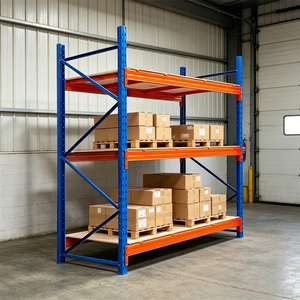
Powder Coated Heavy Duty Adjustable Pallet Racking
Heavy-duty industrial storage rack featuring fully adjustable beam pitch, electro-powder coating, and extreme stability under high seismic loads.
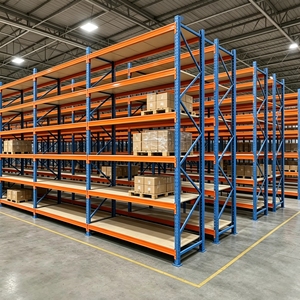
Selective Pallet Racking System (1000–3000kg Capacity)
Direct 100% pallet accessibility engineered for high-turnover logistics centers. Compatible with all standard forklift models.
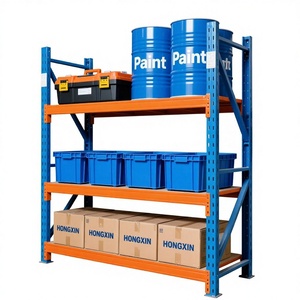
4-Layer Adjustable Boltless Steel Warehouse Shelving
Corrosion-resistant boltless steel rack designed for fast manual assembly, light-to-medium payload distribution, and archive storage.
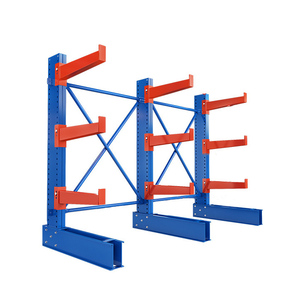
Heavy-Duty Structural Cantilever Racking for Timber & Pipe
Unobstructed horizontal storage columns custom-engineered for long profiles, lumber, steel tubing, and heavy building materials.
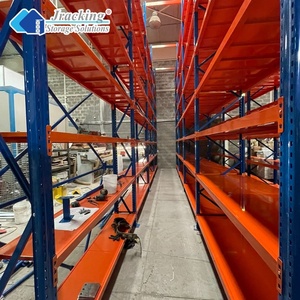
EU Standard Cold Room Deep Freeze Pallet Racking
Low-temperature treated steel racking engineered for cold storage facilities down to -30°C with high resistance to thermal stress.
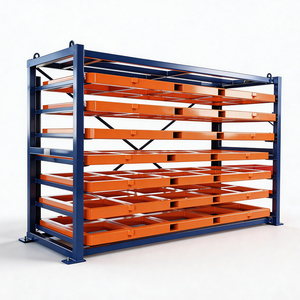
CE Certified Heavy Duty Industrial Cargo Shelving System
Fully compliant with European CE safety certifications, featuring reinforced beam connectors, safety pins, and anti-collapse frame design.
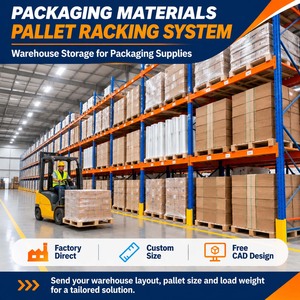
Packaging Materials High-Density Pallet Racking System
Optimized spatial layout tailored for FMCG packaging materials, bulk inventory storage, and high-frequency dispatch centers.
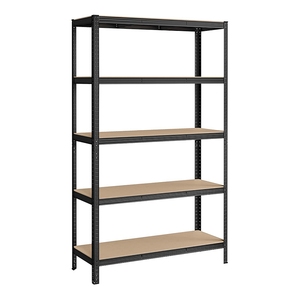
1800mm Galvanized Steel 5-Tier Heavy Duty Corner Rack
Galvanized anti-rust steel corner rack unit with adjustable MDF/metal decks for space optimization in industrial workshops and stockrooms.
Global Industrial Racking Benchmark Metrics
Engineering compliance standards verified across major Swiss, European, and American logistics infrastructure projects.
Industry Whitepaper: Evaluating the Top 10 Pallet Rack Shelving Factories
In modern supply chain architecture, industrial racking is no longer viewed as static commodity steel; it serves as the dynamic backbone of warehousing throughput, automated retrieval systems (ASRS), and critical risk management infrastructure. Choosing the right pallet rack shelving factory requires evaluating advanced structural design capability, roll-forming precision, cold-formed steel metallurgical integrity, and strict adherence to international safety norms such as EN 15512, EN 15620, EN 15635, and Swiss SIA 261 seismic criteria.
When global supply chain executives and engineering procurement managers evaluate top racking vendors, failure risk, load displacement formulas, and yield strength metrics are top of mind. Tier-1 rack manufacturers, such as Helvetia Rack Systems AG and top-tier OEM factories, integrate finite element analysis (FEA) into beam-to-upright connector designs to eliminate mechanical play and micro-rotations under cyclical warehouse loading conditions.
Metallurgical Traceability
Tier-1 factories utilize certified Q235B, Q355B, or S355JR grade steel, accompanied by full mill test certificates (MTC) to guarantee consistent tensile yield and ductile flexure under maximum rated payload conditions.
Seismic Calculation (SIA 261)
Advanced seismic rack design for regions across Swiss zones Z1a to Z3b. Engineered with dynamic response spectrum modeling to withstand horizontal floor acceleration and prevent frame buckling.
Automated Roll-Forming
Continuous multi-station cold roll-forming production lines ensure pitch tolerance precision within ±0.5mm, critical for seamless automated stacker crane (ASRS) and radio shuttle vehicle operations.
Global Procurement Matrix: Top 10 Pallet Rack Factory Benchmark
To assist industrial engineering teams, logisticians, and procurement directors in qualifying suppliers, the following benchmark matrix contrasts structural design standards, robotic welding automation, surface treatment technology, and custom rack engineering capabilities across top international racking manufacturers.
| Evaluation Factor | Tier-1 Industry Standard (Helvetia Rack Baseline) | Standard Commercial Factories | Low-Cost Commodity Suppliers |
|---|---|---|---|
| Structural Design Compliance | EN 15512, FEM 10.2.08, RMI, SIA 261 (Seismic verified) | Basic ISO 9001 / National standard only | Non-verified empirical calculations |
| Steel Material Grades | High-yield cold-rolled Q355B / S355JR with MTC tracing | Standard Q235B steel coils | Mixed scrap/recycled uncertified steel |
| Welding Precision & Standards | Robotic laser-guided welding to AWS D1.1 & EN ISO 3834 | Semi-automated MIG welding | Manual hand stick welding (high defect rate) |
| Surface Protection | Thermosetting epoxy-polyester powder coat (80–100μm) | Standard liquid paint or thin powder coating | Single coat spray paint (prone to corrosion) |
| Cold Storage Performance | Special low-temp alloy steel engineered to -30°C | Standard room temp steel (embrittlement risk) | Unsuitable for refrigerated environments |
| ASRS & Shuttle Tolerances | Ultra-tight deflection control to EN 15620 Class 100-400 | Standard pallet access tolerances | High tolerance variation causing sensor faults |
Engineering Capabilities of Helvetia Rack Systems AG
Helvetia Rack Systems AG combines Swiss structural precision with high-scale global manufacturing facilities. Every racking project undergoes rigorous physical load tests, finite element structural calculations, and precise spatial planning tailored to client building geometry and logistics workflows.
- Seismic Optimization: Certified structural engineers calculate floor anchor shear stresses, dynamic overturning moments, and soil foundation interaction to SIA 261.
- Cold Store & Deep Freeze Specialist: Specially formulated epoxy powder coatings and high-impact structural steel grades engineered specifically for pharmaceutical and food cold chain warehouses down to -30°C.
- Automated Warehouse Integration: Manufacturing high-bay racking systems capable of supporting 40+ meter tall ASRS stacker crane aisles and high-density radio shuttle lanes.
- Full Project Lifecycle Support: Complete turnkey execution encompassing 3D layout simulation, structural calculation reports, certified site installation, and annual EN 15635 rack safety inspections.
Enterprise Project Highlights
High-capacity regional retail distribution hub featuring boltless teardrop beam adjustment and heavy-duty wire mesh decks.
Deep-lane semi-automated shuttle installation operating at -25°C, increasing footprint utilization by 75% over conventional selective racks.
Future Trends in Industrial Pallet Rack Manufacturing & Procurement
As land availability tightens across major logistics hubs in Europe, North America, and Asia, industrial warehouse developers are transitioning from horizontal footprints to vertical, high-density automated eco-systems. Understanding these key trends is essential for future-proofing warehouse investments over a 15-to-20-year operational lifecycle:
1. Automated Shuttle & ASRS Synergy
Traditional manual forklift racking is rapidly giving way to hybrid shuttle systems and Miniload/Pallet ASRS. Future-ready rack structures must incorporate integrated sensor mounts, busbar brackets, and ultra-precise guide rails to accommodate autonomous mobile robots (AMRs) and automated shuttles.
2. Green Steel & Decarbonization
Global supply chain sustainability mandates are forcing procurement teams to track Scope 3 embedded carbon in steel racking. Top factories are adopting hydrogen-reduced green steel coils and zero-VOC electrostatic powder coating technologies to meet corporate ESG targets.
3. Modular & Boltless Dynamic Engineering
Seasonal demand spikes and shifting SKU dimensions require rapid beam reconfigurability. High-performance teardrop and wedge-hook connector systems allow warehouses to alter rack beam heights in minutes without compromising structural rigidity or requiring specialized tooling.
Frequently Asked Questions (FAQ) for Warehouse Procurement
Technical insights and answers compiled by Helvetia Rack Systems AG structural engineers.
Which structural engineering standards must pallet racking satisfy for European and Swiss projects?
For European and Swiss industrial installations, heavy-duty adjustable pallet racking must strictly comply with EN 15512 (structural design requirements for steel static storage systems), EN 15620 (tolerances, deformations, and clearances for automated and manual racking), and EN 15635 (operation and maintenance of storage equipment).
Furthermore, installations in Switzerland must account for regional seismic ground acceleration forces under SIA 261 (seismic zones Z1a to Z3b) and calculate load capacity utilizing FEM 10.2.08 guidelines for seismic rack structural stability.
How do high-density Radio Shuttle and Drive-In systems compare to Selective Pallet Racking in cost-per-pallet position?
While selective pallet racking has a lower initial capital expenditure (CAPEX) per steel upright, it requires multiple forklift aisles, utilizing only 35%–40% of overall warehouse floor cube. High-density systems such as Radio Shuttle Racking or Drive-In Racking eliminate standard aisles, driving storage density up to 75%–85%.
When factors like land lease costs, building heating/cooling energy expenses (especially in cold rooms), and operator labor overhead are calculated over a 5-year operating window, high-density shuttle racking consistently yields a significantly lower total cost per pallet stored.
What steel material grades and surface coatings provide maximum longevity in cold storage environments?
In refrigerated or deep-freeze cold rooms (-25°C to -30°C), low-grade carbon steel can undergo cold embrittlement, increasing structural fracture risks. We utilize high-yield structural steel grades such as Q355B or S355JR with verified impact toughness test ratings.
Surface protection requires thermosetting powder coating with an average dry film thickness (DFT) of 80 to 100 microns or hot-dip galvanization to prevent micro-condensation corrosion during defrost cycles.
Why are rack safety accessories like wire mesh decking and column guards crucial for EN 15635 compliance?
Accidental forklift mast strikes represent over 80% of rack collapse causes worldwide. Installing heavy-duty steel column protectors and frame end-guards absorbs impact kinetic energy before structural upright damage occurs.
Wire mesh decking acts as a safety drop-barrier for misplaced pallets while allowing over 70% open area for in-rack fire sprinkler water penetration, satisfying building insurance and fire safety regulations.
How does factory manufacturing tolerance impact Automated Storage and Retrieval Systems (ASRS)?
In automated high-bay warehouses operating with high-speed stacker cranes or micro-shuttles, positioning accuracy is governed by optical lasers and sensor beams. If an upright frame has pitch deviations exceeding ±1.0mm or beam deflection exceeds 1/200th of span under payload, automatic sensors will trigger emergency stops or mechanical collisions.
Top factories employ automated CNC punch presses and robotic welding lines to maintain tight structural tolerances compliant with EN 15620 Class 100-400 precision classes.
Plan Your Warehouse Racking Infrastructure with Experts
Connect with senior structural engineers at Helvetia Rack Systems AG for custom 2D/3D layout drawings, EN 15512 static load calculations, and comprehensive enterprise procurement proposals.