Engineering Rigor & OEM/ODM Structural Customization Standards
In high-density warehousing, heavy-duty industrial storage racks are structural engineering assets subject to continuous dynamic load, impact stress, and seismic forces. As a globally recognized OEM/ODM warehouse pallet racks manufacturer, our design methodology is rooted in structural integrity verification under EN 15512:2020 (the European standard for adjustable pallet racking systems) and ANSI/MH16.1 (RMI specifications for industrial steel storage racks).
We do not deliver off-the-shelf structural compromises. Our OEM/ODM capabilities encompass custom cold-roll forming profile engineering, FEA (Finite Element Analysis) structural simulation, high-yield steel selection (Q235B, Q355B structural grade steel), and proprietary beam-to-column connector geometries engineered to minimize sway displacement and structural deflection.
EN 15512 Structural Compliance
Every frame and beam profile undergoes rigorous testing for limit state design, ultimate load capacity, second-order sway stability (P-Delta effects), and beam connector rotational stiffness.
SIA 261 & Seismic Design
Tailored structural seismic engineering calculated specifically for localized seismic zones (Z1a through Z3b under SIA 261 / FEM 10.2.08), ensuring anti-collapse stability under lateral ground acceleration.
Advanced Surface Finishing
Automated 9-stage pre-treatment powder coating (60–80 microns thickness) and continuous hot-dip galvanizing options resistant to aggressive cold-store condensation and chemical exposure.
Engineering Decision Matrix: System Selection by Storage Dynamics
Selecting the optimal warehouse racking infrastructure requires balancing volume efficiency, stock turnover kinetics (FIFO vs. LIFO), floor space cost, and automation compatibility. The following decision matrix provides objective engineering data to support strategic procurement planning.
| Racking Architecture | Access Mode | Floor Utilization | Typical Load Rating | Primary Industry Application |
|---|---|---|---|---|
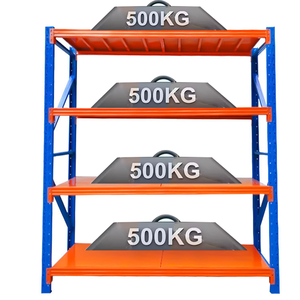
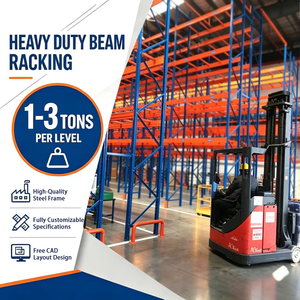
| Selective Pallet Racks | 100% Direct (FIFO) | 40% - 50% | 1,000 - 3,500 kg / Level | 3PL Logistics, Retail Distribution, High-SKU Hubs |
| Radio Shuttle Racks | Semi-Automated (FIFO/LIFO) | 75% - 85% | 1,500 kg / Pallet | Cold Storage (-25°C), FMCG, Food & Beverage |
| Drive-In Pallet Racks | Block Storage (LIFO) | 65% - 75% | 1,000 - 2,000 kg / Level | Seasonal Inventory, Homogeneous Bulk Goods |
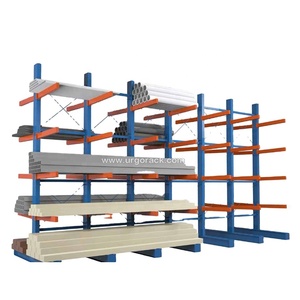
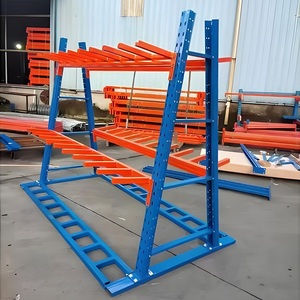
| Heavy-Duty Cantilever Racks | Direct Overhead Access | 60% - 70% | 500 - 5,000 kg / Arm | Lumber, Steel Pipes, Aluminum Extrusions, Sheet Metal |
| ASRS High-Bay Structures | Fully Automated (WMS Driven) | 85% - 92% | Up to 30M Height / Custom | Pharmaceutical, Automotive Assembly, Lights-Out Warehouses |
Strategic Procurement & Future Industry Development Trends (2025–2030)
Global logistics operations are undergoing structural shifts driven by industrial land supply constraints, escalating labor overhead, zero-carbon mandates, and the integration of automated material handling equipment (AMHE). Warehouse storage procurement is transitioning from static steel sourcing to dynamic system engineering.
1. Integration of Smart Racking & Automated Shuttle Systems
Future-proof logistics infrastructures are rapidly adopting radio shuttle carts and Autonomous Mobile Robots (AMRs) integrated directly into high-density pallet racking channels. OEM/ODM design requirements now mandate precision beam channel tolerances (EN 15620 Class 400/300) to allow seamless automated movement without sensor miscalibration or mechanical jamming.
2. Carbon Footprint Tracking & Circular Steel Sourcing
Leading global buyers mandate Environmental Product Declarations (EPDs) for structural steel. OEM manufacturers capable of sourcing low-carbon recycled steel (EAF - Electric Arc Furnace process) coupled with volatile organic compound (VOC)-free thermosetting powder coatings are gaining decisive competitive edges in major international infrastructure bids.
3. Dynamic Load Monitoring & IoT Structural Sensors
Racking systems are morphing into smart nodes. Embedded strain gauges, vibration sensors, and load-cell sensors integrated into upright baseplates alert facility managers in real time to forklift impact damages, structural overload, or uneven settlement—preventing catastrophic rack collapses before structural failure limits are breached.
4. Ultra-High Cold-Chain & Extreme Temperature Resilience
With global cold-chain demand expanding, OEM storage racks are engineered using low-temperature micro-alloyed steels resistant to cold embrittlement at sub-zero conditions (-30°C). Fasteners, welds, and zinc-rich coatings must pass rigorous thermal expansion/contraction fatigue cycles to ensure multi-decade operational safety.
Enterprise Advantage: Why Global Buyers Partner with Our Factory
As a vertically integrated industrial pallet rack manufacturer and custom ODM supplier, our manufacturing footprint bridges raw material engineering with global site deployment. Our end-to-end manufacturing workflow guarantees structural compliance, component interchangeability, and uncompromised safety metrics.
- Traceable Raw Material Integrity: We strictly procure structural steel coil directly from Tier-1 state mills with mill test certificates (MTC) verifying chemical heat numbers, yield strength ($R_{eH} \ge 355\text{ MPa}$), and tensile resilience.
- Automated Cold-Forming Precision: 24-station continuous roll-forming lines guarantee precision section profiles with sub-millimeter punching pitch tolerances, ensuring effortless beam connector engagement and uniform stress distribution.
- Robotic Welding Operations: Critical load-bearing components, including heavy-duty baseplates, beam connector brackets, and cantilever column bases, are welded using robotic MIG systems to eliminate manual weld voids and hydrogen embrittlement.
- Comprehensive Turnkey Lifecycle Support: From initial CAD structural layout, FEA structural calculations, export container loading optimization, to on-site assembly guidance and EN 15635 annual inspection protocols.
Frequently Asked Questions by Technical Buyers
In-depth engineering answers covering design standards, load ratings, safety factors, and custom OEM manufacturing lead times.
Which structural design standards do your warehouse pallet racks comply with?
▼
Our heavy-duty pallet racking systems are engineered primarily in compliance with EN 15512:2020 (Adjustable pallet racking systems – Principles for structural design) for European and global markets, as well as ANSI/MH16.1 (RMI standard) for American project specifications. Deflection limits for load-bearing beams are strictly calculated to not exceed $L/200$ under maximum allowable working load, ensuring operator safety and structural stability under dynamic loading conditions.
Can you custom manufacture racking components under OEM/ODM buyer specifications?
▼
Yes. As a direct OEM/ODM manufacturer, we offer complete structural customization. We can engineer specific beam profiles, custom upright pitch increments (e.g., 50mm, 75mm, or 76.2mm teardrop patterns), heavy-duty frame depths, special column guard profiles, and custom corporate color matching via RAL powder coating. We also produce customized OEM structural stampings, teardrop systems for the North American market, and specialized accessories such as wire mesh decking, pallet support bars, and drum cradles.
How do you calculate load capacities for seismic zones (SIA 261 / FEM 10.2.08)?
▼
In seismic zones (such as Swiss cantons under SIA 261 or seismic zones across North/South America), racking systems must withstand lateral seismic accelerations without structural tipping or beam dislodgement. Our structural engineers utilize finite element software to analyze the building ground acceleration class, rack height-to-depth aspect ratio, unit pallet weights, and dynamic ductility factors. We provide oversized baseplates, heavy-duty floor anchor bolts (chemical or expansion anchors), and specialized cross-bracing towers tailored to localized seismic codes.
What surface treatment options are best suited for cold storage environments?
▼
For ambient warehouses, our standard electrostatically applied epoxy-polyester powder coating (60–80 microns) provides excellent scratch resistance and durability. However, for sub-zero cold rooms (-25°C to -30°C) with high humidity risk, we recommend Hot-Dip Galvanizing (HDG) to BS EN ISO 1461 standards, providing a thick zinc alloy barrier (minimum 65-85 microns) that prevents rust formation caused by thermal cycling condensation.
What documentation and structural certification are supplied with custom OEM orders?
▼
Every industrial shipment is accompanied by Mill Test Certificates (MTC EN 10204 3.1) verifying raw steel chemistry and mechanical properties, static structural calculation reports signed by certified structural engineers, installation guidance drawings, and safety load plates (indicating maximum frame capacity, beam level ratings, and safety warnings) compliant with EN 15635 standards.