Industrial Product Portfolio
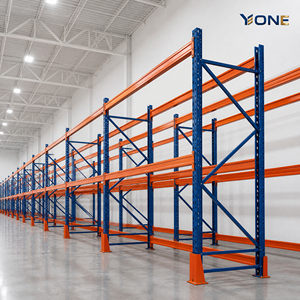
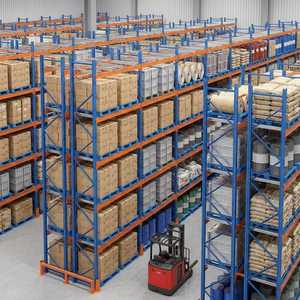
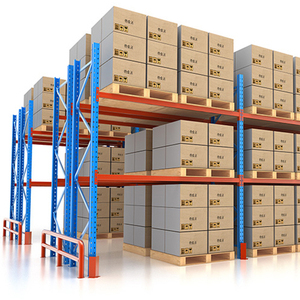
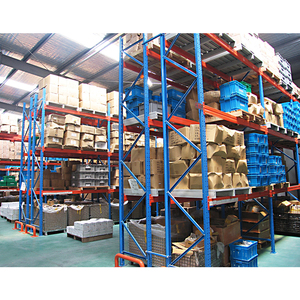
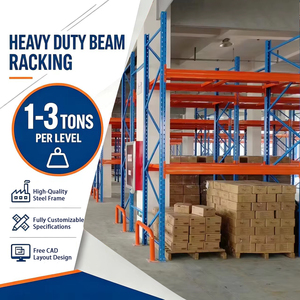
Engineered Heavy-Duty Pallet Racking Systems
Explore our certified OEM/ODM structural steel storage configurations optimized for distribution centers, cold storage, and automated supply chain hubs.
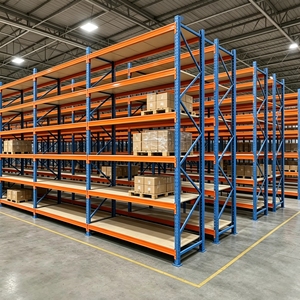
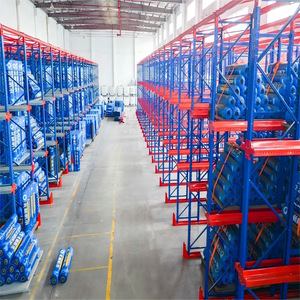
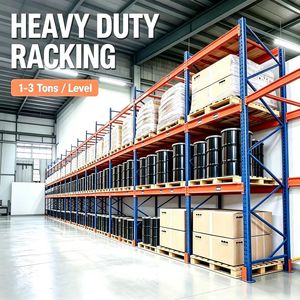
Manufacturing Excellence
Why Global Logistics Leaders Partner with Our OEM/ODM Factory
Combining advanced structural engineering, certified Q235B/Q355B steel sourcing, and flexible custom manufacturing to deliver reliable, long-lifecycle storage infrastructure.
Custom OEM/ODM Engineering
Tailored profile geometries, custom column pitches (50mm, 75mm, 76.2mm teardrop), bespoke load beam sections, and specialized color-matching powder coats designed precisely around your warehouse layout and operational requirements.
Certified Structural Steel Sourcing
Exclusively procuring prime-grade cold-rolled Q235B and high-yield Q355B structural steel from top-tier state steel mills. Full material traceability with mill test certificates (MTC) ensuring verified tensile strength and yield stability.
International Compliance & Seismic Safety
Designed and calculated in strict compliance with European EN 15512 standard, US RMI specs, and Swiss SIA 261 seismic criteria. Seismic baseplates, row spacers, and safety locks protect inventory against extreme mechanical forces.
Robotic Welding & Precision Roll-Forming
Automated continuous roll-forming lines paired with Panasonic multi-axis robotic welding cells deliver ultra-consistent beam connector joints, seamless weld penetration, and exact dimensional tolerances across large-scale volume orders.
Advanced Surface Pre-Treatment & Finish
Automated 9-stage phosphating, degreasing, and ultrasonic cleaning pre-treatment combined with thermosetting epoxy-polyester powder coating (60–90µm thickness) ensures long-term corrosion prevention, even in high-humidity cold stores.
Turnkey Export Logistics & Installation Support
Comprehensive international export packing (steel-banded bundles, protective film wrapping, corner guards) paired with detailed assembly drawings, 3D BIM installation schematics, and multilingual engineering advisory support.
Comprehensive Engineering Overview: OEM/ODM Pallet Racking Infrastructure
In modern industrial logistics, storage density, structural safety, and operational speed dictate warehouse efficiency. As a global OEM/ODM Warehouse Pallet Racking System Manufacturer & Exporter, our engineering core centers on transforming raw structural steel into high-yield, flexible, and seismic-resistant pallet rack systems tailored to complex enterprise requirements.
Selecting the optimal pallet racking system requires rigorous structural analysis balancing dead loads, live loads, seismic accelerations, floor slab tolerances, and material handling equipment (MHE) kinematics. Whether configuring standard selective pallet racks for fast-moving SKU picking hubs or high-density radio shuttle racks for temperature-controlled cold chains, engineering integrity forms the bedrock of supply chain risk mitigation.
1. Metallurgical Excellence: Material Engineering & Profile Physics
Structural reliability starts at the molecular level. Standard market racks often rely on non-certified commercial-grade scrap steel, leading to unpredictable yield points under dynamic forklift impacts or heavy static loads. Our manufacturing lines exclusively utilize cold-rolled high-tensile Q235B (yield strength $\sigma_y \ge 235\text{ MPa}$) and Q355B (yield strength $\sigma_y \ge 355\text{ MPa}$) structural steel, comparable to European S235JR and S355JR standards.
- Omega Upright Profiles: Cold-roll-formed into multi-ribbed "Omega" profiles featuring up to 11 to 13 bending folds along the section perimeter. This complex cross-sectional geometry drastically elevates section modulus and torsional buckling resistance compared to standard C-channels.
- Interlocking Beam Profiles: Constructed from double C-aperture cold-formed steel profiles nested and continuous-seam robotically welded to form a closed box section. Box beams deliver superior lateral stiffness and minimal deflection under concentrated pallet loads.
- Safety Factor Ratios: Standard designs maintain structural safety factors ranging from 1.5 to 1.95 based on EN 15512 calculation algorithms, accommodating micro-overloads without permanent plastic deformation.
2. Structural System Architecture & Load Distributions
Pallet racking systems operate as semi-rigid framed structures where beam-to-column connections dictate overall frame stability. The connector bracket features multi-hook lug patterns that engage into the teardrop or diamond upright perforations. Under load, a self-locking wedge action occurs, increasing joint stiffness as payload mass rises.
| Racking Architecture | Storage Density | SKU Selectivity | Ideal Load Profile | MHE Compatibility | Structural Standard |
|---|---|---|---|---|---|
| Selective Pallet Racking | Standard (40–50% Footprint) | 100% Direct Access | High SKU Diversity, Medium Volume | Reach Trucks, Counterbalance | EN 15512 / RMI MH16.1 |
| Drive-In / Drive-Through | Very High (75–85% Footprint) | Low (LIFO / FIFO Lanes) | Homogeneous Goods, Bulk Batches | Standard Forklifts | EN 15512 / FEM 10.2.07 |
| Radio Shuttle Racking | Maximum (80–90% Footprint) | Medium-High (Deep Lane LIFO/FIFO) | Cold Storage, Food & Beverage | Automated Shuttle + Forklift | EN 15512 / CE Automated |
| Automated High-Bay (ASRS) | Extreme Vertical (Up to 45m) | 100% Automated Access | High Throughput Logistics Hubs | Stacker Cranes / AMRs | EN 15512 / FEM 10.2.08 |
Future Procurement & Industrial Trends (2025–2035 Strategic Outlook)
The global warehousing landscape is undergoing a structural transformation driven by supply chain volatility, urban real estate appreciation, and stringent decarbonization mandates. B2B procurement leaders must account for the following emerging mega-trends when specifying OEM/ODM racking assets:
1. Automation-Ready Hybrid Racks & AMR Integration
Conventional static racking is increasingly giving way to automation-ready hybrid structures. Modern logistics centers require rack frames engineered with tighter manufacturing tolerances ($\pm 0.5\text{mm}$) to integrate seamlessly with Autonomous Mobile Robots (AMRs), Automated Guided Vehicles (AGVs), and stacker cranes. OEM racking must incorporate guided rails, sensor mounting plates, and sub-millimeter beam deflection controls (limiting beam deflection to $L/300$ or lower instead of standard $L/200$) to prevent optical sensor misreads by robotic pickers.
2. Cold-Chain Expansion & High-Density Thermal Efficiency
With global demand for pharmaceuticals, biologics, and frozen foods surging, the energy cost of cold storage operating at $-25^\circ\text{C}$ to $-30^\circ\text{C}$ demands maximum volumetric utilization. Semi-automated Radio Shuttle systems and mobile power-driven racking are replacing standard selective racks in cold stores. By eliminating operating aisles, these high-density systems reduce refrigerated room air volume by up to 60%, delivering massive operational energy savings.
3. Green Steel & Decarbonized Supply Chains (CBAM Compliance)
Environmental, Social, and Governance (ESG) criteria now heavily influence enterprise procurement. Industrial buyers, particularly in Europe and North America, mandate low-carbon footprint manufacturing. Our factory is actively integrating recycled low-emission steel billets, eco-friendly solvent-free powder coatings, and solar-powered manufacturing lines to comply with Europe's Carbon Border Adjustment Mechanism (CBAM) and ISO 14064 carbon neutrality frameworks.
4. Structural Health Monitoring (IoT-Enabled Smart Racks)
Preventative safety maintenance is evolving from annual manual inspections to continuous real-time monitoring. Future-proof OEM racking incorporates embedded strain gauge sensors and micro-accelerometers within critical upright columns. These IoT sensors detect forklift impacts, structural fatigue, micro-deflections, and seismic resonance, transmitting immediate alert signals to the facility’s Warehouse Management System (WMS).
Product Evolution & Technological Innovations in Storage Systems
Industrial pallet racking has evolved far beyond rudimentary slotted angle shelving. The continuous advancement of material science and manufacturing technology has yielded several key structural innovations:
- Evolution of Beam Connections: Early rack designs relied on bolted connections, which were labor-intensive and prone to loosening under vibration. The industry transitioned to 3-hook and 4-hook snap-in connectors with automatic safety lock pins, reducing field assembly time by 70% while improving moment connection stiffness.
- Optimization of Column Perforations: Advanced finite element analysis (FEA) has enabled engineers to optimize perforation geometry (teardrop, hex-diamond, standard rectangular). Modern hole patterns minimize stress concentration around punch zones, retaining over 92% of the unpunched steel profile's column buckling strength.
- Advanced Surface Protection Technologies: High-durability thermosetting powder coats now feature antimicrobial additives for pharmaceutical warehouses, as well as hot-dip galvanizing (ISO 1461) achieving zinc coatings exceeding $65\mu\text{m}$ for corrosive outdoor or chemical storage environments.
Factory Quality & Engineering Standards
Rigorous Manufacturing & Testing Protocol
Every structural component undergoes comprehensive mechanical and dimensional validation prior to export dispatch.
1. Tensile & Yield Strength Testing
Universal testing machines verify batch yield strength, ultimate tensile strength, and elongation percentage for incoming steel coils, ensuring compliance with mill test reports.
2. Full-Scale Stub Column Crushing
In-house hydraulic press rigs execute compressive load-to-failure testing on upright stubs to empirically establish ultimate axial strength and local buckling behavior.
3. Beam Bending & Deflection Shear
Four-point bending test frames measure central deflection under 1.5x nominal load, verifying compliance with the strict $L/200$ deformation threshold specified in EN 15512.
4. Salt Spray & Coating Adhesion
Coated samples undergo 500+ hours of continuous salt spray testing (ASTM B117) and cross-hatch tape adhesion tests to guarantee paint durability and rust prevention.
5. Ultrasonic Weld Flaw Detection
Nondestructive ultrasonic inspection techniques check critical beam connector weld seams to ensure 100% full-penetration weld integrity free from porosity or micro-cracks.
6. 3D Laser Dimensional Audits
High-precision laser trackers inspect column straightness, hole pitch spacing, and beam connector squareness to ensure drop-in accuracy during final job site installation.
Procurement & Engineering Knowledge Base
Frequently Asked Questions by Industrial Buyers
Clear, technical answers to common questions encountered during layout planning, structural engineering, and procurement.
Which structural standards govern your OEM/ODM pallet racking manufacturing?
Our racking systems are calculated and manufactured in full accordance with European standard EN 15512:2020 (Steel static storage systems - Specification of adjustable pallet racking), American RMI (ANSI MH16.1) standards, and FEM 10.2.02 guidelines. For seismic regions (such as Swiss cantons under SIA 261 or US seismic zones 1–4), structural calculations incorporate ground acceleration coefficients ($a_g$), rack ductility factors, and dynamic modal analysis under FEM 10.2.08 specs.
What is the structural difference between Q235B and Q355B steel in racking?
Q235B steel offers a minimum yield strength of $235\text{ MPa}$ and is the cost-effective standard for medium-to-heavy selective pallet racking. Q355B is a high-strength low-alloy steel with a minimum yield strength of $355\text{ MPa}$ (approx. 50% higher yield capacity). We utilize Q355B in high-bay racking frames exceeding 10 meters in height, heavy-duty bottom column sections, high-density shuttle racking, or heavily loaded drive-in systems to reduce overall steel deadweight while maintaining structural safety.
How do you calculate allowable beam deflection limits?
Per EN 15512 standards, maximum vertical deflection of a pallet rack beam under its nominal working load must not exceed $L/200$ (where $L$ is the clear span length of the beam). For automated ASRS or shuttle installations, we enforce stricter internal limits of $L/300$ or $L/400$ to ensure robotic end-effectors can enter and exit pallets without mechanical interference.
Can your factory accommodate custom colors, dimensions, and OEM white-labeling?
Yes. As a direct OEM/ODM manufacturer, we offer full customization: bespoke upright widths (80mm to 120mm), custom profile gauges (1.5mm to 3.0mm), tailored beam lengths, custom punch pitch options (50mm, 75mm, 76.2mm), specialized RAL color matching via electrostatic powder coating, and OEM branding logo plates for engineering distributors and systemic integrators.
What protection accessories are recommended to extend rack service life?
To prevent structural degradation from forklift impact, we recommend installing heavy-duty steel or polymer column protectors (corner guards) at aisle intersections, frame end protectors along main transit corridors, pallet backstops to prevent over-pushing, and wire mesh decking or support bars across beams to support non-standard pallet footprints and satisfy local fire sprinkler penetration requirements.
What is the standard production lead time and export packaging protocol?
Standard manufacturing lead time is 15 to 25 business days from layout sign-off and deposit receipt. Components are bundled using heavy-duty steel straps over protective corrugated edge guards, wrapped in moisture-barrier stretch film, and loaded into 40ft High Cube containers using wooden dunnage to prevent transport friction and ensure pristine arrival condition at international destinations.
Optimize Your Storage Infrastructure Today
Partner with a certified OEM/ODM racking manufacturer. Contact our structural engineering team for customized CAD layouts, load capacity calculations, and competitive factory-direct pricing.