Industrial Pallet Racking Systems & Heavy-Duty Storage Solutions
Engineered to exceed EN 15512 structural guidelines, our certified racking series delivers structural stability, custom load capacities up to 5,000 kg per level, and seamless integration for modern logistics infrastructure.
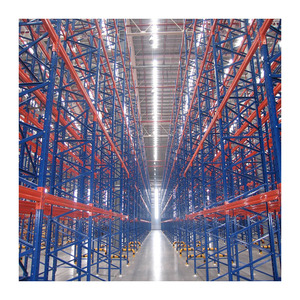
Mracking Heavy Duty Industrial Palletized Racking (1000-4000kg)
Technical Specs & Engineering →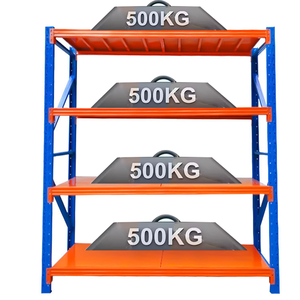
Heavy Duty Adjustable Industrial Steel Pallet Storage Shelving Rack
Technical Specs & Engineering →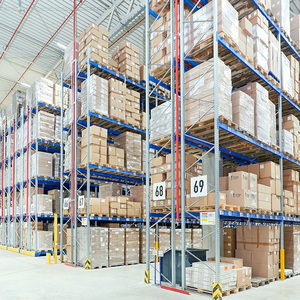
Export Packaging Warehouse Pallet Rack 1200kg OEM Factory System
Technical Specs & Engineering →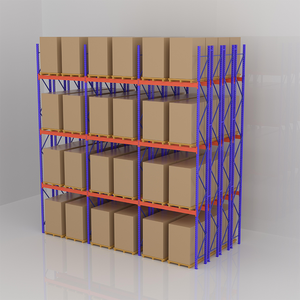
Factory Direct Heavy Duty Warehouse Pallet Rack (1000kg to 5000kg)
Technical Specs & Engineering →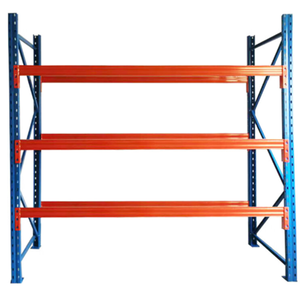
Mracking Modular Industrial Warehouse Pallet Racking & Shelving System
Technical Specs & Engineering →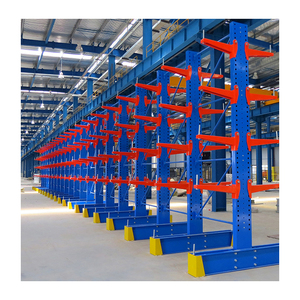
Manufacturer Direct Heavy Duty Automotive & Pipe Cantilever Rack System
Technical Specs & Engineering →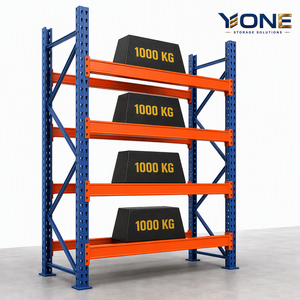
Heavy Duty Pallet Racking with Integrated Frame & Column Protectors
Technical Specs & Engineering →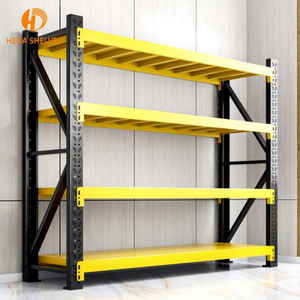
Boltless Adjustable Heavy Duty 500kg/Layer Industrial Steel Storage Rack
Technical Specs & Engineering →Engineering Excellence in OEM/ODM Pallet Racking Manufacturing
In modern high-density logistics, structural integrity and optimization of storage footprints represent critical levers for operational risk mitigation and capital expenditure ROI. As an established OEM/ODM pallet racking manufacturer, our engineering framework integrates cold-formed structural steel dynamics, finite element analysis (FEA), and continuous material quality verification to guarantee structural longevity under maximum duty cycles.
Selective pallet racking and automated racking infrastructures must withstand severe static loads, dynamic forklift impacts, and localized stress concentrations. Utilizing high-tensile cold-rolled steel grades such as Q235B and Q355B (equivalent to S235JR and S355JR under EN 10025), our upright profiles feature multi-stage cold-roll forming with up to 12-16 deformation passes. This precise cold-working process increases yield strength through strain hardening while preserving high ductility under operational stress.
Cold-Formed Upright Profile Mechanics
Upright posts undergo complex combined bending and axial compression. Our profile geometries (Omega profile sections ranging from 80mm to 120mm face width) incorporate stiffening ribs along the flanges and web to maximize the section modulus ($Z_x$) and moment of inertia ($I_x$). This design suppresses local buckling and torsional-flexural buckling under concentrated axial loads.
Beam Locking & Connector Integrity
Beam-to-column connections leverage heavy-duty steel connector claws welded to hollow box beams or step beams. Utilizing a minimum 3 to 4-tooth tapered connection profile, friction-lock geometry increases joint rigidity ($C_{d,i}$ stiffness factor per EN 15512), effectively reducing beam deflection below the conservative $L/200$ operational threshold.
Global Racking Structural Standards & Calculation Models
Compliance with international storage rack structural codes ensures that safety margins, material yield tolerances, and seismic safety coefficients meet local building code regulations globally.
| Standard Code | Jurisdiction | Primary Focus | Deflection Limit ($L/\delta$) | Seismic Standard Integration |
|---|---|---|---|---|
| EN 15512:2020 | European Union / Switzerland | Adjustable Pallet Racking - Structural Design Principles | $L / 200$ | FEM 10.2.08 / SIA 261 (Zones Z1a - Z3b) |
| RMI MH16.1 | North America (USA / Canada) | Specification for the Design, Testing and Utilization of Industrial Steel Storage Racks | $L / 180$ | ASCE 7 / IBC Seismic Load Combinations |
| AS 4084-2012 | Australia / New Zealand | Steel Storage Racking Structural Standard | $L / 200$ | AS 1170.4 Structural Design Actions |
| FEM 10.2.02 | Global / European Logistics | Design of Static Steel Pallet Racking Systems | $L / 200$ | Seismic Eurocode 8 Framework |
* All OEM/ODM production batches undergo structural verification through destructive loading tests and finite element modeling (FEA) to ensure actual safety factors exceed minimum code requirements by at least 15%.
Turnkey OEM/ODM Fabrication Workflow
From preliminary CAD/BIM architectural layout to high-velocity continuous roll-forming and automated powder coating, our factory delivers customized storage systems matched to client operational parameters.
1. CAD & BIM Structural Modeling
Our engineering team converts client warehouse floor plans, pallet dimensions, unit loads, and material handling equipment (MHE) turning radii into fully optimized 3D BIM models. Column spacing and aisle clear distances are calibrated for maximum spatial volumetric efficiency.
2. Precision Cold-Roll Forming
Automated CNC continuous roll-forming lines process raw coil stock into perforated uprights and box beams. Hole pitch tolerances are maintained within $\pm 0.5\text{mm}$ across a 12-meter continuous profile, guaranteeing drop-in beam adjustment accuracy during site erection.
3. Robotic MIG Welding
Beam connectors and baseplates undergo full-penetration pulse MIG welding executed by 6-axis robotic arms. Certified under ISO 3834-2 welding quality management, joint weld seams exhibit zero porosity and optimal heat-affected zone (HAZ) structural retainment.
4. Advanced Surface Finishing
Components pass through a 7-stage chemical pre-treatment process including degreasing, zinc-phosphate conversion coating, and deionized water rinsing. Thermosetting epoxy-polyester powder coating (60-80 microns thickness) provides superior impact and corrosion resistance.
5. ISO Quality Audit & Packaging
Every production lot undergoes dimensional verification, coating adhesion cross-hatch testing, and load deflection sampling. Finished profiles are bundled with heavy-duty corner protectors and moisture-proof wrapping designed for sea freight transit.
Future Procurement Trends in Industrial Storage Racking
Warehouse operators, 3PL logistics providers, and industrial distributors are adjusting their procurement strategies to address real estate cost inflation, labor shortages, and supply chain vulnerability.
Shift to Direct OEM/ODM Manufacturing Partnerships
Tier-1 logistics buyers are increasingly bypassing intermediate distributors to contract directly with specialized racking manufacturers. Direct factory procurement secures tailored engineering support, custom steel profiles, lower capital costs per pallet position, and full supply chain material traceability.
Total Cost of Ownership (TCO) Prioritization
Procurement evaluations are shifting from initial procurement price (CAPEX) to holistic Total Cost of Ownership. Buyers demand high-durability coatings, heavy-duty floor anchor systems, structural column guards, and extended fatigue life to lower ongoing operational maintenance costs (OPEX).
Vertical Height Optimization & High-Bay Density
As industrial land values escalate in urban hubs, procurement strategies favor vertical warehouse expansion. Standard 6-meter racking installations are progressively being replaced by 12-meter to 30-meter high-bay pallet racking structures designed for VNA (Very Narrow Aisle) or automated stacker crane operations.
Next-Generation Racking Development & Tech Integration
Industrial storage equipment is evolving from static structural steel frames into dynamic, intelligent, and sustainable warehouse components.
1. Smart IoT Structural Health Monitoring
Integration of strain-gauge sensors and wireless micro-accelerometers into critical upright bases. Real-time telemetry detects structural overload, forklift collision impact energy, and micro-deflections before progressive structural failure occurs.
2. Semi-Automated Radio Shuttle Systems
High-density deep-lane radio shuttle racking systems are rapidly replacing conventional drive-in racks. Motorized shuttles guided by optical sensors travel inside rack channels to automatically deposit and retrieve pallets, drastically reducing forklift aisle travel times and operating safely in cold storage environments down to -30°C.
3. Low-Carbon Steel & Green Manufacturing
Implementation of low-carbon hydrogen-reduced steel coils, combined with zero-VOC electro-static powder coatings. Closed-loop chemical wash recycling cuts manufacturing carbon footprints, aiding enterprise ESG compliance across global supply chains.
Industrial Pallet Racking Procurement FAQ
Expert responses from our structural design team addressing standard compliance, load calculations, seismic engineering, and custom OEM/ODM lead times.
Which structural standards govern pallet rack engineering for international projects?
Industrial pallet racking structures are calculated in accordance with region-specific structural standards: EN 15512 (Europe / International standard for steel static storage systems), ANSI/RMI MH16.1 (United States industrial racking specification), and AS 4084 (Australian racking standard). Installation and operational safety guidelines are governed by EN 15635. Where seismic resistance is mandated, calculations incorporate dynamic response spectrum analysis according to FEM 10.2.08, Eurocode 8, or Swiss SIA 261 standards.
How are beam beam-load ratings calculated, and what safety factors are applied?
Beam load ratings are calculated based on uniformly distributed loads (UDL) acting on pair beams. Structural deflection is strictly engineered not to exceed $1/200^{\text{th}}$ of the clear span length ($L/200$) under maximum rated payload. Material yield safety factors ($\gamma_M$) of 1.4 to 1.5 are applied according to limit state design principles, preventing permanent plastic deformation under full rated operating conditions.
Can your factory engineer racking systems for high seismic risk zones?
Yes. For installations in active seismic regions (such as Swiss Seismic Zones Z1a to Z3b or US Seismic Design Categories D-F), our engineers increase baseplate thickness (up to 10-12mm), utilize heavy-duty concrete anchor bolts, add structural X-bracing along frame backs, and specify higher-yield Q355B cold-rolled steel profiles. Detailed seismic engineering documentation and load signs are provided with every system.
What customization options are available under OEM/ODM production contracts?
Our OEM/ODM capabilities include custom upright section profiles, non-standard pitch perforations (e.g., 50mm, 75mm, or 76.2mm teardrop connection), custom beam profiles (box, step, or open-C section), specific powder coating RAL colors, custom brand embossing, and custom accessory fabrication (wire mesh decking, pallet support bars, drum cradles, and frame protection wrap).
What is the standard production lead time and export delivery capability?
Standard order production cycles range from 15 to 25 days depending on total tonnage and custom tooling requirements. As an export-oriented direct manufacturer, we coordinate ocean container loading, sea-worthy bundling, customs clearance documentation, and complete installation guidelines for global destination ports.
Why Global Logistics Leaders Partner with Our Factory
Combining automated manufacturing scale with advanced structural engineering services to deliver high-performance industrial storage assets.
Direct Factory Quality Guarantees
Every structural component produced in our manufacturing facility is backed by certified raw material mill test reports (MTR), full traceability from coil to installed component, and ongoing EN 15635 inspection support.