Heavy-Duty Warehouse Storage Racking Systems
Precision-engineered factory-direct industrial storage rack solutions built to international quality, seismic safety, and structural integrity standards.
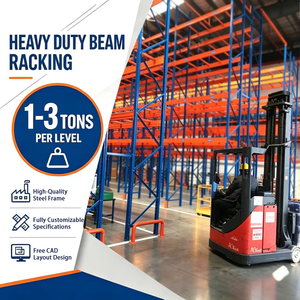
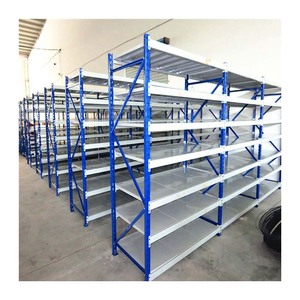
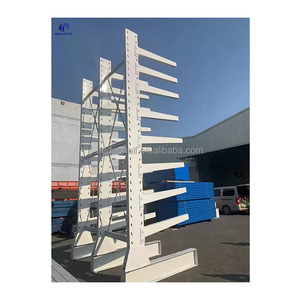
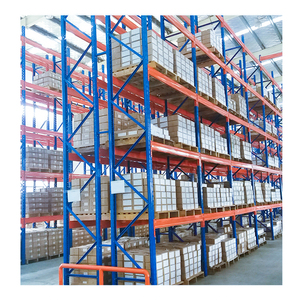
Enterprise Technical Strengths & OEM/ODM Industrial Manufacturing Authority
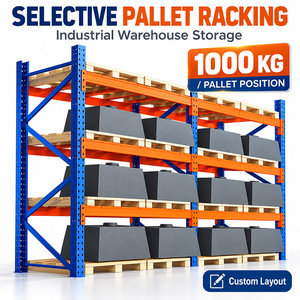
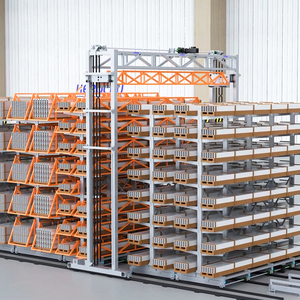
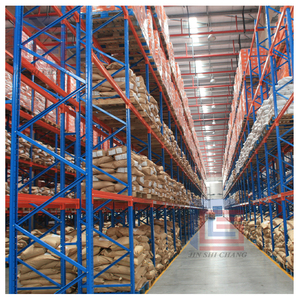
As a leading global tier-1 OEM/ODM industrial storage shelving factory and exporter, our structural engineering team delivers full lifecycle warehouse racking systems engineered to surpass traditional material limits. Operating from automated continuous cold-roll forming lines and state-of-the-art fabrication facilities, we engineer customized heavy-duty selective pallet racks, automated high-bay storage retrieval systems (ASRS), radio shuttle systems, and cantilever racking solutions engineered for extreme load conditions.
Our structural design methodology complies rigorously with international standards including EN 15512:2020 (Structural Design of Adjustable Pallet Racking), EN 15620 (Tolerances, Deformations and Clearances), FEM 10.2.02, and seismic parameters governed by SIA 261 (Swiss Structural Loading Code). Utilizing certified high-yield structural steel grades such as Q235B and cold-formed Q355B (yield strength up to 355 MPa), every racking upright column, box beam, and support bracing undergoes Finite Element Analysis (FEA) to ensure structural safety factors ranging from 1.65 to 2.0 depending on client project specs.
Computerized multi-stage cold-roll forming production machinery ensures sub-millimeter punching accuracy, continuous column profiling up to 15 meters in single piece execution, and zero structural stress fracture risks.
Thermosetting epoxy-polyester powder coating applied via electrostatic process (60-80 microns thickness) provides superior impact, scratch, and chemical resistance, certified for salt spray endurance exceeding 500 hours (ASTM B117).
From CAD/BIM model development, custom teardrop or euro-style beam connectors, to specialized color schemes and private-label packaging, our technical team turns architectural layouts into operational logistics assets.
Industrial Storage System Engineering Analysis & Application Profiles
Choosing the optimal warehouse rack system requires balancing stock-keeping unit (SKU) selectivity, floor area utilization, vertical clear height, forklift operational envelopes, and material handling speeds. Below is an engineering analysis of our key product configurations designed for global procurement managers.
| Storage System Type | Selectivity Ratio | Floor Area Utilization | Max Load per Level | Optimal Logistics Application |
|---|---|---|---|---|
| Selective Pallet Racking | 100% Direct Access | 35% - 40% | Up to 4,500 kg | High-SKU 3PL fulfilment, retail distribution centers. |
| Radio Shuttle Racking | LIFO / FIFO (Deep Lane) | 75% - 85% | 1,500 kg / pallet | Cold storage (-25°C), high-volume FMCG, beverage batching. |
| Automated ASRS Racking | 100% Computer Controlled | 85% - 92% | Up to 3,000 kg | 24/7 automated high-bay warehouses, pharmaceutical plants. |
| Heavy-Duty Cantilever Rack | 100% Unobstructed Linear | 50% - 60% | Up to 6,000 kg / arm | Steel pipes, rebar bundles, timber extrusions, sheet metal. |
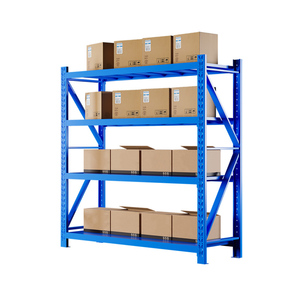
Our heavy-duty selective rack frames feature specialized 75mm and 76.2mm (3-inch) pitch adjustment holes allowing operators to fine-tune beam heights with 100% modular flexibility. Solid structural footplates with chemical anchor bolts disperse static and dynamic forklift impacts into the concrete foundation in strict accordance with floor slab structural capacities.
Future Procurement Trends in Industrial Storage & Warehousing (2025–2035)
As global supply chains shift toward rapid order fulfillment, land scarcity in logistics hubs, and nearshoring manufacturing strategies, industrial racking procurement is undergoing a massive structural transformation. Buying decisions are no longer governed purely by steel tonnage cost; instead, procurement directors prioritize total cost of ownership (TCO), automated material handling compatibility, and environmental compliance.
Conventional forklift-dependent racking is rapidly transitioning to semi-automated and fully automated platforms. Future-proof facilities incorporate shuttle-ready guide channels, AMR (Autonomous Mobile Robot) running decks, and ASRS stacker crane tolerances engineered directly into the steel framing.
ESG policies demand traceable low-carbon steel procurement and Zero-VOC powder coating processes. Importers and enterprise end-users now require EPD (Environmental Product Declarations) and ISO 14064 carbon footprint verification from factory partners.
Modern racking systems are becoming IoT-enabled. Embedded strain gauges, real-time deflection sensors, and scannable QR tags per rack column enable predictive structural maintenance, tracking rack damage before catastrophic failures occur.
Our factory's engineering R&D team works proactively with global system integrators to ensure that our structural rack profiles seamlessly interface with automated guided vehicles (AGVs), conveyor networks, and Warehouse Management Systems (WMS).
Industrial Racking Procurement FAQ (Frequently Asked Questions)
Technical answers from our senior engineering team to help buyers evaluate standards, structural parameters, and export logistics.
Which structural design standards do your industrial racking systems comply with?
Our warehouse storage systems are engineered strictly per EN 15512:2020 (European Standard for Steel Static Storage Systems - Adjustable Pallet Racking), FEM 10.2.02, and North American RMI (Rack Manufacturers Institute) guidelines. Where projects are situated in active earthquake regions, we conduct dynamic seismic calculations according to SIA 261 or local building codes, adjusting baseplate anchor embedment depth, upright profile thickness, and dynamic bracing configurations accordingly.
What steel grades are used in manufacturing, and how is quality verified?
We source structural cold-rolled steel coils exclusively from premier steel mills with mill test certificates (MTC). Profiles are manufactured using Q235B steel (yield strength ≥ 235 MPa) and Q355B high-strength steel (yield strength ≥ 355 MPa). Raw materials undergo tensile strength, yield point, and elongation testing. Finished welded assemblies (such as beam connector brackets) undergo 100% robotic weld inspection and destructive loading tests to guarantee structural safety margins.
What is your OEM/ODM customization workflow for global importers and contractors?
Our standard OEM/ODM customization process follows five structured stages:
1. Data Collection & Architectural Layout Review: Pallet dimensions, unit weights, clear warehouse ceiling height, and floor slab specifications.
2. 3D CAD & FEA Simulation: Engineering stress distribution models and structural load calculation reports.
3. Commercial Quotation & Sample Approval: Custom hole pattern matching, beam connector selection, and color powder coat sample verification.
4. Automated Mass Production: Precision roll-forming, robotic welding, and automated powder coating.
5. Container Packing & Global Logistics: Knockdown bundle packaging optimized for sea container capacity, including installation drawings and load safety plaques.
How do you protect racking components against corrosion in cold storage or humid environments?
For standard ambient warehouses, we utilize a multi-stage pre-treatment wash (degreasing, phosphating) followed by electrostatic epoxy-polyester powder coating cured at 200°C. For harsh environments, cold storage freezers (-25°C to -30°C), or outdoor cantilever applications, we supply Hot-Dip Galvanized (HDG) steel components complying with ISO 1461, providing a zinc coating thickness exceeding 65–85 microns for multi-decade corrosion immunity.
What are the maximum beam deflection limits permitted in your rack calculations?
In full compliance with EN 15512 standards, our pallet rack beams are engineered to ensure maximum vertical deflection under safe working load (SWL) does not exceed L/200 (where L is the clear span length of the beam). For automated ASRS installations, deflection limits are held to even stricter engineering thresholds (up to L/300 or 10mm absolute maximum) to prevent automated stacker crane optical sensor misalignments during high-speed retrieval cycles.
Global Logistics Export & OEM Packaging Standards
Exporting heavy structural steel racking globally requires meticulous bundle protection and container space optimization. Our packaging division employs high-density wooden skids, steel banding straps, plastic shrink wrapping, and edge protectors to safeguard upright frames, box beams, and wire mesh decking panels against trans-oceanic moisture, friction, and movement.
- Knockdown Flat-Pack Assembly: Upright frames can be shipped pre-bolted or unbolted to maximize 40ft High-Cube container volume utilization by up to 35%.
- Comprehensive Documentation: Every export shipment includes mill test certificates, certified structural calculation books, step-by-step CAD installation manuals, and load safety rating plaques.
- Global Project Delivery: Supporting CIF, FOB, DDP, and DDU shipping terms to ports across Europe, North America, Middle East, Southeast Asia, and South America.
Request a Customized Warehouse Engineering Layout & Direct Quote
Partner with an industry-leading OEM/ODM industrial storage racking manufacturer. Contact our senior structural engineers today for technical CAD drawings, structural calculations, and competitive factory-direct wholesale pricing.
Get a Quote