1. Technical Engineering Whitepaper: Custom OEM/ODM Industrial Racking Solutions
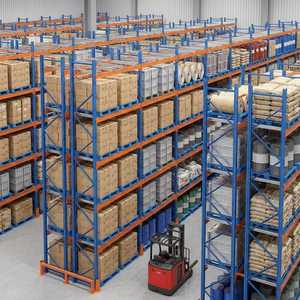
In modern industrial manufacturing, third-party logistics (3PL), and automated distribution infrastructure, warehouse storage is no longer viewed merely as passive steel structure placement. It is a core determinant of internal supply chain throughput, capital expenditure ROI, structural risk management, and operational safety. For system integrators, warehouse equipment brand owners, storage manufacturers, and industrial factory managers, sourcing OEM/ODM industrial racks demands an engineering-first methodology that addresses exact structural load calculations, material science, surface protection dynamics, and regional regulatory compliance.
Helvetia Rack Systems AG provides factory-direct custom OEM/ODM contract manufacturing, bridging high-precision European engineering design principles with large-scale advanced steel fabrication. By adhering strictly to structural standards such as EN 15512:2020 (Steel static storage systems - Adjustable pallet racking systems - Principles for structural design), EN 15620 (Tolerances, deformations and clearances), and Swiss seismic code SIA 261, our custom OEM racking solutions deliver structural integrity, longevity, and optimal spatial efficiency.
Structural E-E-A-T Insight: Standard off-the-shelf pallet racks often suffer from over-engineering in non-critical nodes or dangerous under-engineering in high-stress upright-to-beam connectors. Custom OEM/ODM manufacturing utilizes Finite Element Analysis (FEA) software to optimize profile cross-sections, reducing unnecessary structural deadweight while increasing buckling load capacity by up to 22% under dynamic loading conditions.
1.1 High-Yield Material Selection: Q235B vs. Q355B Structural Carbon Steel
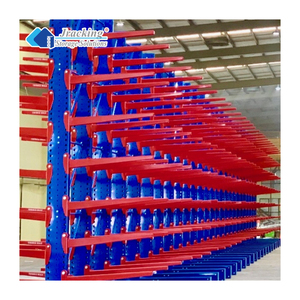
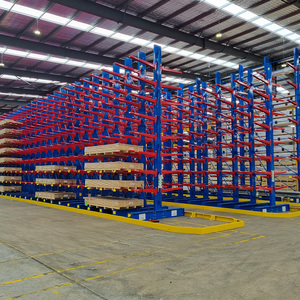
The performance foundation of any heavy-duty storage rack resides in steel grade metallurgy. Standard low-tier storage systems utilize commercial-grade Q235 structural steel with minimum yield strengths around 235 MPa. However, for industrial factories storing heavy die molds, automated high-bay palleted cargo, or cantilevered steel coils, higher strength-to-weight ratios are imperative.
Our OEM manufacturing lines primarily utilize high-tensile Q355B (equivalent to S355JR under EN 10025-2) cold-rolled structural steel. The higher yield point (355 MPa) permits thinner wall profiles with superior moment of inertia, significantly reducing freight costs for export orders without compromising beam deflection limits set by EN 15512 (typically limited to L/200 under total working load).
| Mechanical Property / Parameter | Standard Q235B Steel | High-Tensile Q355B Steel (Helvetia Spec) | Engineering Impact on Storage Racks |
|---|---|---|---|
| Yield Strength (ReH) | ≥ 235 MPa | ≥ 355 MPa | 51% higher resistance to permanent beam sagging under heavy loads. |
| Tensile Strength (Rm) | 370–500 MPa | 470–630 MPa | Enhanced safety factor against catastrophic structural impact failure. |
| Column Buckling Threshold | Baseline | +28% Load Threshold | Allows taller high-bay upright frames (up to 24+ meters in ASRS applications). |
| Cold-Temperature Impact (−20°C) | Moderate Brittle Transition | High Impact Toughness (≥27J) | Critical for sub-zero cold storage facilities and freezer warehouses. |
2. Custom OEM/ODM Manufacturing & Precision Engineering Capabilities
Original Equipment Manufacturers (OEM) and Original Design Manufacturers (ODM) require tailored manufacturing flexibilities. Helvetia Rack Systems AG operates full automated roll-forming production lines capable of producing intricate structural geometries, precise punch patterns, and bespoke color finishes aligned with corporate identity guidelines.
Custom Profile Roll-Forming
Multi-stage cold roll forming machines create upright columns with 8 to 12 structural bends, boosting vertical section modulus and torsional resistance against forklift impact.
Flexible Pitch & Punching Patterns
We support standard European 50mm and 75mm pitches, as well as American teardrop 2-inch (50.8mm) pitch configurations for seamless component interchangeability.
Advanced Surface Finishing
Automated 8-stage pre-treatment wash coupled with electrostatic thermosetting epoxy-polyester powder coating (80–120 microns) or Hot-Dip Galvanization (HDG to ISO 1461).
2.1 Structural FEA Simulation & Seismic Engineering to SIA 261
Switzerland and seismic-active regions worldwide present complex structural hazards for high-density warehouse storage. Under seismic excitation, fully loaded pallet racks experience intense lateral force concentration at frame nodes. Helvetia Rack Systems AG incorporates 3D Finite Element Analysis (FEA) to simulate horizontal ground acceleration, shear distribution, and sway deformation.
For installations situated in Swiss seismic zones Z1a, Z1b, Z2, Z3a, and Z3b according to SIA 261, as well as Eurocode 8 (EN 1998-1) compliant zones, our engineers design specialized heavy-duty baseplates, expanded anchor bolt patterns, diagonal back-bracing, and stiffened beam connectors. This mitigates the risk of progressive collapse during dynamic earthquake events.
3. Global Strategic Procurement Trends in Industrial Storage (2025–2035)
As global supply chains transition toward Industry 4.0 automation, warehouse managers and enterprise buyers must align their procurement strategies with evolving technological and economic trends. Below are five defining macro trends shaping industrial rack procurement over the next decade:
3.1 Rapid Transition from Manual Warehousing to Automated ASRS & Radio Shuttle Racking
Industrial land scarcity and escalating labor overheads are accelerating the adoption of high-density automated systems. Automated Storage and Retrieval Systems (ASRS) and semi-automated Radio Shuttle racks utilize vertical storage spaces up to 40 meters high. OEM rack design for ASRS demands strict manufacturing tolerances (within ±1.5mm structural variance over a 20-meter vertical span) to ensure stacker cranes and AGVs operate without positioning faults.
3.2 Decarbonization and Sustainable Steel Supply Chains
Multinational industrial clients increasingly demand Environmental Product Declarations (EPDs) for structural materials. Sustainable procurement now prioritizes steel mills utilizing Electric Arc Furnace (EAF) technology fueled by renewable power over traditional Blast Furnace (BF) routes. OEM custom rack suppliers capable of demonstrating low embodied carbon and 100% recyclable powder coating formulations gain a significant competitive advantage in corporate ESG audits.
3.3 Growth of Cold Chain Logistics & Sub-Zero Storage Demand
The global surge in pharmaceutical biologics, frozen food distribution, and chemical storage has driven demand for cold-room optimized racking systems. Standard carbon steel undergoes a ductile-to-brittle transition when exposed to temperatures below 0°C, increasing susceptibility to impact fracture from forklifts. Modern procurement specifications dictate fine-grain aluminum-killed structural steel with certified Charpy V-notch impact toughness test results down to −30°C.
3.4 Smart Racking: IoT Structural Health Monitoring (SHM) Integration
Future OEM rack frames will increasingly integrate embedded strain gauges, tilt sensors, and piezoelectric accelerometers. These IoT sensors provide real-time telemetry regarding load distribution, accidental forklift impacts, and structural fatigue. Enterprise buyers are selecting OEM partners capable of designing structural channels with protected wire routing or sensor mounting brackets for smart maintenance platforms.
3.5 Modular Flexibility and Total Cost of Ownership (TCO) Prioritization
Savvy procurement officers are shifting their evaluation metrics from initial Capex per pallet position to Total Cost of Ownership (TCO) over a 15-to-20-year lifespan. Modular racking designs with boltless adjustable beam levels, replaceable lower column protectors, and standardized interchangeable parts reduce maintenance downtime, lower repair costs, and adapt quickly to shifting product dimensions.