High-Density Pallet Racking Portfolio
Engineered for cold-storage facilities, high-throughput distribution hubs, and industrial warehousing requiring optimal LIFO/FIFO space utilization.
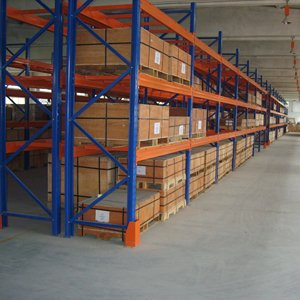
Industrial Storage Warehouse Pallet Racking Systems Racks Display Heavy Duty
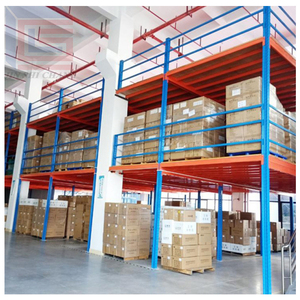
Heavy Duty Mezzanine Racking System Custom Storage Shelves Platform
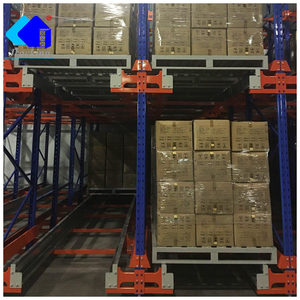
Industrial Cold-Rolled Steel Mobile Shelving with Two-Way Shuttle
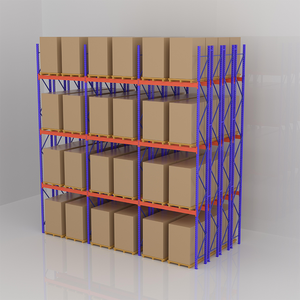
Factory Direct Heavy Duty Warehouse Pallet Rack 1000kg to 5000kg
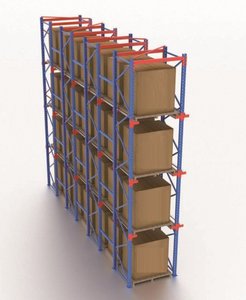
High Density Commercial Storage Drive-In Pallet Rack System
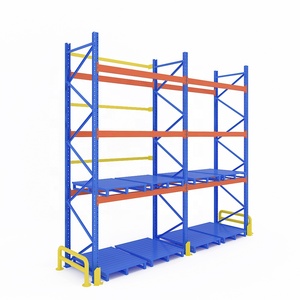
Warehouse Storage Industrial Pallet Rack with Back Stopper System
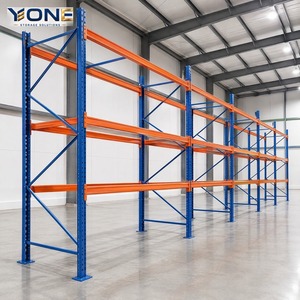
Steel Storage Heavy Duty Selective Pallet Rack System Metal Organizer
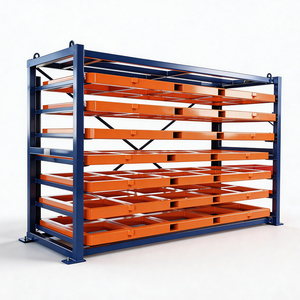
CE Certified Industrial Warehouse Steel Shelving System Storage Racks
Technical Whitepaper: Kinematics & Structural Mechanics of Custom OEM Push Racks
In modern high-density material handling operations, warehouse space optimization often forces a compromise between selectivity and volume efficiency. As global industrial real estate costs appreciate and cold-storage power consumption scales, global logistics managers are transitioning away from low-density selective racking toward high-density dynamic storage architectures. Among these, **Push-Back Pallet Racking (Push Racks)** represents the pinnacle of dynamic Last-In, First-Out (LIFO) material handling engineering.
Unlike static drive-in racking—which exposes upright columns to structural forklift impacts—or fully automated ASRS systems—which demand significant capital expenditure—push-back systems utilize nested telescoping carts running on inclined structural steel rails (typically angled between 1.5° and 2.0°). When a forklift loads a pallet onto the front position, it gently pushes back the existing pallet to reveal a secondary cart beneath it. Upon retrieval, gravity smoothly conveys the rear pallets forward to the pick face at a controlled speed.
Information Gain Benchmark: OEM push-back racking engineered to EN 15512 specifications reduces forklift cycle times by up to 38% compared to drive-in racking while increasing floor area utilization by 75% compared to standard selective setups.
1. Kinematic Cart Nesting Mechanics & Physics of Inclined Flow
The primary operational variable in OEM push rack manufacturing lies in the engineering tolerances of the nested cart mechanism. High-performance push racks manufactured by specialized exporters utilize low-profile, heavy-gauge steel nesting carts that stack vertically without reducing available vertical clearance.
The structural kinetic balance relies on the coefficient of rolling friction ($\mu_r$) across the steel wheels and galvanized guide tracks. Premium OEM manufacturers configure cart wheels with sealed precision bearings coated in specialized low-temperature lubricants capable of operating flawlessly in temperature ranges from $-30^\circ\text{C}$ (freezer stores) up to $+50^\circ\text{C}$ (industrial ambient environments). Track inclines must be precision-calculated based on pallet weight profiles:
- Standard Heavy Loads (1,000 kg – 1,500 kg per pallet): Precision calibrated 1.5° gradient to prevent excessive terminal momentum during forward gravity flow.
- Lightweight Goods / Varied Loads (300 kg – 600 kg per pallet): Steepened 1.75° to 2.0° pitch combined with rubberized flow decelerators to ensure complete push-forward reliability without sticking.
2. Structural Steel Materiality: Cold-Rolled Q235B vs. Q355B High-Yield Steel
As a premier wholesaler and OEM exporter, structural integrity is enforced through material selection. Upright frames are cold-formed from certified high-tensile structural steel coil (Q355B equivalent to European S355 grade), yielding superior resistance to torsional buckling under heavy eccentric loads. Beams and cart rails utilize precision roll-formed Q235B steel treated with heavy-duty thermosetting epoxy-polyester powder coating (80–110 microns thick) or hot-dip galvanization per ISO 1461 for cold-chain, high-humidity environments.
Comparative Engineering Matrix: High-Density Warehouse Racking Systems
| Storage Technology | Access Type | Density Efficiency | Forklift Damage Risk | Ideal SKU Profile | Relative ROI |
|---|---|---|---|---|---|
| OEM Custom Push-Back Racks | LIFO (Last-In, First-Out) | Very High (2 to 6 deep) | Extremely Low (Forklift stays out of aisle) | Medium SKU, High Volume per SKU | High (Fast Payback) |
| Drive-In Pallet Racking | LIFO (Last-In, First-Out) | High (Up to 10 deep) | High (Forklift enters rack frame) | Very Low SKU, Batch Operations | Moderate (High Maintenance) |
| Radio Shuttle Racking | LIFO / FIFO Automated | Maximum (Up to 30 deep) | Zero (Shuttle moves in rack) | Low SKU, Bulk Cold Storage | High Capital Investment |
| Selective Pallet Racking | 100% Selective (FIFO) | Baseline (Single deep) | Moderate | Unlimited SKUs, Low Volume | Baseline Control Standard |
Future Procurement & Technological Trends in Push Rack Manufacturing (2025–2030)
Global logistics networks are experiencing massive disruption driven by automated material handling, sustainability mandates, and nearshoring manufacturing trends. Wholesalers and OEM push rack exporters must evolve to support these shifts. Below are the key engineering trends defining the next decade of push-back rack procurement:
1. Automated Guided Vehicle (AGV) Compatibility
Modern push racks are engineered with wider guide channels and optical reflector sensors to accommodate autonomous forklifts and AGVs, enabling 24/7 dark warehouse operations.
2. Sub-Zero Cold Chain Optimization
With refrigerated logistics surging globally, OEM push racks utilize specialized stainless-steel cart axles and freeze-proof low-viscosity synthetic oils that eliminate lock-ups at $-30^\circ\text{C}$.
3. Hybrid OEM Modular Rail Systems
Fast-scaling enterprise buyers require flexible infrastructure. Next-gen push racks feature bolt-on cart conversion kits allowing lanes to be expanded from 2-deep to 6-deep dynamically.
4. SIA 261 & FEM 10.2.08 Seismic Resilience
Advanced FEA (Finite Element Analysis) simulation guarantees rack stability during seismic shockwaves, providing engineered safety buffers for seismically active regions globally.
5. Low-Carbon Green Steel Manufacturing
Leading exporters adopt recycled electric arc furnace (EAF) steel and zero-VOC powder coatings to meet international Scope 3 emissions reporting and ESG mandates.
6. Integrated IoT Load & Flow Monitoring
Smart cart sensors monitor pallet arrival speeds, detect off-center loads, and wirelessly stream structural maintenance diagnostics to warehouse ERP systems.
Why Partner With Us: OEM Manufacturing & Supply Chain Excellence
As a globally recognized exporter and engineering supplier backed by Swiss engineering standards (Helvetia Rack Systems AG technical framework), we provide end-to-end OEM and ODM racking solutions. We don't just supply steel—we optimize logistics ecosystems to lower total cost of ownership (TCO).
Precision Swiss-Standard Engineering
Every rack frame calculation adheres to EN 15512 structural guidelines, incorporating safety factors calibrated for maximum impact protection and static capacity.
Full In-House Manufacturing
From continuous cold-roll forming to automated robotic beam welding and electrostatic powder coating, our total quality control ensures zero batch defects.
Global Export & Multilingual Support
Full OEM export documentation, CAD layout design, and multi-language engineering support in English, German, French, and Italian across global cantons.
Manufacturing Plant & Quality Inspection Oversight


Enterprise FAQ: Technical & Procurement Guidelines for Push Racks
What standards do your push-back racking systems comply with for international projects?
How does push-back racking compare to drive-in racking for warehouse safety?
What pallet depth configurations can be custom manufactured via OEM?
Can push racks be utilized effectively in cold storage and blast freezers?
What floor slope and building requirements are necessary for installation?
Request an OEM Push-Back Racking Project Quote
Connect directly with our senior racking structural engineers. We provide complimentary CAD aisle layout designs, load calculations, and wholesale price evaluations within 24 hours.