Featured Industrial Racking & Shelving Systems
Engineered for extreme structural integrity, space optimization, and seamless integration with modern logistics infrastructure.
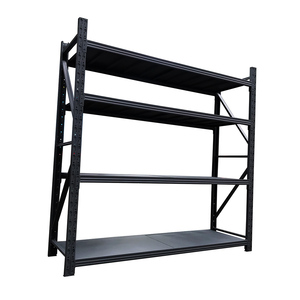
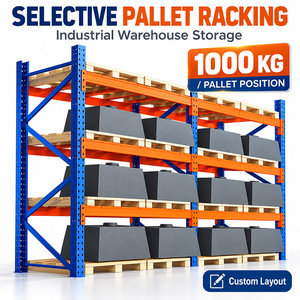
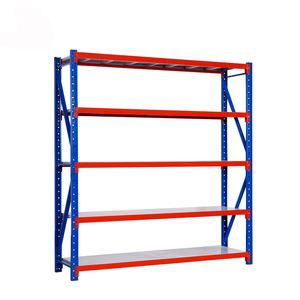
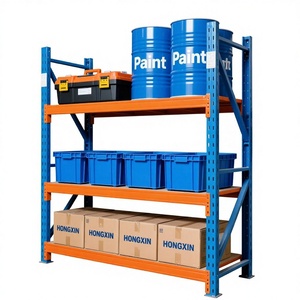
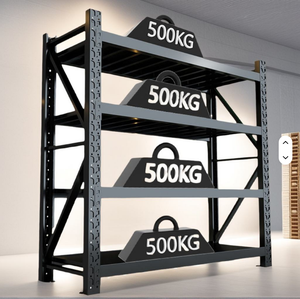
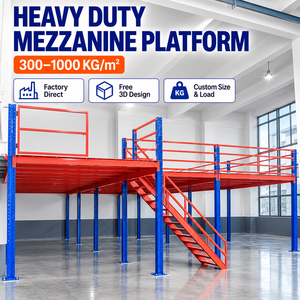
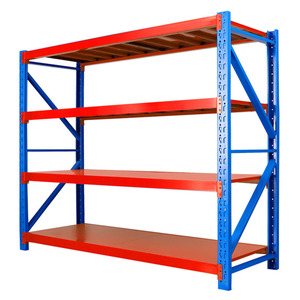
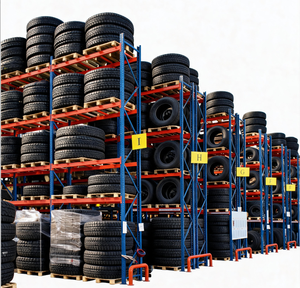
State-of-the-Art OEM Industrial Shelving Manufacturing
Uncompromising structural steel design, automated cold-roll forming, FEA stress simulation, and precision robotic fabrication for high-stress logistics hubs.
Certified Metallurgical Integrity
We utilize certified prime Q235B and Q355B high-tensile structural cold-rolled steel. Our structural uprights feature continuous cold-roll forming for uniform stress distribution and superior elastic limits under dynamic forklift impacts.
Structural Compliance Standards
Engineered precisely to EN 15512 static calculations, EN 15620 tolerance thresholds, and SIA 261 seismic mitigation protocols. Every custom OEM rack framework undergoes Finite Element Analysis (FEA) prior to serial production.
Advanced Surface Protection
Automated 9-stage pre-treatment wash combined with thermosetting epoxy-polyester powder coating (60–80 µm thickness). Tested to ISO 9227 salt spray standards for unmatched corrosion resistance in ambient and cold-storage (-25°C) zones.
Industrial Shelving Architecture & Load Optimization Analysis
Modern industrial warehousing demands high spatial efficiency, structural safety, and operational flexibility. As a custom OEM manufacturer, our structural design philosophy focuses on maximizing cubic storage utilization while eliminating safety failure vectors. Whether implementing selective pallet racking for distribution facilities or cold-rolled medium-duty boltless shelving for e-commerce fulfillment hubs, engineering exactness determines lifetime ROI.
Finite Element Analysis (FEA) & Load Capacity Verification
Industrial racks are unbraced or semi-braced steel frame structures subjected to heavy vertical dead loads, dynamic placement impacts, and lateral seismic sway forces. Our structural engineering team utilizes 3D ANSYS FEA simulation software to analyze beam deflection under full load, joint rigidity at the connector-upright interface, and column buckling behavior under EN 15512 safety load factors.
| Storage System Type | Typical Load / Level | Space Utilization % | Selectivity Ratio | Ideal Industrial Application |
|---|---|---|---|---|
| Selective Pallet Racking | 1,000 kg – 4,000 kg | 40% – 50% | 100% Direct Access | 3PL Logistics, FMCG, High-SKU Distribution |
| Radio Shuttle Racking | 1,000 kg – 1,500 kg | 75% – 85% | LIFO / FIFO Semi-Auto | Cold Storage (-25°C), Food & Beverage, Bulk Stock |
| Multi-Tier Mezzanine Rack | 300 kg – 1,000 kg/m² | 150% – 200% (Vertical) | Manual Batch Picking | Auto Spare Parts, E-Commerce Fulfillment, Garments |
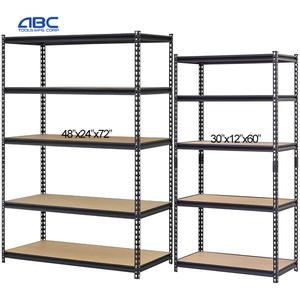
| Medium-Duty Boltless Shelving | 200 kg – 800 kg | 60% – 70% | 100% Manual Hand-Load | Maintenance Toolrooms, Supermarkets, Light Industrial |
| Automated ASRS Miniload | 50 kg – 300 kg / Tote | 85% – 95% | 100% Robotic Retrieval | Pharmaceutical Cleanrooms, Electronics Components |
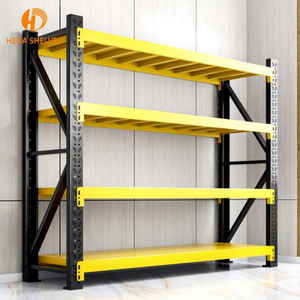
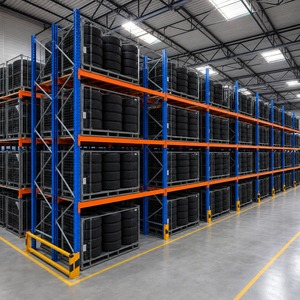
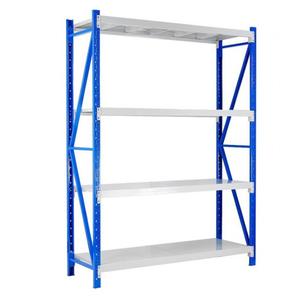
OEM Industrial Racking Systems Overview
Explore specialized heavy-duty and long-span racking systems custom-manufactured to match exact building bay dimensions, floor loading tolerances, and material handling machinery.
Future Sourcing & Procurement Trends in Industrial Racking
1. Shift Toward Automation-Ready Dynamic Structures
Global warehouse procurement is experiencing a decisive migration toward automation-compatible structural racking. Traditional static racks are increasingly replaced by ultra-precise high-bay ASRS frameworks and radio shuttle lanes. Procurement managers must specify stricter beam deflection metrics (1/200th span constraints per EN 15620 Class 300) to ensure seamless operation of Autonomous Mobile Robots (AMRs) and automated stacker cranes without mechanical jamming.
2. Stringent Seismic Risk Mitigation & SIA 261 Compliance
Regulatory bodies across Europe, North America, and seismic-active global regions now enforce rigorous seismic load calculations. Racking suppliers are required to integrate anchor baseplate load-spreading designs, heavy-duty floor anchoring, and dynamic ductility factors. OEM suppliers who provide certified structural engineering calculations validated against regional seismic maps (such as Swiss SIA 261 seismic zones Z1a to Z3b) reduce regulatory approval friction and structural liability.
3. High-Density Footprint Optimization Driven by Real Estate Costs
Industrial land scarcity and rising per-square-meter warehouse leases compel logistics directors to capture vertical air cube space. Sourcing strategies favor Multi-Tier Mezzanine Platform Systems and Radio Shuttle Racking. By converting unutilized vertical height into usable floor space, enterprises avoid capital-intensive real estate expansion, achieving payback within 18 to 24 months.
4. Sustainable Supply Chains & Green Steel Sourcing
ESG directives require supply chain officers to audit the carbon intensity of steel procurement. Future-ready OEM manufacturers leverage low-emission electric arc furnace (EAF) recycled steel, zero-VOC solvent-free electrostatic powder coatings, and flat-pack shipping designs that minimize maritime carbon footprints per delivered storage level.
Product Innovation & Material Engineering Advancement
The industrial shelving sector is advancing beyond basic ironwork into engineered structural systems. Key product innovations driving the next generation of warehouse infrastructure include:
Snap-In Lock & Boltless Beams
Advanced 3 to 5-prong connector hooks designed with automatic safety locks eliminate manual bolting errors. This structural joint accelerates field installation times by 65% while delivering rigidity against torsional loading.
NFPA 13 Wire Mesh Decking
Replacing solid wood or steel plates, open wire mesh decking allows 50%+ water penetration from overhead fire sprinklers. This material innovation is essential for satisfying international fire codes while eliminating dust accumulation.
Hybrid Upright Geometry
Omega-profile roll-formed upright posts with 11 to 13 structural bends maximize moment of inertia. This geometry allows thinner steel gauges to yield higher axial load-bearing capacity, reducing raw material mass without compromising structural safety margins.
Frequently Asked Technical Questions (FAQ)
Technical, engineering, and compliance answers for warehouse operations managers, procurement officers, and structural engineers.
Which structural standards do your custom OEM industrial shelving systems comply with?
What is the difference between Q235B and Q355B steel in racking frame fabrication?
How does custom OEM engineering accommodate seismic design requirements (e.g., SIA 261)?
What surface treatment finish is recommended for cold storage warehouse environments (-25°C)?
Why is Finite Element Analysis (FEA) critical prior to bulk manufacturing custom shelving?
How can we request custom structural drawings, load capacity calculations, and factory audit reports?
Request a Custom OEM Structural Engineering Consultation
Optimize your warehouse cubic capacity today. Share your building CAD layout, floor load capacities, and storage requirements with our senior structural engineers for a complimentary design proposal.