Featured Cantilever & Heavy-Duty Pallet Racking Systems
Custom OEM Engineered Racking Solutions Built to EN 15512, SIA 261, and ISO Industrial Standards
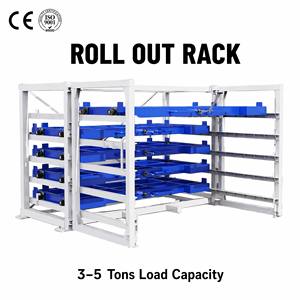
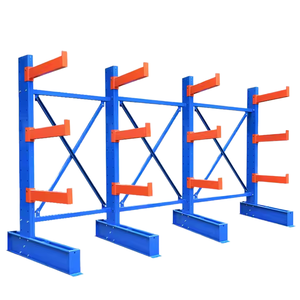
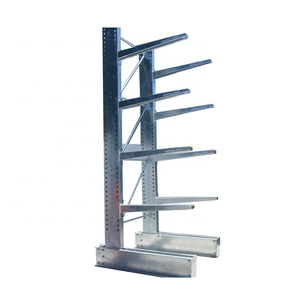
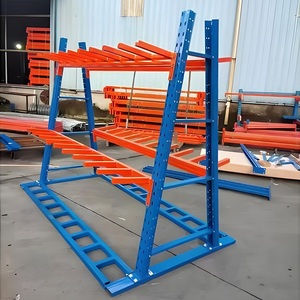
1. Executive Summary & The Mechanics of Custom Cantilever Racking
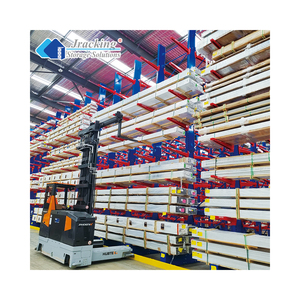
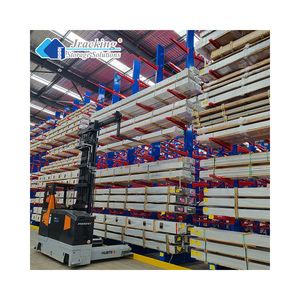
Modern industrial supply chains, logistics hubs, and advanced manufacturing plants face a persistent spatial challenge: storing long, heavy, non-standard, or oversized materials safely while maximizing vertical cubic capacity. Conventional selective pallet racking systems are architecturally constrained by front vertical columns, restricting continuous horizontal loading. Custom OEM Cantilever Pallet Racking systems eliminate these vertical obstacles by utilizing central structural columns with overhanging load-bearing arms.
As a leading OEM manufacturer with advanced metallurgical rolling mills and structural engineering capabilities, Helvetia Rack Systems AG manufactures heavy-duty cantilever systems engineered for severe operational environments. Designed in full compliance with European Standard EN 15512 (Structural design of adjustable pallet racking), EN 15620 (Tolerances, deformations and clearances), and Swiss SIA 261 (Actions on structures including seismic mapping Z1a to Z3b), our cantilever configurations guarantee maximum structural stability, minimal deflection, and operational safety for capacities ranging from 500kg to over 5,000kg per arm level.
Core Structural Gain: Unlike standard pallet racking where loads are contained between vertical uprights, cantilever racking mechanics rely on bending moment transfer at the arm-to-column connection. Precision structural design requires rigorous calculation of column section modulus ($Z_x$), moment of inertia ($I_x$), and dynamic arm deflection limits ($L/200$) under maximum full loading conditions.
Modular Roll-Formed vs. Heavy H-Beam
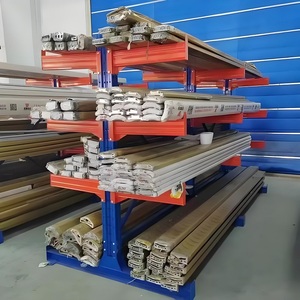
Roll-formed cantilever arms offer cost-effective flexibility for medium-duty lumber and aluminum profiles, whereas hot-rolled structural H-beams (Q355B/S355JR steel) provide extreme resistance against impact fork collisions and ultra-heavy industrial coil loads.
A-Shape & Roof-Supported Cantilever Racks
For outdoor storage yards, integrated A-Shape bracing structures and custom roof-canopy extensions transform raw cantilever racks into weather-resistant, cost-efficient outdoor storage sheds without requiring full building construction permits.
2. Enterprise Advantages & OEM Manufacturing Rigor
Custom OEM manufacturing is not merely about shaping steel; it requires precise finite element analysis (FEA), traceable raw material procurement, and rigorous surface finishing technology. Original site engineering capabilities reflect Swiss quality standards and precision steel fabrication methodologies:
- Structural Engineering Validation (EN 15512 & SIA 261): Every column and arm section undergoes static load analysis, factoring in localized live load impact factors, wind pressures (for outdoor units), and regional ground acceleration seismic coefficients under SIA 261.
- In-House Metallurgical Processing: Utilizing premium Q235B and high-yield Q355B (S355JR grade) carbon steel, our roll-forming lines and robotic welding units ensure total dimensional stability and zero thermal weld distortion.
- Dual Surface Protection Systems: For climate-controlled indoor warehouses, advanced electrostatic powder coating (80–100μm thickness) provides superior scratch resistance. For harsh outdoor environments and chemical handling, continuous Hot-Dip Galvanizing (HDG per ISO 1461) delivers multi-decade corrosion prevention.
- Safety Factor & Pin Locking System: Arms feature continuous height adjustability at 75mm or 100mm pitches and utilize hardened shear pins combined with safety locks that prevent accidental dislodgement during fork truck lifting maneuvers.
| Cantilever Subtype | Material Engineering | Standard Arm Capacity | Recommended Applications | Surface Treatment |
|---|---|---|---|---|
| Light/Medium Duty Roll-Formed | Cold-Rolled Carbon Steel Q235B | 300 kg – 1,000 kg / Arm | Plastic Pipes, Light Extrusions, PVC Bars | Powder Coated RAL Series |
| Heavy Duty Structural H-Beam | Hot-Rolled Steel S355JR / Q355B | 1,000 kg – 3,500 kg / Arm | Steel Pipes, Structural Timber, Sheet Plates | Powder Coated or HDG |
| Extra Heavy Duty Coil & Die Rack | Structural I-Beam & Box Welded | 3,500 kg – 6,000+ kg / Arm | Heavy Molds, Steel Coils, Machinery Parts | Hot-Dip Galvanized (ISO 1461) |
| A-Shape Vertical Bar Rack | Structural Tubular Frame Q235B | 500 kg – 1,500 kg / Level | Vertical Bar Stock, Trim Moldings, Profiles | Powder Coated |
3. Future Procurement Trends in Industrial Cantilever Racking (2025–2030)
The industrial storage sector is experiencing a rapid technological transition toward automated handling, smart telemetry, and dynamic spatial density. Enterprise procurement officers and logistics engineers should align their racking specifications with the following future trends:
A. Integration with Automated Guided Vehicles (AGVs) and Very Narrow Aisle (VNA) Trucks
As labor costs rise globally, warehouse operations are deploying VNA turret trucks and AGVs equipped with guidance systems (magnetic wire, optical, or LiDAR). Modern custom cantilever racks incorporate floor-mounted guide rails (C-channel or angled steel) or magnetic floor ribbons to enable high-speed automated navigation inside narrow aisles down to 1,600mm width, unlocking up to 45% more warehouse storage density.
B. Smart IoT Load & Deflection Telemetry Sensors
To prevent catastrophic rack collapses caused by improper manual weight distribution or structural fatigue, next-generation OEM cantilever systems integrate wireless strain gauges and micro-load cells inside column bases and arm connections. These IoT sensors communicate directly with Warehouse Management Systems (WMS), issuing real-time alerts if arm deflection exceeds $L/200$ thresholds or if asymmetrical loading threatens structural stability.
C. High-Density Mobile Cantilever Racking Systems
By mounting heavy-duty structural cantilever columns on motor-driven mobile bases running on embedded floor tracks, mobile cantilever systems eliminate static aisles. A single operational aisle serves an entire block of cantilever racks. With the press of a button or automated WMS command, the bases shift sideways, reducing floor footprint requirements by up to 50% while preserving 100% direct access to every stored bundle.
4. Product Development & Technical Engineering Innovations
Innovation in cantilever design centers on optimizing structural steel volume against dynamic loading forces. OEM engineers at Helvetia Rack Systems AG focus on three key development pillars:
Tapered Beam Arm Deflection Control
Custom tapered cantilever arms feature a decreasing vertical profile from the column connector to the outer tip. This design aligns with bending moment distribution, reducing dead weight by 15% while improving overhead clearance for forklift tines.
Toolless Quick-Change Arm Lockings
Replacing traditional bolted connections with self-locking wedge pins and heavy-duty retaining rings enables warehouse operators to adjust storage level heights without specialized tools, dramatically reducing maintenance downtime during stock reconfigurations.
5. Enterprise Frequently Asked Questions (FAQ)
Detailed engineering answers regarding standard compliance, load calculations, and procurement parameters for OEM cantilever racks.
Which European and International standards govern your cantilever rack manufacturing?
Our OEM cantilever racking systems are designed and manufactured in full compliance with EN 15512 (structural design of adjustable pallet racking), EN 15620 (tolerances and clearances), EN 15635 (application and maintenance of storage equipment), and FEM 10.2.09 (structural design of cantilever racking). For installations in seismic regions across Europe and Switzerland, static calculations integrate SIA 261 seismic criteria and Eurocode 3 (EN 1993) steel structure design rules.
How do you calculate the required load capacity for a custom cantilever arm and column?
Arm load capacity ($P_{arm}$) is determined by dividing the total weight of the long material load ($W_{total}$) by the total number of arms supporting the bundle ($N_{arms}$), ensuring that load deflection does not exceed $L/200$ (where $L$ is arm length). Column capacity ($P_{col}$) factors in the sum of all arm loads, asymmetrical loading conditions, dynamic forklift impact allowances, and overturning moments transferred to the concrete slab anchor base.
What is the main difference between roll-formed and structural steel cantilever racks?
Roll-formed cantilever racking utilizes cold-rolled sheet coil steel (typically Q235B) bent into C- or column profiles, providing an economical choice for light to medium loads (300kg–1,000kg per arm). Structural steel cantilever racking is manufactured from hot-rolled H-beams or I-beams (S355JR/Q355B steel), offering extreme structural toughness, superior resistance against forklift impact damage, and heavy load capacities up to 5,000kg+ per arm.
Can cantilever racking systems be installed outdoors in rain or snow conditions?
Yes. For outdoor installations exposed to rain, ice, snow loads, or marine coastal salt spray, we supply Hot-Dip Galvanized (HDG) structural steel cantilever racks processed according to ISO 1461. Hot-dip galvanizing coats all inner and outer steel surfaces with a 70–100μm zinc-iron alloy layer, providing corrosion resistance for 25 to 50+ years. Canopies, back cladding, and drainage gutters can also be engineered directly onto the racking structure.
What customized accessories are available for storing pipes, tubing, and delicate aluminum profiles?
We supply a full suite of custom OEM attachments, including removable vertical arm end-stops (pipe stoppers), welded or bolt-on guide rails, wire mesh decking, solid steel decking plates, and protective rubber/polyoctenamer sleeves on arm contact surfaces to prevent scratching delicate anodized aluminum extrusions or finished stainless steel tubing.
What concrete slab thickness and floor strength are required for heavy-duty cantilever racks?
Heavy-duty cantilever columns concentrate high vertical loads and overturning moment forces onto small baseplate anchor points. Most heavy industrial installations require a reinforced concrete slab with a minimum thickness of 150mm to 250mm, a minimum compressive strength of C20/25 or C25/30, and heavy chemical anchoring bolts evaluated to ETAG standards for cracked and non-cracked concrete.
Do you offer OEM/ODM engineering and customized layout design for specialized logistics applications?
Yes. As a direct OEM manufacturer, our structural engineering team delivers complete turnkey project support—including custom CAD layout design, 3D structural modeling, FEA stress simulation, custom color powder coating (RAL palette), bespoke arm lengths, and localized load sign compliance to support international enterprise procurement.
Request Your Custom OEM Cantilever Engineering Proposal
Partner with a trusted manufacturer for engineered heavy-duty cantilever racking systems. Contact our technical team today to receive a complete CAD layout, structural load analysis, and technical product catalog.