Featured Industrial Racking & High-Density Storage Solutions
Direct factory wholesale racking systems manufactured with Q235B/Q355B high-grade steel, customized for maximum volumetric efficiency.
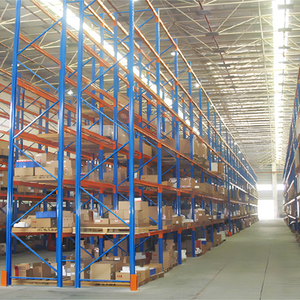
Heavy Duty Stackable Q235B Steel Pallet Rack System with Forklift Guide 3000kg Industrial
Engineered for intense industrial distribution centers featuring integrated forklift guidance, reinforced upright frames, and up to 3000kg load capacity per level.
View Product Details →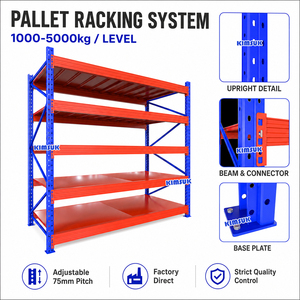
Heavy Duty Rack Laminated Aluminum Warehouse Storage Shelving Plate Warehouse Units
Versatile heavy-duty storage racks with anti-corrosive plates and modular beam spacing, ideal for multi-SKU retail and industrial inventory management.
View Product Details →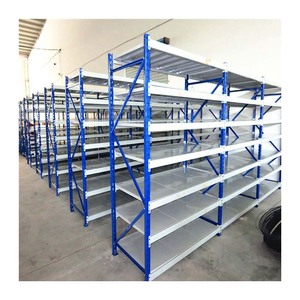
Light Duty Warehouse Selective Shelf Metal Steel Customized Boltless Racking System
Quick-assembly boltless steel racking designed for manual picking operations, archive storage, and lightweight industrial applications.
View Product Details →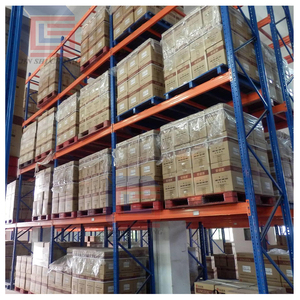
Industrial Heavy Duty Steel Pallet Rack Warehouse Shelving System for Storage & Logistics
Standard selective racking offering 100% direct pallet accessibility, structural rigidity under SIA 261 seismic criteria, and customizable beam levels.
View Product Details →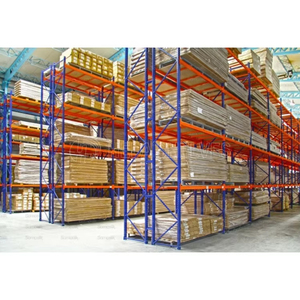
Medium Duty Warehouse Europe Pallet Rack Heavy Duty Metal Shelving Stacking Racks
European-standard pallet and modular racking configured for medium to heavy load profiles with electrostatic powder-coated finishing.
View Product Details →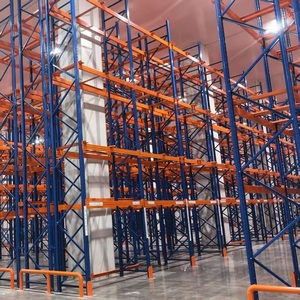
Low Price Heavy Duty Pallet Racking System Adjustable Steel Storage Shelving
Cost-effective adjustable racking solutions manufactured to strict EN 15512 specifications, maximizing floor storage without compromising safety.
View Product Details →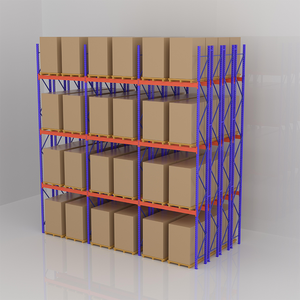
Factory Direct Heavy Duty Warehouse Pallet Rack 1000kg to 5000kg Adjustable Levels
Heavy-duty pallet structures supporting extreme load capacities up to 5000kg per bay, engineered with heavy-gauge roll-formed steel profiles.
View Product Details →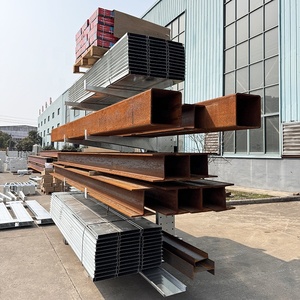
Outdoor Storage Corrosion Protection Hot-Dip Galvanized Cantilever Rack for Profiles
Weather-resistant hot-dip galvanized cantilever system engineered for long-span items such as timber, steel pipes, aluminum profiles, and heavy bar stock.
View Product Details →Engineering Architecture of Push Back Racking Systems
An In-Depth Technical Analysis for Warehouse Directors, Logistics Engineers, and Global B2B Procurement Managers
Push back racking systems represent one of the most efficient high-density dynamic storage methodologies available in modern intralogistics. By utilizing a series of nested, inclined carts that ride on heavy-duty structural steel rails, push back racking allows warehouses to store pallets from 2 to 6 deep while maintaining single-aisle operational access. Operating under a Last-In, First-Out (LIFO) inventory rotation strategy, this architecture combines the high-density footprint of drive-in racking with the speed and accessibility of selective pallet racking.
Mechanical Kinematics: How Nested Carts Function
When loading a push back rack, the first pallet is deposited onto the top nested cart by a standard forklift. To load the second pallet, the forklift driver gently pushes the first pallet backward, exposing the secondary cart beneath it. This process repeats for up to 6 pallets deep. The entire assembly rests on precision-engineered incline rails, typically set at a slope angle of 1.5° to 3.0° depending on pallet weight and friction coefficients.
During unloading, gravity automatically advances the remaining pallets forward to the front aisle edge as the front-most pallet is removed. Gravity flow rate is meticulously controlled by heavy-duty steel wheels equipped with precision sealed bearings, anti-pop-out safety hooks, and rubber damper stops to prevent kinetic impact damage.
Nested Cart Geometry
Low-profile steel nesting design optimizes vertical clear bay height, allowing maximum rack levels within constrained building ceiling clearances.
Slope & Velocity Control
Precision-machined structural rails feature calculated gradient pitch to ensure consistent kinetic flow without dangerous acceleration of heavy unit loads.
Anti-Pop-Out Mechanism
Integrated safety catches secure carts to the structural rail channel, preventing derailment during aggressive forklift loading or seismic events.
Why Source Push Back Racks from Leading China Manufacturers?
Combining High-Volume Steel Fabrication with Rigorous International Structural Standards
China has established itself as the global manufacturing epicenter for warehouse logistics equipment. As a premier manufacturer and wholesaler, top Chinese rack factories leverage industrial-scale procurement of certified raw steel, advanced robotic welding, and automated cold roll-forming lines to deliver high-performance push back systems at highly competitive price points.
1. Raw Material Quality & Structural Integrity
Superior push back racking systems rely strictly on prime structural steel grades such as Q235B and Q355B (equivalent to ASTM A36 and ASTM A572 Grade 50). Frame uprights undergo multi-stage continuous roll-forming to create high-moment-of-inertia profiles capable of withstanding massive axial loading and lateral sway forces.
2. International Engineering Standards Compliance
Leading Chinese manufacturers design and validate rack calculations in strict alignment with major international regulatory codes:
- EN 15512:2020: European standard for steel static storage systems – adjustable pallet racking principles and structural design tolerances.
- ANSI MH16.1 (RMI): American National Standard for the Design, Testing and Utilization of Industrial Steel Storage Racks.
- SIA 261 / FEM 10.2.08: Seismic design criteria evaluating dynamic forces across seismic zones Z1a to Z3b.
- ISO 3834-2: Quality requirements for fusion welding of metallic materials ensuring 100% weld integrity on load-bearing cart assemblies.
3. Surface Treatment & Powder Coating Metallurgy
Components undergo an intensive 9-stage pre-treatment process (including degreasing, acid pickling, phosphating, and deionized water rinsing) prior to electrostatic thermosetting powder coating. The resulting 70–90 micron epoxy-polyester coating delivers superior impact resistance, abrasion protection, and long-term corrosion guard essential for high-humidity and cold-storage environments (-30°C).
Future Procurement & Product Development Trends (2025-2030)
How Technological Innovations are Reshaping High-Density Dynamic Storage Systems
As global supply chains face escalating real estate costs and warehouse labor shortages, the demand for dynamic push back racking is evolving rapidly. Key technological and procurement shifts over the coming decade include:
Hybrid Automated Push Back (AMR Integration)
Traditional push back racks are being re-engineered with specialized front-end guide funnels and sensor arrays to support automated guided vehicles (AGVs) and Autonomous Mobile Robots (AMRs), enabling 24/7 lights-out handling of LIFO inventory.
IoT-Enabled Load Monitoring Sensors
Smart push back carts equipped with wireless strain gauges and RFID position tracking transmit real-time telemetry to Warehouse Management Systems (WMS), monitoring live pallet counts, weight distribution, and structural stress anomalies.
Ultra-Cold Storage Optimization
With the expansion of cold-chain food and pharmaceutical distribution, specialized cold-hardened low-temperature bearings and synthetic synthetic lubricants rated down to -35°C are becoming standard OEM specifications.
Green Steel & Sustainable Manufacturing
Global B2B procurement policies increasingly require suppliers to provide Carbon Footprint Documentation. Top Chinese manufacturers are adopting Electric Arc Furnace (EAF) recycled steel and solvent-free zero-VOC powder coatings.
Frequently Asked Questions (FAQ) for Global Buyers
Expert Guidance on Sourcing, Installing, and Maintaining Push Back Racking Systems
What is the structural difference between Push Back Racking and Drive-In Racking?
Push Back Racking utilizes a series of inclined, nested carts that slide along steel rails. Forklifts operate exclusively from the front aisle, pushing stored pallets back as new ones are loaded. In contrast, Drive-In Racking requires forklifts to physically drive inside the rack structure to place pallets on cantilevered side rails. Push back systems offer vastly superior loading speed, lower risk of rack collision damage, and support independent lane management per level.
How deep can a push back racking system be safely engineered?
Push back racking systems are standardly engineered from 2 to 6 pallets deep per lane. Dynamic cart-based push back systems operate with exceptional reliability up to 6-deep. For deeper lanes (up to 10+ deep), alternative dynamic systems such as Semi-Automated Radio Shuttle Racks are recommended to ensure ergonomic forklift push-force limits are not exceeded.
What are the load capacity limits per pallet cart in Chinese manufactured systems?
Standard heavy-duty push back carts engineered by top Chinese factories support unit loads ranging from 500kg up to 1500kg (1100 lbs to 3300 lbs) per pallet position. Heavy-duty structural channels and solid steel machined wheels are custom-engineered for heavy industrial manufacturing, beverage distribution, and cold-store applications requiring higher weight thresholds.
Are Chinese push back racking systems compliant with North American (RMI) and European (EN) codes?
Yes. Reputable OEM/ODM manufacturers perform finite element analysis (FEA) and physical destructive testing to ensure full compliance with European EN 15512 design rules, EN 15620 tolerance standards, and American RMI (ANSI MH16.1) standards. Complete structural calculations, mill test certificates, and stamped engineering drawings can be supplied for municipal building permit approvals.
What pallet types are compatible with cart-based push back racks?
Nested cart push back systems are compatible with virtually all standard industrial pallets, including GMA (US 48x40 inch), EURO (1200x800mm), Industrial (1200x1000mm), and custom steel or plastic pallets. Because the pallet rests fully supported on the structural cart frame, broken or poor-quality wooden pallets that might fail in drive-in or gravity roller systems can be safely handled.
How does cold-storage ambient temperature affect push back rack components?
In sub-zero freezer applications (down to -30°C), low-grade steel can become brittle and standard grease can solidify, preventing cart movement. Direct factory custom ordering ensures the use of impact-tested cold-resistant structural steel, stainless steel axle pins, specialized synthetic low-temperature lubricants, and heavy-duty polyurethane or steel wheels.
What container packaging and shipping methods are used for export orders?
Racking frames, beams, and incline rails are bundled using steel strapping, protective edge corner boards, and plastic shrink film to prevent surface scuffing during ocean freight transport. Carts, wheels, and hardware are packed in reinforced wooden crates or heavy-duty corrugated cartons. Standard 40ft High Cube (40HQ) containers are optimized to maximize shipping volume and weight density.
Optimize Your Warehouse Density Today
Request a free CAD layout design, structural engineering calculation, and competitive factory wholesale price quote tailored to your facility footprint.
Contact Us