China’s Premier Industrial Pallet Racking Engineering & Export Hub
Technical Whitepaper & Industrial Procurement Specification Guide
As modern intra-logistics demands transition toward automated handling, high-density SKU accumulation, and rigorous structural seismic resilience, selecting a premier industrial racking manufacturer in China requires deep technical evaluation. Industrial pallet racking is no longer merely structural steel assembled in a grid; it represents the structural backbone of supply chain continuity, automated material handling systems (AMHS), and warehouse cubic space maximization.
Leading Chinese racking exporters utilize advanced cold-roll forming mills, high-yield structural steel grades (Q235B and high-strength Q355B), automated robotic welding cells, and electrostatic epoxy-polyester powder coating lines. Designed in strict compliance with European standard EN 15512:2020, US RMI (Rack Manufacturers Institute) specifications, and seismic performance criteria under SIA 261 / FEM 10.2.08, engineered pallet racking systems from China guarantee maximum load integrity, finite element analyzed deflection limits (L/200), and operational safety across distribution centers, cold stores, and manufacturing facilities worldwide.
Engineered Heavy Duty Warehouse Storage Systems
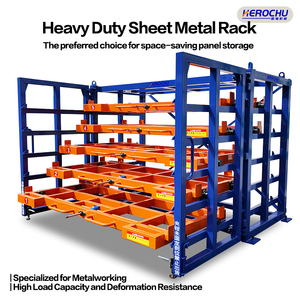
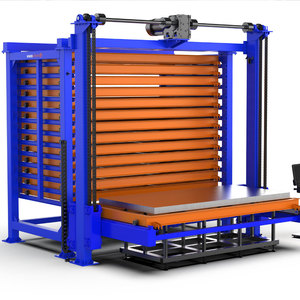
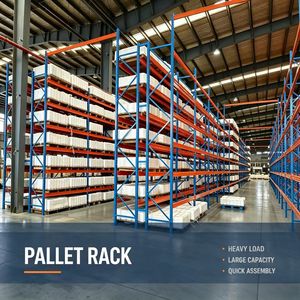
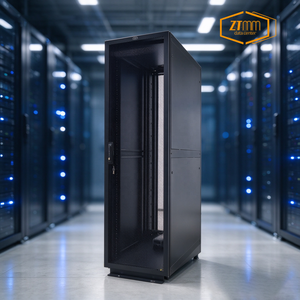
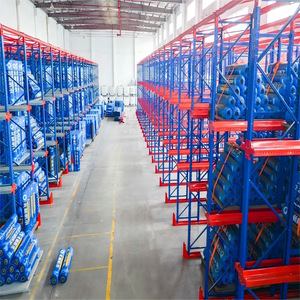
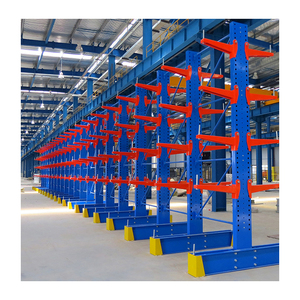
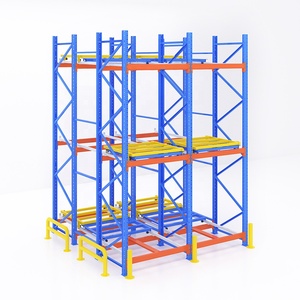
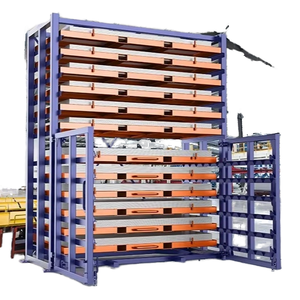
Select from our benchmark pallet storage systems designed for high-throughput logistics.
Manufacturer Capabilities & Structural Engineering Compliance
Why Tier-1 Global EPC Contractors and System Integrators Partner with Us
Advanced Metallurgical Standards
We source prime structural steel coils exclusively from premier state steel mills (Baosteel, Shougang Group). Components undergo finite element analysis (FEA) to verify yield strength (fy ≥ 235-355 MPa) and ensure minimum factor of safety standards under dynamic forklift impacts.
EN 15512 & SIA 261 Compliance
Racking frames are mathematically modeled for global stability, shear deformation, and torsional buckling. Static load calculations adhere strictly to European Norm EN 15512, with custom seismic detailing for high-risk seismic zones (Zones Z1a to Z3b per SIA 261).
Precision Automated Production
Utilizing continuous roll-forming production lines with automatic punching units, CNC laser cutting, and robotic welding stations to ensure pitch tolerances within ±0.5mm, enabling seamless onsite assembly and perfect beam-to-column locking connection.
Surface Protection & Cold Store Coating
Pre-treatment involves a multi-stage chemical washing and phosphatizing sequence followed by thermosetting powder coating (60-80 microns thickness). Passed 500+ hours ASTM B117 salt-spray tests for long-life performance in sub-zero freezer rooms (-30°C).
Industrial Racking Architecture Comparison Matrix
Technical comparison of density, selectivity, cost per pallet position, and forklift accessibility.
| Racking Architecture | Space Utilization | Pallet Selectivity | Handling Speed | Structural Load Rating | Best Application Scenarios |
|---|---|---|---|---|---|
| Selective Pallet Racking | 40% - 50% | 100% Direct Access | High (Standard Forklifts) | Up to 4,500 kg / beam level | High SKU variety, fast moving FMCG, retail distribution hubs. |
| Radio Shuttle Racking | 75% - 85% | LIFO / FIFO (Deep Lane) | Very High (Automated Cart) | 1,500 kg / pallet position | Cold storage, food & beverage bulk storage, high-density SKU accumulation. |
| Push-Back Racking | 65% - 75% | LIFO (2 to 6 Pallets Deep) | Moderate to High | Up to 1,500 kg / cart level | Medium turnover, bulk storage with restricted aisle space. |
| Drive-In / Drive-Through | 65% - 75% | LIFO / FIFO | Moderate (Forklift enters rack) | Up to 1,200 kg / pallet position | Homogeneous bulk goods, seasonal products, raw material stores. |
| Automated High-Bay ASRS | 85% - 95% | 100% Automated (WMS) | Ultra-High (Stacker Crane) | Custom (up to 40m height) | 24/7 automated operations, pharmaceutical logistics, high-value inventory. |
Future Procurement & Sourcing Trends (2025–2030)
Strategic insights for global logistics managers and procurement directors sourcing from China.
The global industrial storage manufacturing landscape is undergoing structural transformation driven by warehouse automation, carbon footprint regulations, and nearshore/offshore supply chain resilience. Procurement executives evaluating Chinese racking suppliers must realign their sourcing metrics beyond basic FOB price-per-kilogram calculations.
1. Convergence of Steel Racking & Robotics (ASRS Ready)
Traditional passive static racking is rapidly giving way to ASRS-compatible tolerances. Modern racking systems must meet strict millimetric deflection criteria (≤ L/300 under full live load) to allow stacker cranes, AGVs, and Autonomous Mobile Robots (AMRs) to traverse storage aisles without mechanical jamming. Chinese tier-1 suppliers now ship laser-guided structural upright assemblies specifically tailored for automated warehouses.
2. Green Steel Manufacturing & Scope 3 Decarbonization
With multinational corporations committing to net-zero ESG objectives, international buyers require environmental product declarations (EPDs) from rack suppliers. Premier Chinese racking exporters are transitioning to electric arc furnace (EAF) low-carbon steel processing, coupled with solvent-free, zero-VOC powder coating technologies, drastically reducing the embedded Scope 3 carbon intensity of warehouse build-outs.
3. Digital Twin Modeling & Structural IoT Integration
Next-generation pallet racking installations integrate structural health monitoring systems. By embedding strain gauges, tilt sensors, and RFID load monitoring nodes within upright columns, facility operators receive real-time alerts regarding forklift impact damage or structural overload conditions. Procurement teams are now favoring manufacturers capable of providing BIM (Building Information Modeling) and Revit files for digital twin warehouse integration.
4. Modular Hybrid Storage & Supply Chain Agility
Volatile consumer demand requires modular racking layouts capable of fast reconfiguration. Future-proof procurement favors boltless teardrop and beam-hook connection geometries that allow vertical beam adjustment in 50mm to 75mm increments without requiring structural welding or specialized toolsets. This flexibility drastically lowers total cost of ownership (TCO) during layout expansions.
Technology & Engineering Development Trends in Pallet Racking
Structural Innovations Redefining Heavy Industrial Storage Systems
The engineering of warehouse storage racks has evolved from empirical load testing to multi-physics structural simulation. Below are the core engineering breakthroughs driving the reliability and efficiency of Chinese pallet storage racks globally:
- High-Yield Cold-Formed Steel Profiles: Development of complex upright profile geometries featuring 10 to 14 cold-rolled bends. These multi-flange profiles significantly increase the radius of gyration, enhancing cross-sectional buckling resistance while reducing net frame weight.
- Seismic Energy Dissipation Connections: Incorporating ductile baseplate anchors and semi-rigid beam-to-column connector connectors engineered to absorb peak ground acceleration (PGA) during seismic occurrences, maintaining structural integrity under SIA 261 and IBC seismic provisions.
- Hybrid Anti-Corrosion Surface Treatments: Dual-layer surface treatment featuring hot-dip galvanizing (HDG) for outdoor/high-humidity environments, or pre-galvanized high-yield steel coupled with epoxy powder topcoats for aggressive chemical processing facilities.
- Intelligent Dense-Lane Automation: Self-charging radio shuttle fleets utilizing LiFePO4 battery chemistry, optical LIDAR positioning sensors, and CAN-bus communication modules capable of working in deep-lane push-back or drive-in structures seamlessly.
Need Custom Engineering & Seismic Structural Calculations for Your Project?
Our structural engineering team provides complete warehouse layout CAD designs, FEA stress analysis reports, and factory-direct quotation proposals within 24 hours.
Get CatalogComprehensive B2B Procurement FAQ
Addressing Key Engineering, Logistics, and Quality Control Questions
Which design standards do your industrial pallet racks comply with for international projects?
Our pallet racking systems are engineered in accordance with European standard EN 15512:2020 (Steel static storage systems - Adjustable pallet racking systems - Principles for structural design), FEM 10.2.02 / 10.2.08, and US RMI (ANSI MH16.1) standards. For Australian projects, design compliance with AS 4084-2012 is provided. Structural calculations include static dead/live load verification, frame stability analysis, and dynamic forklift impact safety factors.
Can your engineering team calculate racking for seismic zones?
Yes. We utilize Finite Element Analysis (FEA) software to perform seismic response spectrum analysis based on local building codes (such as SIA 261 in Switzerland, IBC/ASCE 7 in the USA, or Eurocode 8). We adjust upright steel grades, increase footplate thickness, and engineer specialized anchor bolt configurations to handle dynamic overturning moments and seismic lateral forces.
What is the difference between Q235B and Q355B steel in racking manufacturing?
Q235B steel offers a yield strength of 235 MPa and is standard for light to medium duty beams and uprights. Q355B is a low-alloy, high-strength structural steel with a yield strength of 355 MPa (approx. 50% stronger than Q235B). Utilizing Q355B allows us to engineer high-bay upright frames (exceeding 12 meters height) with thinner profile gauges while maintaining structural load capacity, reducing total freight weight and shipping costs.
How do you prevent shipping damage and container space loss during export?
Components are bundle-packed using heavy-duty steel strapping, protective cardboard edge protectors, and waterproof plastic film wrapping. Upright frames are nested, and load beams are bundled on customized steel skids to maximize 40ft High Cube (40HC) container cube utilization. Special timber blocking and dunnage prevent metal-to-metal friction and paint scratching during ocean transit.
Which storage rack is optimal for cold storage environments (-25°C to -30°C)?
For sub-zero cold rooms, spatial efficiency is paramount due to high refrigeration energy costs. Radio Shuttle Racking or Mobile Automated Pallet Racking offer the highest density (up to 85% floor utilization). We utilize low-temperature specialized powder coatings and steel grades certified for impact toughness at sub-zero temperatures to prevent cold embrittlement structural failure.
What warranty, quality certification, and inspection protocols are provided?
All products are backed by a 5 to 10-year structural warranty. Mill test certificates (MTC) per EN 10204 3.1 are supplied with every raw material batch. Quality inspection includes ultrasonic weld testing, coating thickness measurement, and dimensional tolerance checks. We welcome third-party factory audits (SGS, TÜV, Bureau Veritas) prior to shipment loading.
What is the lead time for custom OEM pallet racking orders?
Standard production lead time is 14 to 21 days for standard container loads (approx. 2 to 4 40HC containers). Custom OEM engineering drawings and initial structural approval calculations are delivered within 48 hours of project requirement submission.
Ready to Optimize Your Warehouse Layout & Cubic Capacity?
Contact our senior engineering team to request technical specs, CAD drawings, and factory direct export pricing.
Get Catalog