Choosing among the Top 10 Pallet Rack Systems Manufacturers in China takes more than comparing prices. Buyers need to examine load capacity, steel quality, connection design, finish, and the supplier’s engineering support. A beam may look substantial in a product photo. Its rated capacity still depends on the full configuration, including frame height, beam length, and load placement.
Quality expert W. Edwards Deming is widely associated with the reminder, “In God we trust; all others must bring data.” That principle fits this market well. Ask manufacturers for clear specifications, drawings, test records, and project references. Check whether the proposed system suits your pallet dimensions, forklift routes, ceiling height, and floor conditions. Details matter. A small mismatch can reduce usable space or complicate daily handling.
This guide compares Chinese manufacturers through practical criteria: product range, customization, manufacturing capability, quality controls, and communication. It also considers the support available after delivery, when installation questions or future expansion arise. No single supplier is right for every warehouse. Some buyers need selective access to each pallet; others prioritize dense storage or rapid picking. Treat rankings as a starting point, not a substitute for project-specific review. Even a polished catalog leaves questions unanswered. The strongest choice is the one whose documented design matches your actual loads, layout, and operating habits.
Pallet Rack Systems and Their Role in Warehouse Storage
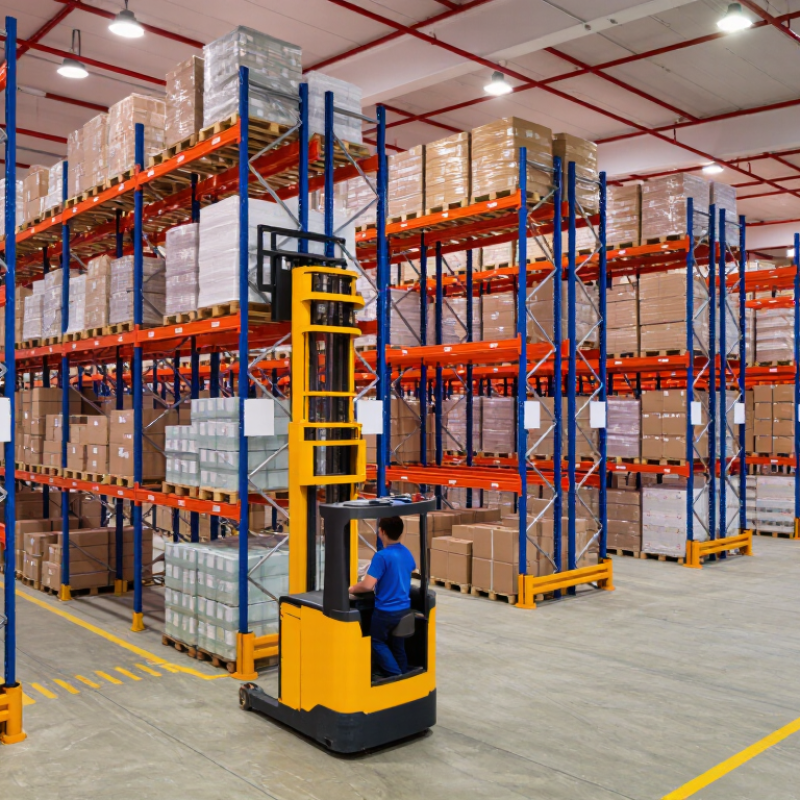
Pallet rack systems turn warehouse height into usable storage space. They keep palletized goods off the floor, create clear travel aisles, and help workers locate stock by bay and level. In a busy facility, that can mean fewer blocked paths and less time searching. Small gains matter.
Selective racks suit warehouses handling many product types because each pallet position remains accessible. Drive-in and high-density systems can store more goods in a smaller footprint, but they may reduce direct access to individual pallets. The right choice depends on inventory turnover, pallet dimensions, forklift type, and building height.
MHI’s 2024 Annual Industry Report found that 55% of surveyed supply-chain professionals planned to invest more than $1 million in supply-chain innovation over the following two years. Racking is only one part of that investment, yet its layout affects how well digital inventory tools and material-handling equipment work together. Clear load labels, protected uprights, and routine inspections also matter. A bent frame is easy to overlook. Teams should match rack capacity to actual loads and review changes in pallet weight or beam configuration. Even a well-designed layout can become inefficient when fast-moving goods sit in hard-to-reach locations.
Top 10 Pallet Rack Systems Manufacturers in China - Pallet Rack Systems and Their Role in Warehouse Storage
A practical comparison of ten widely used pallet rack system configurations. The table focuses on storage design and warehouse use rather than company or brand information.
| No. | Pallet Rack System | Access Method | Storage Density | Selectivity | Typical Warehouse Use | Key Consideration |
|---|---|---|---|---|---|---|
| 1 | Selective Pallet Racking | Forklifts access each pallet position directly from an aisle. | Low to medium | High | Warehouses handling many product lines, frequent picking, or varied pallet sizes. | Provides straightforward access but requires aisles between rack rows. |
| 2 | Double-Deep Pallet Racking | Each rack face stores two pallets deep; a deep-reach forklift retrieves the rear pallet. | Medium to high | Medium | Operations with several pallets per product and relatively consistent inventory. | Rear pallets are less directly accessible, so inventory rotation and forklift capability should be considered. |
| 3 | Drive-In Racking | Forklifts enter rack lanes to load and retrieve pallets. | High | Low | Bulk storage of a limited number of product types, commonly managed in batches. | Typically operates on a last-in, first-out basis within a lane; forklift and rack clearances are important. |
| 4 | Drive-Through Racking | Forklifts can enter a lane from one side and exit from the opposite side. | High | Low to medium | High-volume storage where loading and retrieval can take place at opposite ends. | Can support first-in, first-out flow when the lane is managed accordingly; requires access at both ends. |
| 5 | Pallet Flow Racking | Pallets move by gravity along inclined roller or wheel lanes from loading to picking faces. | High | Medium | High-throughput operations that benefit from separate replenishment and picking sides. | Designed for first-in, first-out flow; pallet condition, lane controls, and product consistency matter. |
| 6 | Push-Back Racking | New pallets push previously stored pallets backward on carts or inclined rails. | High | Low to medium | Storage of multiple pallets per product where access from one aisle is preferred. | Generally follows last-in, first-out lane access; pallet dimensions and loading procedures should be consistent. |
| 7 | Mobile Pallet Racking | Rack rows move on powered or manually operated bases to open an access aisle where needed. | High | High when an aisle is open | Facilities seeking to increase storage capacity while retaining direct pallet access. | Requires suitable floor conditions, safety controls, and careful coordination of moving aisles. |
| 8 | Shuttle Pallet Racking | A powered shuttle transports pallets within deep storage lanes; forklifts load and retrieve at the lane ends. | High | Low to medium | High-volume, deep-lane storage with repetitive pallet handling. | System layout, shuttle management, and the chosen stock rotation method should match operating needs. |
| 9 | Structural Pallet Racking | Forklifts access pallet positions in a rack structure built with heavier structural components. | Varies by layout | Varies by layout | Applications requiring a robust rack structure or integration with demanding warehouse environments. | Member selection and connections must be designed for the specified loads and site conditions. |
| 10 | Mezzanine-Integrated Pallet Racking | Racking is combined with an elevated platform or additional storage level. | Increases use of vertical space | Depends on the rack and access layout | Warehouses with available clear height and a need to create additional usable storage or work areas. | Platform loading, access, guarding, fire protection, and building constraints require coordinated design. |
Planning note: Storage density and selectivity are qualitative comparisons, not guaranteed performance figures. Actual capacity, dimensions, layout, and suitability depend on pallet loads, equipment, building conditions, applicable safety requirements, and a project-specific engineering assessment.
FAQS
Ask whether each rating applies per beam level, per bay, or to the complete frame. Get the answer in writing.
Request the steel grade, upright dimensions, beam connectors, and safety factors. Check these against the proposed drawings.
Share pallet dimensions, maximum load, aisle width, ceiling height, and forklift turning radius. Include floor conditions and picking patterns.
Ask for material certificates, weld inspection records, coating thickness results, and a sample report tied to a production batch.
A visit can help, or arrange an independent inspection before shipment. Photos are not proof.
Look at welds, finish coverage, and connector fit. Small details matter during assembly and routine inspections.
Compare lead times, packaging, installation guidance, spare-part availability, and written replacement procedures for damaged beams.
Ask whether the team can revise a layout when pallet sizes change. Request references from projects with similar loads and operating conditions. Some details may remain uncertain.
Conclusion
Pallet Rack Systems play an important role in warehouse storage by helping businesses organize inventory, use vertical space efficiently, and support smooth picking and replenishment. This overview explains common system types and how their design can suit different goods, facility layouts, and operating needs. It also outlines practical criteria for evaluating Chinese manufacturers, including material quality, engineering and customization capabilities, production capacity, quality control, communication, and after-sales support.
The guide introduces ten manufacturers as part of a broad market comparison, without focusing on brand promotion. It considers the products and manufacturing capabilities buyers may encounter, along with applications across logistics, retail, manufacturing, and other storage environments. The final section offers a structured approach to choosing a supplier: define load and space requirements, verify specifications and production standards, compare proposals and service terms, and assess whether the manufacturer can meet both current needs and future expansion plans.