Choosing the right Pallet Racking system starts with the goods you store, not the products in a brochure. A warehouse holding standard pallets needs different access from one handling mixed cartons or unusually long loads. The choice affects how much stock fits, how quickly staff can reach it, and how safely daily work flows.
Start with measurements. Record pallet size, loaded weight, ceiling height, aisle width, and the clear space around columns, doors, and sprinklers. Then note how often each product moves. Fast-moving items may need direct access, while slower stock can sometimes use denser storage. Small details matter. A pallet that overhangs its beam, or a forklift that cannot turn comfortably, can undermine an otherwise tidy layout.
Selective racking offers direct access to each pallet, but uses more aisle space. Drive-in and push-back systems can increase storage density, though access and stock rotation work differently. Mobile or automated options may suit specific operations, but require careful planning and investment. No system fits every warehouse. That sounds simple. It isn't.
A floor plan alone may miss practical issues, such as changing inventory or busy crossing routes. Before choosing, confirm load requirements with reliable product documentation and seek qualified advice on the building, equipment, and applicable safety requirements. Think about future changes, too. A lower-cost layout may become restrictive as stock grows. This guide explains the main system types, the questions worth asking, and the trade-offs behind a decision that needs to work on an ordinary Tuesday, not just on paper.
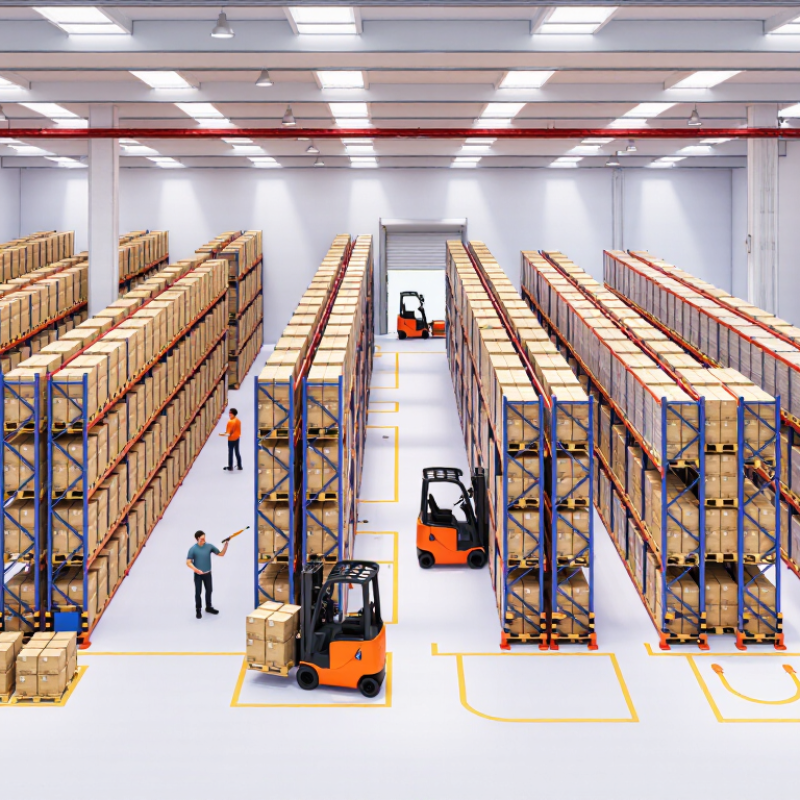
A pallet racking decision should start with the loads moving through your building, not a catalog. Record pallet length, width, height, and loaded weight. Check for overhang, uneven bases, and unusual loads; these details can affect beam and frame choices. Measure the aisle and turning space, too. A rack that fits on paper may still frustrate forklift operators.
Next, map your SKUs and daily throughput. A warehouse holding many different products in small quantities usually needs direct access to each pallet. Selective racking provides 100% pallet selectivity in a single-deep layout: operators can retrieve a specific pallet without moving another one first. That can help when orders change often or products have short rotation cycles. The trade-off is lower storage density than some high-density systems, because forklifts need working aisles. Measure the real cost of that space.
Count peak-day pallet moves, not just an average week. Note how many replenishments and picks happen during busy shifts. Small data gaps matter. If SKU counts or volumes are only estimates, mark them as estimates and review them before committing. A clear spreadsheet is useful, but a walk through the aisles often reveals the awkward corner you forgot.
Choosing pallet racking begins with the aisle, not the rack. Conventional aisles commonly measure 10–12 ft, while very narrow aisle (VNA) layouts often use 5–7 ft. These are planning ranges, not guaranteed equipment clearances. Aisle width must match the truck’s turning envelope, load dimensions, and operating method. Measure with a loaded truck, not an empty one. That detail is easy to miss.
The space effect is tangible. Across a 200-ft-wide building, reducing each of ten aisles by 4 ft could reclaim about 8,000 sq ft, before allowing for end clearances and cross-aisles. But narrower is not automatically better: VNA operations may require guided trucks, tighter floor tolerances, and disciplined traffic control. The Rack Manufacturers Institute’s ANSI MH16.1 standard covers structural design of industrial steel storage racks; it does not prescribe one universal aisle width. OSHA’s 29 CFR 1910.176(a) requires clear, unobstructed aisles, so keep operational safety in the layout review. A useful check is to test turning, picking, and emergency access on a scaled plan. Recheck with the actual pallet overhang. That can change the answer.
Drive-in pallet racking stores pallets several positions deep, with fewer aisles between rows. A forklift enters the storage lane and places pallets on rails, making better use of floor space than many selective-rack layouts. This can suit warehouses holding large quantities of the same product, especially when replenishment arrives in full pallet loads. The trade-off matters. In a typical drive-in layout, the last pallet placed is often the first one retrieved, so stock rotation may follow a last-in, first-out pattern. That may not suit every product or picking routine.
Before choosing this system, compare the space saved with the access your team needs. Check pallet dimensions, load weights, forklift turning room, and the number of different product lines. A lane filled with one product can work smoothly; frequent changes between small quantities may slow retrieval and create extra handling. It is easy to overestimate usable capacity on a plan. Leave room for clearances and safe forklift movement, and have a qualified storage professional review the rack design and building conditions. If both ends of a lane are accessible, a drive-through arrangement may support first-in, first-out flow, but it needs a different operating plan. Test the expected pallet flow against real order patterns, not just peak storage figures.
A pallet rack should be checked against its engineered design, not judged by appearance alone. ANSI MH16.1 provides design and testing requirements for industrial steel storage racks. Ask for the rack drawings and verify that the installed frame, beam lengths, and connection details match them. Check the posted load plaques, too. They should clearly state the permitted loads for the actual configuration.
Read the limits carefully. A beam-pair rating is not automatically the capacity of an entire bay, and allowable loads may vary by beam level. Confirm the intended pallet weight, placement, and load distribution against those figures. Check that anchors are present and that the concrete floor is suitable for the rack’s loads. Small details matter. A relocated beam can change the system’s capacity, even when the rack still looks sturdy.
Inspect for bent uprights, cracked welds, loose anchors, or beams that are not fully seated. If damage or missing load information makes the rating uncertain, keep the affected area unloaded until a qualified rack professional reviews it. I would not treat a neat-looking installation as proof of safety; that assumption is easy to make, and easy to regret. Recheck the design whenever layouts or stored loads change. A review can still miss something, so record what was checked and when.
How to Choose the Right Pallet Racking System?
A safe racking plan begins with the actual load: pallet size, product weight, and how evenly weight is distributed. OSHA 1910.176(b) requires materials stored in tiers to be stacked, blocked, and interlocked, with height limited to keep them stable and secure against sliding or collapse. The rule sets a stability principle; it does not specify one rack design for every warehouse.
Check each rack’s rated capacity against the heaviest planned load, including the pallet. Keep loads centered and within the beams, and replace damaged pallets before they enter storage. A leaning stack or a broken board can turn a routine lift into a serious hazard. Small details matter. Also confirm that the floor and rack layout suit the loads and equipment in use. Capacity labels help workers make quick checks, but they cannot correct an overloaded or poorly placed pallet.
Walk the aisles during a normal shift, not only during a quiet inspection. Watch how operators place loads, and look for bent uprights, loose components, or pallets that protrude into travel paths. A neat plan on paper can miss awkward real-world handling. That is worth admitting. Reassess the setup when products, pallet dimensions, or handling equipment change, and seek a qualified review if capacity or damage is uncertain.
| Rack System | Typical Storage Pattern | Best Suited For | Key Stability and Loading Checks | Planning Considerations |
|---|---|---|---|---|
| Selective pallet rack | Each pallet is accessed directly from an aisle. | Warehouses with many product types, frequent picking, or relatively low quantities per item. | Use the rack’s posted or documented load limits; place loads evenly on the beams; secure beam connections and inspect frames, braces, and anchors for damage or displacement. | Offers direct access to stored pallets but requires an aisle for each rack row. Confirm aisle width against the lift truck and pallet-handling method. |
| Double-deep rack | Pallets are stored two positions deep and retrieved with suitable reach equipment. | Operations seeking more storage density than single-deep selective rack while retaining access to multiple product groups. | Verify that the equipment can safely reach the rear pallet position. Keep loads within the specified beam and bay capacities, and avoid impacts to uprights and beams. | Some pallets are less directly accessible. Consider inventory rotation, lift-truck capability, and clear access to both pallet positions. |
| Drive-in or drive-through rack | Forklifts enter storage lanes; pallets are commonly supported on rails along the lane. | High quantities of a smaller number of product types, where storage density is a priority. | Follow the designed loading sequence and use the specified pallet dimensions. Check lane rails and uprights for impact damage; prevent loads from being placed unevenly or left unstable. | Drive-in systems generally operate from one end of a lane; drive-through systems can be accessed from both ends. Select a lane arrangement that fits the required stock rotation. |
| Push-back rack | Pallets are placed on nested carts or carriages that move along inclined rails. | Multiple pallets per product type where compact, lane-based storage is useful. | Load and retrieve pallets in the system’s intended sequence. Confirm pallet compatibility, cart movement, rail condition, and that loads remain stable during placement and retrieval. | Provides access by lane rather than to every pallet position. Plan for the system’s operating method and the inventory rotation it supports. |
| Pallet flow rack | Pallets move by gravity along rollers or wheels from a loading end to a picking end. | High-throughput operations that benefit from separate loading and retrieval sides, often using first-in, first-out lane flow. | Use pallets compatible with the flow equipment. Keep rollers, brakes, and lane components in serviceable condition; ensure loads move and stop as designed without creating unstable stacks. | Requires a suitable floor layout and operating controls at the loading and discharge ends. Confirm pallet condition and dimensions before selecting lanes. |
| Cantilever rack | Long or bulky items rest on projecting arms rather than conventional pallet beams. | Items such as lumber, pipe, sheet goods, or other long loads that do not fit standard pallet bays. | Distribute the load across the arms as specified for the rack; keep items from rolling or sliding; use appropriate stops or restraints where the design and load require them. | Choose arm spacing, length, and capacity for the actual load dimensions and weight. Keep stored material within the intended support area. |
OSHA and capacity note: OSHA 29 CFR 1910.176(b) requires stored material to be stacked, blocked, interlocked, and limited in height so it is stable and secure against sliding or collapse. The standard does not provide a universal pallet-rack capacity or a single rack design for every warehouse. Follow the rack design documentation and load limits, keep aisles and access clear, and have damaged or altered rack components assessed by a qualified person before continued use.
Record pallet length, width, height, and loaded weight. Check for overhang, uneven bases, and unusual loads. Measure aisles and turning space, too.
It gives direct access to every pallet in a single-deep layout. That suits warehouses with many SKUs, small quantities, or changing orders. Forklifts need working aisles, though.
Count peak-day pallet moves, replenishments, and picks during busy shifts. Weekly averages can hide rush-hour bottlenecks. Small data gaps matter.
Conventional aisles often measure 10–12 feet. Very narrow aisle layouts often use 5–7 feet. These are planning ranges, not guaranteed clearances.
Match its width to the truck’s turning space, pallet dimensions, and operating method. Measure with a loaded truck. Empty trucks may give a misleading answer.
They can. In a 200-foot-wide building, reducing ten aisles by four feet could reclaim about 8,000 square feet before clearances. Still, estimates can fool us.
They may require guided trucks, tighter floor tolerances, and careful traffic control. Test turning and picking on a scaled plan before committing.
A plan may miss awkward corners, end clearances, or cross-aisles. Check emergency access and actual pallet overhang. That detail matters.
Choosing the right Pallet Racking system starts with understanding the products you store, the number of distinct SKUs, and how quickly pallets need to move through your operation. Selective racks allow direct access to every pallet, making them suitable when variety and fast retrieval matter. Aisle width also affects both accessibility and space use: conventional aisles are often 10–12 feet wide, while very narrow aisle (VNA) layouts may use 5–7 feet, provided the equipment and workflow support them.
Balance storage density with the access your operation requires. Drive-in racks place pallets several positions deep and can increase capacity, but offer less direct access than selective systems. Before installation, check that the rack design and rated capacity align with ANSI MH16.1 and that load limits are clearly posted. Plan loading and storage practices to maintain stability, protect workers, and follow OSHA 1910.176(b).