0%

Choosing the best Pallet Storage Racking System in 2026 starts with the work happening on your warehouse floor. A rack that looks efficient on a drawing may slow down forklift turns, block access to fast-moving stock, or leave awkward gaps above the pallets. The right choice depends on load weights, pallet sizes, ceiling height, inventory turnover, and how often operators need direct access.

MHI president and CEO John Paxton has discussed the need for supply chains to adapt as conditions change. The following is a paraphrase of that broader message, not a verbatim quotation: “A storage system should be ready to change with the operation.” That principle matters when a business adds product lines, changes order patterns, or introduces new handling equipment. Small details count. A few inches of clearance can affect safe, practical movement.

There is no universal winner. Selective pallet racking may suit varied stock and frequent picking. Drive-in systems can increase storage density, but they require careful planning around access and inventory flow. Push-back and pallet-flow options may help in specific high-volume operations. Trade-offs remain. A system optimized for density can make access less flexible, and a flexible layout can use more floor space.

This guide compares common rack types, their strengths, limitations, and suitability for different warehouse needs. It also considers load capacity, layout, inspection, and future expansion. Treat any recommendation as a starting point, not a substitute for a qualified site assessment. Even a well-designed rack can disappoint when real operating habits are overlooked.
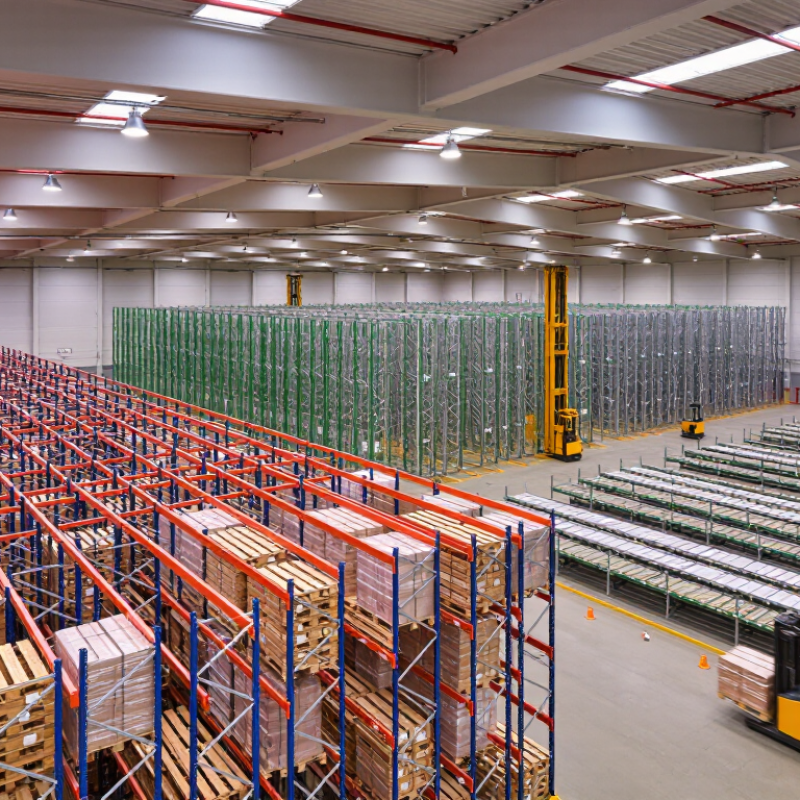
What Is the Best Pallet Storage Racking System in 2026?

How Pallet Storage Racking Systems Work

A pallet storage racking system holds goods above the floor so forklifts can store and retrieve loads efficiently. Upright frames carry vertical weight, while horizontal beams support each pallet. Together, they form bays with several storage levels. A forklift places a pallet onto a pair of beams, where its weight transfers through the frame to the floor. Simple, but not casual. Pallets must sit evenly, and their dimensions should match the bay. A leaning load or damaged beam can change how safely the rack performs.

The rack layout determines how goods move. Selective racking gives a forklift direct access to each pallet, which suits varied stock. Drive-in layouts place pallets deeper into lanes, using less aisle space but limiting access to some loads. Gravity-fed systems use slightly inclined rollers to move pallets toward the picking face. The right choice depends on inventory turnover, forklift type, available floor space, and load weight. These details are easy to underestimate. Check the rack’s rated capacity and follow its installation and inspection guidance. A warehouse may look orderly while still having poor clearance or uneven loading. Revisit the layout when pallet sizes or work patterns change; the original plan may no longer fit.

The Main Types of Pallet Racking Available in 2026

Selective pallet racking suits warehouses handling many product lines and frequent order changes. Each pallet remains directly accessible, making stock rotation and cycle counting straightforward. The trade-off is lower storage density, because every aisle consumes floor space. Choose it when access matters more than maximum capacity.

Double-deep racks reduce aisle space but require compatible handling equipment and tighter inventory planning. Drive-in and drive-through systems store pallets several positions deep, so they work best with fewer product types and larger, consistent batches.

Push-back racks offer deeper storage with access from one face; pallet-flow racks use gravity rollers for first-in, first-out movement. Small details matter. Pallet condition, load weight, and beam clearance can affect safe operation.

MHI’s 2024 Annual Industry Report found that 55% of respondents planned to adopt robotics and automation within five years. That trend may influence equipment and aisle choices, but it does not make automated storage the right fit for every site.

Aisle measurements and picking patterns should be checked against actual daily activity—not just a capacity estimate.

How Warehouse Needs Determine the Right Racking Type

What Is the Best Pallet Storage Racking System in 2026?
How Warehouse Needs Determine the Right Racking Type

The best system depends on what moves through your warehouse, how often it moves, and how much floor space you can spare. Selective pallet racking gives forklifts direct access to each pallet, making it practical for mixed products and frequent picking. But it uses more aisle space than denser options. Walk the busiest routes before deciding. A few minutes of observation can reveal recurring traffic jams.

For high-volume storage of similar products, drive-in racking can increase capacity by reducing aisles. It also limits access to individual pallets, so stock rotation and forklift procedures matter. Push-back and pallet-flow systems offer different balances of density and selectivity. Consider order patterns, pallet sizes, and how quickly inventory changes. Dense storage is not always efficient if workers struggle to find the next pallet.

Check ceiling height, floor condition, sprinkler clearance, and the reach and turning radius of your equipment. Confirm expected pallet loads against rack specifications, and plan for inspections after installation. Measure twice. Layout drawings are useful, but they can miss a column, an awkward dock turn, or a staging area that expands during busy shifts. Revisit the plan with operators before committing; their daily work often exposes details the measurements miss.

Safety, Load Capacity, and Compliance Factors

What Is the Best Pallet Storage Racking System in 2026?
Safety, Load Capacity, and Compliance Factors

The best system is not simply the one holding the most pallets. It must match the loads, forklifts, floor, and daily workflow. A 2023 U.S. Bureau of Labor Statistics report recorded 4.8 cases of workplace injury or illness per 100 full-time workers in warehousing and storage, compared with 2.4 across private industry. That gap makes safe access and damage prevention practical priorities. A struck upright can look harmless until a loaded bay shifts.

Check rated capacities for each beam level and the full rack bay. Compare them with the heaviest pallet, including uneven or concentrated loads. Capacity labels help, but they do not correct poor loading. Keep pallets centered, avoid overhang, and inspect for bent members, loose anchors, and impact damage. ANSI MH16.1 provides design and testing guidance for industrial steel storage racks. Have a qualified rack professional verify the proposed configuration, especially after layout changes.

Compliance is part of the design, not paperwork added later. In the United States, OSHA 29 CFR 1910.176(b) requires stored materials to remain stable and secure against sliding or collapse. Confirm that aisles, sprinkler clearances, exits, and forklift routes remain unobstructed. Floor capacity matters, too; a strong rack on an unsuitable slab is still a risk. One detail is often missed: real pallets vary in condition and weight. Build in operating margin, then review the layout after the first weeks of use.

What Is the Best Pallet Storage Racking System in 2026? — Safety, Load Capacity, and Compliance Factors
Racking System Pallet Access Space Utilization Typical Use Load Capacity and Safety Factors Key Compliance Checks Best Fit When…
Selective pallet racking Direct access to each pallet from the aisle. Baseline; requires aisles for forklift access. Mixed products, frequent picking, and high SKU variety. Beam and frame capacities must be calculated for the actual beam span, rack height, bay configuration, pallet loads, and load placement. Protect frame ends in areas exposed to vehicle impacts. Confirm rack design documentation, load plaques, anchorage, aisle clearances, and inspection procedures. In the United States, OSHA 29 CFR 1910.176(b) requires stored materials to be stable and secure against sliding or collapse. Fast access and inventory flexibility matter more than maximizing pallet positions.
Double-deep racking Two pallet positions deep; rear pallets require compatible reach equipment or an appropriate retrieval method. Higher than selective racking because fewer aisles may be needed. Moderate SKU variety with multiple pallets per SKU. Design must account for the greater depth, equipment reach, pallet support, and loads on each beam level. Reduced access can increase handling complexity and the risk of damage during retrieval. Verify forklift suitability, aisle dimensions, rack configuration, load plaques, and operator training. Ensure the design and installation match the approved drawings. Some storage density is needed while retaining access to more than one SKU per bay.
Drive-in or drive-through racking Forklifts enter storage lanes; drive-in is generally accessed from one end, while drive-through can be accessed from both ends. High, with fewer aisles than selective layouts. High volumes of similar products, often managed by lane and sequence. Loads are supported on rails or arms within the structure. Specify pallet dimensions and condition, lane depth, forklift clearances, entry guidance, and load sequence; impacts inside lanes can damage uprights and supports. Check structural design, floor and anchorage requirements, fire-protection design, vehicle clearances, and access for inspection. Keep lanes free of damaged or unsuitable pallets. High-density storage is more important than immediate access to every pallet.
Push-back racking Multiple pallets are stored in depth on carts or nested carriers and retrieved from the aisle side. High; aisle space is reduced compared with selective layouts. Several pallets of the same SKU per lane, with last-in, first-out handling. Capacity depends on the engineered rack and cart system, lane depth, pallet dimensions, and operating loads. Confirm that pallets are compatible with the carriers and that loads are placed and retrieved as designed. Check supplier design documents, rated load information, cart operation, installation, maintenance, and inspection arrangements. Follow local fire and building-code requirements for the stored commodity and layout. Dense storage and aisle-side loading and unloading are priorities, and last-in, first-out rotation is acceptable.
Pallet flow racking Pallets move along inclined roller or wheel lanes, usually loaded from one end and picked from the other. High; separate loading and picking aisles can support dense layouts. High-throughput operations and first-in, first-out inventory rotation. Design must match pallet size, weight, base condition, lane slope, flow-control devices, and impact loads. Test pallet compatibility and flow before operation; unsuitable pallets can jam or move unpredictably. Verify engineered ratings, lane controls, stop devices, guarding, maintenance access, and safe loading and picking procedures. Coordinate the layout with applicable fire-protection design. Stock rotation and throughput are important, and pallets can reliably travel through the lanes.
Cantilever racking Open-front access to long, bulky, or irregular loads. Varies by layout and load length; typically not as compact as deep-lane pallet systems. Long products such as pipe, lumber, bar stock, and sheet materials. Capacity depends on column, arm, base, spacing, load length, and whether loads are supported evenly. Loads must be placed within the specified arm and system limits; protect exposed frames from impact. Confirm rated arm and column capacities, anchorage, load stability, aisle clearances, and handling-equipment compatibility. Use load signage that reflects the installed configuration. Stored items are too long, awkward, or irregular for conventional pallet beams.

Selection and compliance note: There is no universally “best” system or standard pallet-position capacity. Capacity must be established for the specific rack configuration and operating loads by a qualified designer, and the installed system must match its approved design and load signage. In the United States, applicable references may include OSHA requirements, the locally adopted building and fire codes, and ANSI MH16.1 for industrial steel storage rack design and use. Sprinkler clearances and fire-protection requirements depend on the applicable codes, storage arrangement, commodity, and sprinkler design.

How to Compare Costs and Choose a Racking System

What Is the Best Pallet Storage Racking System in 2026?

Comparing pallet storage systems starts with the work your warehouse needs to do. Selective racks offer direct access to each pallet, while higher-density designs can store more goods in the same floor area. That sounds simple. But dense storage may slow picking if staff frequently need specific pallets. Estimate daily pallet movements before comparing quotes.

Compare the full installed cost, not just the price per rack bay. Ask whether each quote includes delivery, installation, floor anchoring, protective barriers, and any required site checks. Then review ongoing costs, including inspections, repairs, and possible changes when inventory shifts. A cheaper system can cost more if it creates extra handling or needs early modification. Small details matter.

Check that the proposed layout fits your building, equipment, and pallet loads. Confirm clearances around columns, doors, sprinklers, and travel paths. Request written load information and have a qualified professional review the design for your site. Compare usable pallet positions, installation time, and disruption to operations alongside the quoted price. One part is easy to overlook: a layout that works on paper may feel cramped once forklifts are moving. Leave room to adjust. The perfect forecast rarely happens.

FAQS

How does pallet storage racking support warehouse loads?

Upright frames carry vertical weight, and horizontal beams support pallets. Loads transfer through the frame to the floor. Simple, but not casual.

Which racking layout gives direct access to every pallet?

Selective racking lets forklifts reach each pallet directly. It suits varied stock and frequent picking, though it may use more aisle space.

When might a higher-density layout be useful?

Drive-in layouts store pallets deeper in lanes, using less aisle space. Access to some loads becomes limited. That trade-off matters.

How should a warehouse choose a racking system?

Consider pallet movements, inventory turnover, forklift type, available floor space, and load weight. A layout should match daily work, not just a drawing.

What costs should a racking quote include?

Check for delivery, installation, floor anchoring, protective barriers, and site checks. Include inspections, repairs, and future layout changes. Small details add up.

How can a warehouse check whether a layout fits?

Review clearances around columns, doors, sprinklers, and travel paths. Check forklift movement on site. Paper plans can feel cramped.

Why should pallet dimensions and loads be checked?

Pallets should sit evenly and match the bay dimensions. Confirm written load information and rated capacity. A leaning load is a warning.

When should a racking layout be reviewed again?

Revisit it when pallet sizes, stock patterns, or work routines change. A tidy aisle can fool you; real operations may reveal problems.

Conclusion

Choosing the best Pallet Storage Racking System in 2026 starts with understanding how rack structures support palletized goods and how forklifts access stored loads. Common options include selective, drive-in, push-back, pallet flow, and double-deep racking. Each offers a different balance of accessibility, storage density, and handling requirements, so the right choice depends on inventory turnover, pallet quantities, available floor space, equipment, and warehouse layout.

Safety and capacity should guide every decision. Evaluate rated load limits, rack condition, aisle clearance, impact protection, and the suitability of the system for the building and handling equipment. Compare total costs rather than purchase price alone, including installation, maintenance, and potential changes to operations. The best system is the one that fits current needs while allowing safe, efficient storage as inventory and workflow demands evolve.

Clara

Clara

Clara is a marketing professional with a strong understanding of the company’s products and the needs they are designed to meet. She brings together product knowledge, customer insight, and clear communication to help readers make informed decisions. Through regular articles on the company website,......